Alabama awaits NCAA ruling after revealing continuing investigation into textbook improprieties involving athletes
Friday, March 06, 2009
By GENTRY ESTES
Mobile Press Register Sports Reporter
TUSCALOOSA ? An investigation triggered almost 17 months ago by a female student-athlete has the University of Alabama's football program in hot water again with the NCAA.
UA representatives met Feb. 20 in San Diego with the NCAA Committee on Infractions to address allegations of two potentially major violations stemming from Alabama's self-initiated investigation into impermissible receipt of textbooks.
Schools officials released details Thursday of the NCAA's charges and UA's admission that the university "failed to adequately monitor its student-athlete textbook distribution system." A final ruling by the NCAA is expected by May.
"The University has not denied, and cannot deny, that the infractions occurred," said UA's formal response to the NCAA. "Instead, the University has acted diligently to investigate fully this occurrence, take appropriate corrective action to reform its textbook issuance process and prevent or deter any reoccurrence."
Alabama's report did not include any infractions by members of the Crimson Tide men's basketball program.
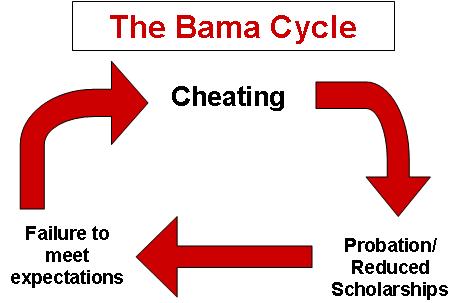
The school now hopes its arguments, cooperation and corrective actions will be enough to deter NCAA penalties that could range from the forfeiture of games to the loss of football scholarships and recruiting visits to the extreme punishment of the death penalty, which is made possible by Alabama's status as a "repeat offender."
School officials self-reported the violations, and five offending football players were suspended for a 2007 game against Tennessee three days after UA was first made aware of improprieties. UA described its own reaction as "immediate and severe."
"Our compliance department and the administration, when that happened and we discovered that, I've never seen a response to a problem that aggressive in resolving it," UA athletic director Mal Moore told the Press-Register last summer. "We kept the NCAA abreast of everything that has been done."
UA officials began an investigation soon after Oct. 17, 2007, when an employee of the University Supply Store noticed "questionable textbook charges in excess of $1,600 for the fall 2007 semester" for a female athlete. The NCAA was notified Oct. 19, after the UA compliance office uncovered "charges in excess of $1,300 and $1,500 for fall 2007."
School officials initially examined textbook records dating back through spring 2006. The NCAA asked that the investigation go back as far as October 2003. Citing "inadequate documentation," UA could only "spot check" potential violations before the fall semester of 2005.
In 2007, the NCAA placed Ball State's athletics department on two years of probation for lack of institutional control for impermissible receipt of textbooks. Ball State lost three football scholarships, a reduction of money for men's tennis scholarships and a restriction on hours for softball practice.
The total for Ball State's infractions came to $26,944. In documents released Thursday, Alabama redacted the total dollar amount, individual athlete names and the sports programs involved.
From the football team, center Antoine Caldwell, tailback Glen Coffee, right guard Marlon Davis, cornerback Marquis Johnson and cornerback Chris Rogers were suspended four games in 2007 before being reinstated by the NCAA prior to the Auburn game. Caldwell, Coffee and Rogers subsequently admitted their involvement during interviews with the Press-Register. Each said he used scholarship funds to obtain textbooks for classes not on his schedule, but it was to benefit others, no money was involved and they weren't aware rules were being broken.
"It was something so petty that we didn't even talk about it," Rogers said. "It wasn't anything you'd even blink twice about. Like your girl needs some books, 'I'll take care of your books. I know money's tight.' It was more that than I'm trying to sell books. I wasn't even getting any money."
"I was trying to help out friends," Coffee said. "There wasn't any money involved. The books were returned after they used the books. I was trying to do good, actually. Unfortunately, there's a rule saying you can't do stuff like that, and I got caught. I felt like I was in the right the whole time. But a rule is a rule."
UA officials admitted "shortcomings with (its) textbook issuance process," including a system that allowed athletes to pick up books prepared for their classes at the University Supply Store and then have a "30-foot opportunity" to gather other items before charging purchases to an existing athletics department account that paid for scholarship athletes' course material.
Assistant director of athletic student services Jon Dever was issued a letter of reprimand from Moore. Teresa Shreve, the director of the Supply Store, was issued a similar reprimand from vice president for financial affairs Lynda Gilbert.
Stricter measures are now in place to require additional training for Supply Store employees and on-site textbook supervision by members of UA's compliance staff.
"In stating what this case is, it is also important to recognize what it is not," UA's response said. "This is not a case of intentional misconduct by coaches, institutional employees or boosters. No other type of NCAA rules violations were discovered. No one made a financial profit from the textbook violations ? books were received or acquired in violation of the rules, but no one sold the book or materials for cash. Moreover, no one obtained materials other than materials of an academic nature."
Friday, March 06, 2009
By GENTRY ESTES
Mobile Press Register Sports Reporter
TUSCALOOSA ? An investigation triggered almost 17 months ago by a female student-athlete has the University of Alabama's football program in hot water again with the NCAA.
UA representatives met Feb. 20 in San Diego with the NCAA Committee on Infractions to address allegations of two potentially major violations stemming from Alabama's self-initiated investigation into impermissible receipt of textbooks.
Schools officials released details Thursday of the NCAA's charges and UA's admission that the university "failed to adequately monitor its student-athlete textbook distribution system." A final ruling by the NCAA is expected by May.
"The University has not denied, and cannot deny, that the infractions occurred," said UA's formal response to the NCAA. "Instead, the University has acted diligently to investigate fully this occurrence, take appropriate corrective action to reform its textbook issuance process and prevent or deter any reoccurrence."
Alabama's report did not include any infractions by members of the Crimson Tide men's basketball program.
The school now hopes its arguments, cooperation and corrective actions will be enough to deter NCAA penalties that could range from the forfeiture of games to the loss of football scholarships and recruiting visits to the extreme punishment of the death penalty, which is made possible by Alabama's status as a "repeat offender."
School officials self-reported the violations, and five offending football players were suspended for a 2007 game against Tennessee three days after UA was first made aware of improprieties. UA described its own reaction as "immediate and severe."
"Our compliance department and the administration, when that happened and we discovered that, I've never seen a response to a problem that aggressive in resolving it," UA athletic director Mal Moore told the Press-Register last summer. "We kept the NCAA abreast of everything that has been done."
UA officials began an investigation soon after Oct. 17, 2007, when an employee of the University Supply Store noticed "questionable textbook charges in excess of $1,600 for the fall 2007 semester" for a female athlete. The NCAA was notified Oct. 19, after the UA compliance office uncovered "charges in excess of $1,300 and $1,500 for fall 2007."
School officials initially examined textbook records dating back through spring 2006. The NCAA asked that the investigation go back as far as October 2003. Citing "inadequate documentation," UA could only "spot check" potential violations before the fall semester of 2005.
In 2007, the NCAA placed Ball State's athletics department on two years of probation for lack of institutional control for impermissible receipt of textbooks. Ball State lost three football scholarships, a reduction of money for men's tennis scholarships and a restriction on hours for softball practice.
The total for Ball State's infractions came to $26,944. In documents released Thursday, Alabama redacted the total dollar amount, individual athlete names and the sports programs involved.
From the football team, center Antoine Caldwell, tailback Glen Coffee, right guard Marlon Davis, cornerback Marquis Johnson and cornerback Chris Rogers were suspended four games in 2007 before being reinstated by the NCAA prior to the Auburn game. Caldwell, Coffee and Rogers subsequently admitted their involvement during interviews with the Press-Register. Each said he used scholarship funds to obtain textbooks for classes not on his schedule, but it was to benefit others, no money was involved and they weren't aware rules were being broken.
"It was something so petty that we didn't even talk about it," Rogers said. "It wasn't anything you'd even blink twice about. Like your girl needs some books, 'I'll take care of your books. I know money's tight.' It was more that than I'm trying to sell books. I wasn't even getting any money."
"I was trying to help out friends," Coffee said. "There wasn't any money involved. The books were returned after they used the books. I was trying to do good, actually. Unfortunately, there's a rule saying you can't do stuff like that, and I got caught. I felt like I was in the right the whole time. But a rule is a rule."
UA officials admitted "shortcomings with (its) textbook issuance process," including a system that allowed athletes to pick up books prepared for their classes at the University Supply Store and then have a "30-foot opportunity" to gather other items before charging purchases to an existing athletics department account that paid for scholarship athletes' course material.
Assistant director of athletic student services Jon Dever was issued a letter of reprimand from Moore. Teresa Shreve, the director of the Supply Store, was issued a similar reprimand from vice president for financial affairs Lynda Gilbert.
Stricter measures are now in place to require additional training for Supply Store employees and on-site textbook supervision by members of UA's compliance staff.
"In stating what this case is, it is also important to recognize what it is not," UA's response said. "This is not a case of intentional misconduct by coaches, institutional employees or boosters. No other type of NCAA rules violations were discovered. No one made a financial profit from the textbook violations ? books were received or acquired in violation of the rules, but no one sold the book or materials for cash. Moreover, no one obtained materials other than materials of an academic nature."