Disillusioned Bayh advocates electoral ?shock? to broken system
<abbr title="2010-02-16T16:35:26-0800" class="timedate">Tue Feb 16, 7:35 pm ET</abbr>
<!-- end .byline -->
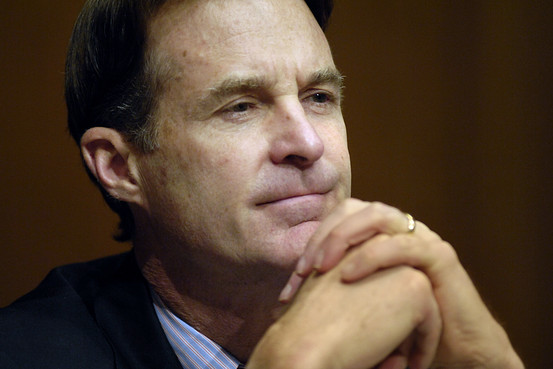
In an interview on MSNBC this morning, newly retiring Sen. Evan Bayh declared the American political system "dysfunctional," riddled with "brain-dead partisanship" and permanent campaigning. Flatly denying any possibility that he'd seek the presidency or any other higher office, Bayh argued that the American people
<script type="text/javascript"></script>
needed to deliver a "shock" to Congress by voting incumbents out en masse and replacing them with people interested in reforming the process and governing for the good of the people, rather than deep-pocketed special-interest groups.
Bayh's announcement stunned the American political world, as up until just last week he looked to be well on his way to an easy reelection for a third term in the Senate, and his senior staff was aggressively pursuing that goal.
But Bayh had apparently become increasingly frustrated in the Senate. In this morning's interview he noted that just two weeks ago, Republicans who had co-sponsored a bill with him to rein in the deficit turned around and voted against it for purely political reasons. He also stated repeatedly that members of his own party should be more willing to settle for a compromise rather than holding out for perfection.
"Sometimes half a loaf is better than none," Bayh insisted.
It's no secret that the Senate has struggled to take action this year. With the two major parties unusually far apart in their substantive proposals for the direction of the country, even finding half a loaf to agree on has been difficult. Though the Democrats have had a substantial majority in the Senate for the last year, Republicans have escalated their threats to use filibusters (by forcing a cloture vote, see the graph below) to force Democrats to come up with 60 votes to pass any major legislation. And after Scott Brown's election to the Senate last month gave Republicans a 41st seat, health-care reform and other Democratic goals were stopped dead in their tracks.

(CLICK IMAGE FOR FULL VIEW)
Bayh blamed the current atmosphere of intense partisanship on the need for senators to constantly campaign to be reelected to another six-year term. Citing his father, a popular liberal senator in the '60s and '70s, he noted that "back in the day they used to have the saying: 'You campaign for 2 years and you legislate for 4.' Now you campaign for 6!" He noted that the need for constant fundraising made it nearly impossible to focus on passing legislation.
Frustration over the increasing amount of money being spent on political campaigns isn't exactly a new thing, as spending by candidates in the 2008 presidential election nearly quadrupled the amount of money spent by candidates in the 2000 election. Additionally, winners of House races in 2000 spent an average of $849,158 to do so, while House winners in 2008 spent an average of $1,372,591. Enhancing the concerns of many on the left and the right has been a recent Supreme Court decision to strike down the country's existing campaign finance laws. Put simply, the ruling opens the door for an even greater influence of money by allowing corporations spend money directly on campaigns.
Meanwhile, voter frustration is high, making the fight for campaign cash all the more crucial to politicians hoping to remain in office. A recent poll found that 44% of Americans believe incumbents should be voted out of office.
However, reforms of Congress appear unlikely. There doesn't appear to be any significant momentum at this time behind efforts to change the rules that govern passing legislation or Congress's need to constantly campaign and fundraise. With an election year beginning, it's also unlikely that congressional leaders will begin to see eye to eye more often on major legislation.
Perhaps a "shock" is indeed called for in order to change that.
<abbr title="2010-02-16T16:35:26-0800" class="timedate">Tue Feb 16, 7:35 pm ET</abbr>
<!-- end .byline -->
In an interview on MSNBC this morning, newly retiring Sen. Evan Bayh declared the American political system "dysfunctional," riddled with "brain-dead partisanship" and permanent campaigning. Flatly denying any possibility that he'd seek the presidency or any other higher office, Bayh argued that the American people
<script type="text/javascript"></script>
needed to deliver a "shock" to Congress by voting incumbents out en masse and replacing them with people interested in reforming the process and governing for the good of the people, rather than deep-pocketed special-interest groups.
Bayh's announcement stunned the American political world, as up until just last week he looked to be well on his way to an easy reelection for a third term in the Senate, and his senior staff was aggressively pursuing that goal.
But Bayh had apparently become increasingly frustrated in the Senate. In this morning's interview he noted that just two weeks ago, Republicans who had co-sponsored a bill with him to rein in the deficit turned around and voted against it for purely political reasons. He also stated repeatedly that members of his own party should be more willing to settle for a compromise rather than holding out for perfection.
"Sometimes half a loaf is better than none," Bayh insisted.
It's no secret that the Senate has struggled to take action this year. With the two major parties unusually far apart in their substantive proposals for the direction of the country, even finding half a loaf to agree on has been difficult. Though the Democrats have had a substantial majority in the Senate for the last year, Republicans have escalated their threats to use filibusters (by forcing a cloture vote, see the graph below) to force Democrats to come up with 60 votes to pass any major legislation. And after Scott Brown's election to the Senate last month gave Republicans a 41st seat, health-care reform and other Democratic goals were stopped dead in their tracks.

(CLICK IMAGE FOR FULL VIEW)
Bayh blamed the current atmosphere of intense partisanship on the need for senators to constantly campaign to be reelected to another six-year term. Citing his father, a popular liberal senator in the '60s and '70s, he noted that "back in the day they used to have the saying: 'You campaign for 2 years and you legislate for 4.' Now you campaign for 6!" He noted that the need for constant fundraising made it nearly impossible to focus on passing legislation.
Frustration over the increasing amount of money being spent on political campaigns isn't exactly a new thing, as spending by candidates in the 2008 presidential election nearly quadrupled the amount of money spent by candidates in the 2000 election. Additionally, winners of House races in 2000 spent an average of $849,158 to do so, while House winners in 2008 spent an average of $1,372,591. Enhancing the concerns of many on the left and the right has been a recent Supreme Court decision to strike down the country's existing campaign finance laws. Put simply, the ruling opens the door for an even greater influence of money by allowing corporations spend money directly on campaigns.
Meanwhile, voter frustration is high, making the fight for campaign cash all the more crucial to politicians hoping to remain in office. A recent poll found that 44% of Americans believe incumbents should be voted out of office.
However, reforms of Congress appear unlikely. There doesn't appear to be any significant momentum at this time behind efforts to change the rules that govern passing legislation or Congress's need to constantly campaign and fundraise. With an election year beginning, it's also unlikely that congressional leaders will begin to see eye to eye more often on major legislation.
Perhaps a "shock" is indeed called for in order to change that.