- Mar 19, 2006
- 38,712
- 599
- 113
- 75
Even in Small Things, "Quality is Important"
William Wrigley Jr. came to Chicago from Philadelphia in the spring of 1891. He was 29 years old, had $32 in his pocket and unlimited enthusiasm and energy. He also had great talent as a salesman.
His father was a soap manufacturer, and at the start of his new business in Chicago, Mr. Wrigley sold Wrigley's Scouring Soap. As an extra incentive to merchants, Mr. Wrigley offered premiums. He knew his customers would be more likely to carry Wrigley's soap if they received a little "something for nothing." One of these premiums was baking powder. When baking powder proved to be more popular than soap, he switched to the baking powder business.
Then one day in 1892, Mr. Wrigley got the idea of offering two packages of chewing gum with each can of baking powder. The offer was a big success. Once again the premium - chewing gum - seemed more promising than the product it was supposed to promote.
At that time, there were at least a dozen chewing gum companies in the United States, but the industry was relatively undeveloped. Mr. Wrigley decided that chewing gum was the product with the potential he had been looking for, so he began marketing it under his own name. His first two brands were Lotta and Vassar. Juicy Fruit gum came next in 1893, and Wrigley's Spearmint was introduced later that same year.
Getting a foothold in the chewing gum business was not easy. Several times the young company was on the verge of going under, but hard work overcame the difficulties, and the business forged ahead.
In the very early days, William Wrigley Jr. personally did much of the selling to the trade. He had a gift for seeing his customers' point of view and accommodating himself to their needs. As the company grew, Mr. Wrigley showed an unusual knack for inspiring enthusiasm in the people who worked with him.
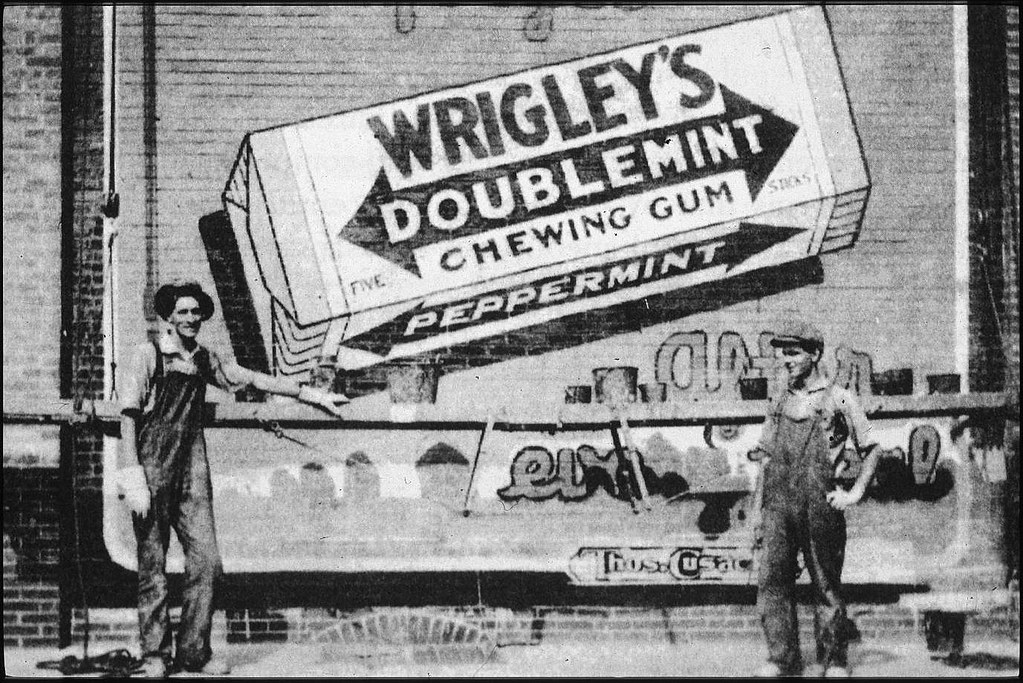
Mr. Wrigley was also one of the pioneers in the use of advertising to promote the sale of branded merchandise. He saw that consumer acceptance of Wrigley's gum could be built faster by telling people about the benefits of the product through newspaper and magazine ads, outdoor posters and other forms of advertising. Then, as more and more consumers began to ask for and buy Wrigley's chewing gum in the stores, the storekeeper would naturally want to keep a sufficient stock of Wrigley brands on hand.
As the company continued to grow, it steadfastly applied this basic principle: "Even in a little thing like a stick of gum, quality is important."