
The Dallas Cowboys endured a miserable start to the 2025 season. Back-to-back defeats left them at 3-5-1 on the trade deadline, hemorrhaging 30.8 points per game, with their playoff hopes circling the drain. Then, Jerry Jones pulled the trigger, snagging Quinnen Williams from the Jets for a 2026 second-rounder, a 2027 first-round pick, and Mazi Smith. At 82 years old, America’s Team’s owner and long-serving GM mortgaged his side’s future on a gut feeling that this defensive tackle could salvage everything.
Two weeks later, his Cowboys erased a 21-point deficit against Philadelphia to somehow emerge victorious before going on to beat Kansas City 31-28 on Thanksgiving with Williams wreaking havoc up front. They finished 7-9-1, not enough to secure a playoff berth, but enough to prove that the optimism had returned to JerryWorld. Now, they’re sitting at +3300 to win Super Bowl LXI next February. And somehow, those odds feel disrespectful.
The Lay of the Land in 2026
That’s what the 2026 NFL season promises in a nutshell—chaos masquerading as analysis, longshots that aren’t really longshots, and oddsmakers admitting they have no idea how the script will play out. When Seattle sits atop futures at +950 as Super Bowl LXI favorites, Vegas is essentially shrugging and saying “we have no damn idea.” Those aren’t dynasty odds. The Chiefs at their peak commanded +350 as they hunted down the three-peat. Seattle’s price suggests the evaluation model broke somewhere around the time they rode a “Dark Side” defense from +6600 preseason odds to Lombardi Trophy champions, dismantling the equally improbable +8000 Patriots at Super Bowl LX.
But one look at a betting calculator shows that the Cowboys are considered far more likely to mount a Lombardi challenge than either of those two teams when they were crashing football’s biggest party at astronomical odds. A $10 bet on the Cowboys next year would yield $330 in winnings, while you’d have gotten $600 on the Seahawks and some $800 on the Patriots, had they managed to somehow light up Seattle in Santa Clara.
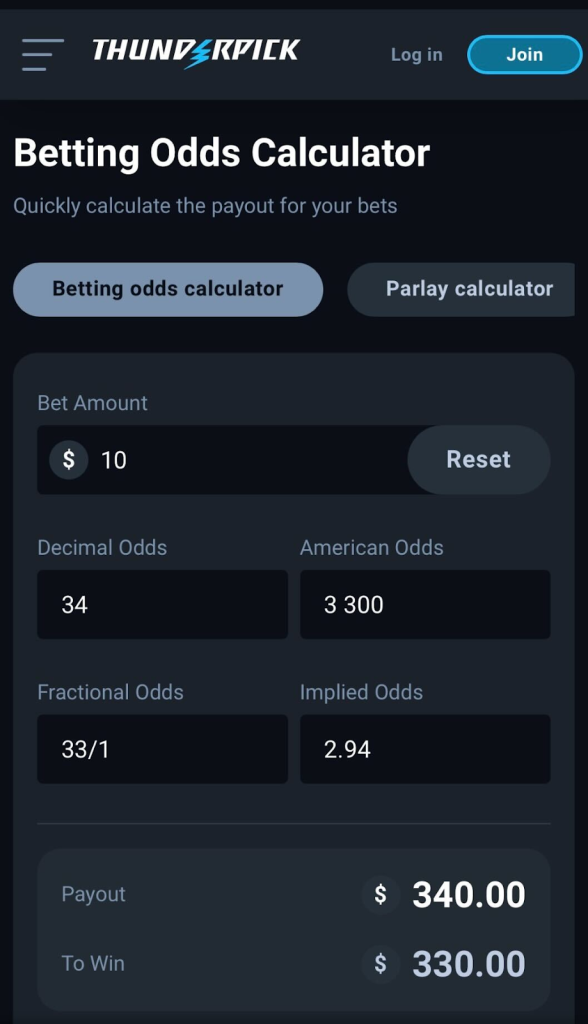
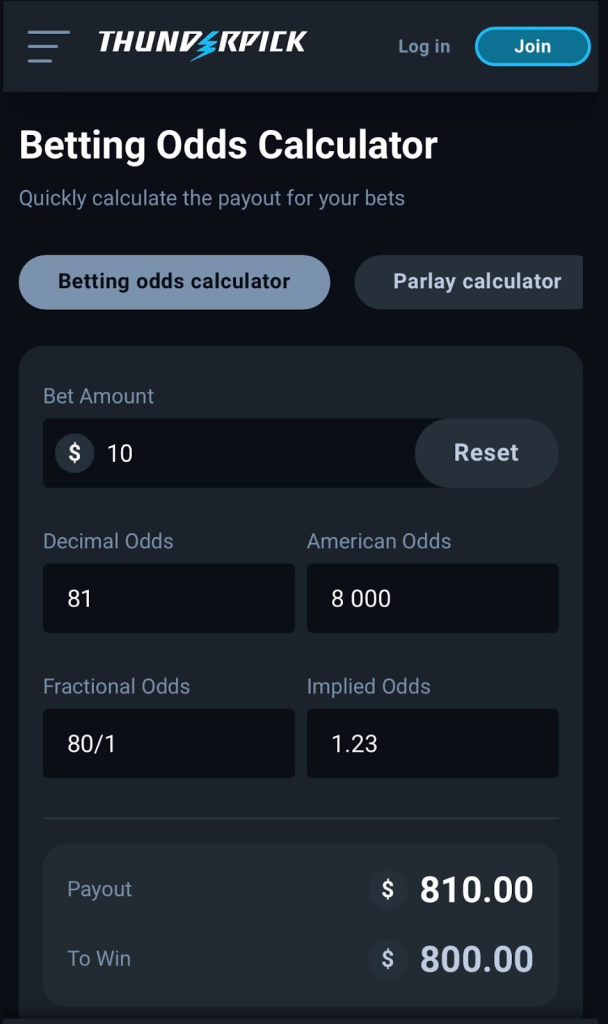
Screenshots taken from the reliable betting calculator available here: https://thunderpick.io/betting-calculators/betting-odds-calculator
So, if the Seahawks can upset the odds, why can’t franchises with legitimate draft capital, cap flexibility, and young cornerstones make similar leaps? The house is scared, and these three teams possess the exact combination of desperation, assets, and audacity to exploit that fear.
Giants
Jaxson Dart sat in the Giants’ facility after the season finale, surrounded by the wreckage of a nine-game losing streak, and told anyone who’d listen: “Things are going to change here.” That declaration could be visionary leadership or hollow rookie bravado from a kid who just endured organizational dysfunction at its finest.
Here’s what makes it intriguing: Dart rewrote franchise history, accumulating 2,740 yards across 12 starts and finishing second in Giants annals for rookie passing yards while leading all first-year signal-callers with 15 touchdown passes. Running back Cam Skattebo provided explosive firepower before a devastating Week 8 ankle injury—fractured fibula, ruptured deltoid ligament—ended his season at 410 rushing yards, five touchdowns, 207 receiving yards, and two receiving scores across eight games. Add to that the hiring of respected head coach John Harbaugh, and the sky could well be the limit for one of the league’s most storied teams.
His hiring isn’t window dressing—owner John Mara made him one of the NFL’s highest-paid coaches on a five-year deal, betting his reputation on transforming this roster immediately. Harbaugh commanded Baltimore’s defense for 18 years; he knows how to build championship-caliber units. +7500 odds say he does the same at MetLife Stadium.
Cowboys
Here’s the tension Dallas can’t escape: they finished 7-9-1. They’re minus-$79.4 million against the cap. They traded Micah Parsons. Dak Prescott is 31 years old with a résumé full of January disappointments. And yet the second-half evidence suggests something clicked when Williams arrived.
Dallas rattled off statement wins against Philadelphia (24-21 comeback) and Kansas City (31-28) with a fundamentally different defensive identity. Against the Chiefs on Thanksgiving, Williams’ interior pressure forced five three-and-outs and held Patrick Mahomes to 38.5% third-down efficiency—the kind of dominance the Cowboys lacked all season.
The Cowboys possess unprecedented draft capital for a contending team: two first-rounders at No. 12 and No. 20 (Green Bay’s pick from the Parsons deal). The experts project George Pickens to become the fourth-highest-paid receiver at just under CeeDee Lamb’s $34 million annually if they franchise-tag him, creating one of football’s most formidable receiving duos. The cap gymnastics require restructuring Prescott, Lamb, Tyler Smith, and Jake Ferguson’s contracts, but Jones has decades of experience maneuvering through financial constraints.
If Williams sustains the dominance he showed throughout the back end of 2025, if Prescott continues his late-season clutch play, if those two first-rounders address edge rusher and linebacker needs, Dallas has already proved they can beat championship-caliber opponents when it matters. The +3300 odds significantly undervalue a team that found its identity and simply ran out of regular-season games.
Commanders
Washington’s +4500 odds hinge on one question: was 2025’s injury apocalypse aberration or organizational incompetence? GM Adam Peters saying they need to “get younger and faster” is executive-speak for “we screwed this roster construction up.” The Commanders used 312 unique offensive lineup combinations—that’s not bad luck, that’s organizational chaos.
Jayden Daniels missed significant time with dislocated elbow, knee sprain, and hamstring issues before getting shut down in December. Terry McLaurin battled quad problems. Austin Ekeler tore his Achilles. Luke McCaffrey broke his collarbone. Defensive ends Dorance Armstrong, Deatrich Wise Jr., and Javontae Jean-Baptiste all suffered season-ending injuries. Twenty players total went down.
They parted ways with offensive coordinator Kliff Kingsbury, despite going 12-5 the year before, forcing organizational introspection about whether 2024 was magic or a mirage. Washington possesses approximately $90 million in cap space, but only 36 players signed for 2026. That’s a roster in shambles requiring massive reconstruction. They hold six draft picks, including No. 7 overall, with an additional $18.5 million available by releasing cornerback Marshon Lattimore, who tore his ACL in November.
The Commanders must hit on that No. 7 selection, inject youth through free agency as Peters envisions, and successfully navigate Daniels’ recovery from multiple injuries. If they avoid 2025’s injury plague and Peters executes his vision, this talent-rich roster demonstrates that a 12-5 ceiling exists when healthy. But can Daniels’ body hold up? Was 2024 real? The +4500 odds reflect the legitimate uncertainty.