This 9-0 SCOTUS Decision Makes Clear Law Enforcement’s Right To Stop Threats To Public Safety
By:
Shawn Fleetwood
January 08, 2026
5 min read
Image Credit
usicegov/Wikimedia Commons
‘It stands to reason that, if police officers are justified in firing at a suspect in order to end a severe threat to public safety, the officers need not stop shooting until the threat has ended,’ wrote Justice Alito.
Shawn Fleetwood
Visit on Twitter
@ShawnFleetwood
More Articles
Share
Since Wednesday’s shooting of a
violent anti-ICE demonstrator at the hands of U.S. immigration officials in Minneapolis, Democrats and their left-wing lackies have taken to doing what they do best: lying.
Within hours, these self-professed “misinformation” experts spread disinformation of their own by
claiming that the now-deceased woman — who is
on video obstructing law enforcement operations and accelerating her vehicle at an ICE agent — was nothing more than an innocent “legal observer.” And naturally, their media allies were more than happy to
help obfuscate the pretty pertinent car-ramming detail from their coverage of the incident.
[READ: Dems React To Minneapolis Car-Ramming By Inciting More Anti-ICE Violence]
But to anyone with a lick of common sense, it’s clear after watching footage of the moment that agents had every right to fire upon the suspect. By every indication, she obstructed a law enforcement operation, refused to obey officers’ orders, and most importantly, accelerated her vehicle at the agent standing in front of her.
As my colleague Breccan Thies aptly
noted, “Regardless of the left-wing psy-op now at play, the justification for shooting the driver is quite clear, because cars being used in this manner should be perceived as deadly weapons.”
That’s not just the opinion of Federalist columnists, either. It’s also the view of the U.S. Supreme Court, which unanimously held in 2014 that law enforcement officers (in cases such as this) are justified in neutralizing threats to public safety (and by default, themselves).
Plumhoff v. Rickard
The case known as
Plumhoff v. Rickard dates back to 2004, when a West Memphis police officer pulled over Donald Rickard due to a broken headlight. Rather than comply with the officer’s
orders to step out of the vehicle or produce a form of identification, Rickard sped off and led police on a high-speed chase.
As
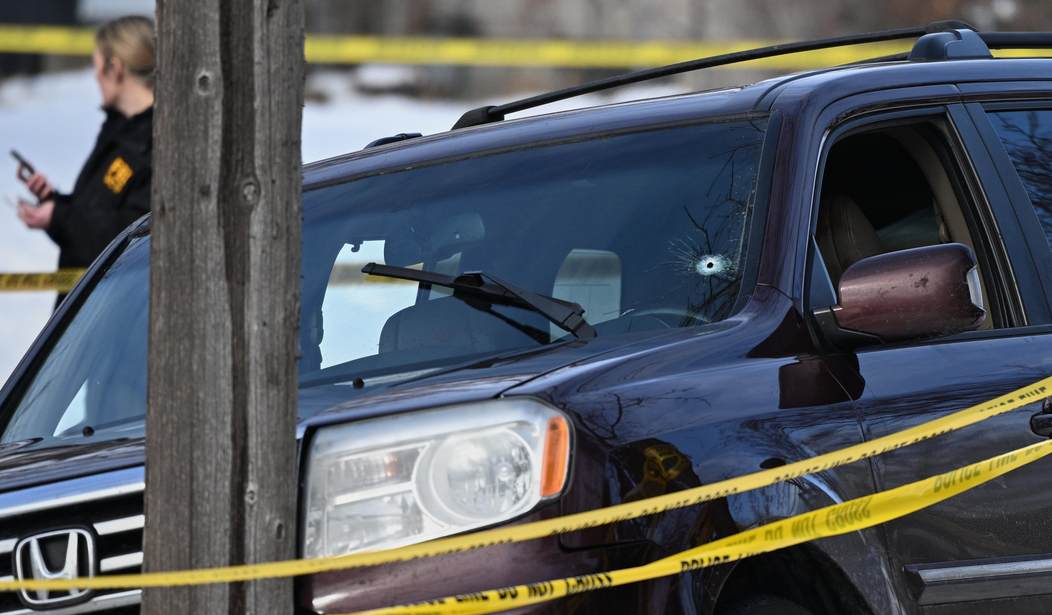
described by Justia, the chase culminated in a spin-out in a parking lot, where Rickard “continued to accelerate, even though his bumper was flush against a patrol car.” This prompted officers to fire three shots into his car, at which point Rickard “managed to drive away, almost hitting an officer.” Police fired an additional 12 shots into the vehicle in response. Rickard and his passenger died “from a combination of gunshot wounds and injuries suffered when the car crashed.”
Rickard’s daughter filed a lawsuit following the incident, claiming law enforcement employed “excessive force” that violated the
Fourth and
14th Amendments. According to Justia, the district court overseeing the case “denied the officers’ motion for summary judgment based on qualified immunity, holding that their conduct violated the Fourth Amendment and was contrary to clearly established law.” The 6th Circuit Court of Appeals later affirmed this decision.
The Supreme Court subsequently reversed the lower courts in a 2014
unanimous ruling authored by Associate Justice Samuel Alito. Writing for the high court, the Bush appointee noted that the police’s conduct “did not violate the Fourth Amendment” and that the officers “acted reasonably in using deadly force.”
“Rickard’s outrageously reckless driving posed a grave public safety risk,” Alito wrote. “Thus, the record conclusively disproves respondent’s claim that the chase in the present case was already over when petitioners began shooting. Under the circumstances at the moment when the shots were fired, all that a reasonable police officer could have concluded was that Rickard was intent on resuming his flight and that, if he was allowed to do so, he would once again pose a deadly threat for others on the road. Rickard’s conduct even after the shots were fired — as noted, he managed to drive away despite the efforts of the police to block his path — underscores the point.”
The Supreme Court further rejected claims from respondents that, as summarized by Alito, “even if the use of deadly force was permissible, petitioners acted unreasonably in firing a total of 15 shots.” Writing on behalf of his colleagues, Alito unequivocally stated, “It stands to reason that, if police officers are justified in firing at a suspect in order to end a severe threat to public safety, the officers need not stop shooting until the threat has ended.”
“Under the circumstances present in this case, we hold that the Fourth Amendment did not prohibit petitioners from using the deadly force that they employed to terminate the dangerous car chase that Rickard precipitated. In the alternative, we note that petitioners are entitled to qualified immunity for the conduct at issue because they violated no clearly established law,” Alito concluded.
The Law is on ICE’s Side
It’s hard not to see the parallels between Rickard’s case and the one that unfolded in Minneapolis.
Much like it was reasonable to conclude Rickard’s conduct — including “almost hitting an officer” with his car — warranted police’s use of lethal force, it’s similarly reasonable to conclude that the ICE agent in Minneapolis viewed the woman accelerating her car toward him as a legitimate threat to his and the public’s safety. As such, he acted accordingly to neutralize the perceived threat.
And yet, the same Democrats who feigned support for law enforcement during their recent Jan. 6
candlelight performance will pretend none of this matters.
They will continue to lie about the circumstances of the Minneapolis shooting because the goal of keeping the millions of illegal aliens shoveled into America by the Biden administration is simply too important. And if accomplishing that effort requires
inciting violence against ICE and other law enforcement officers, then so be it.



 www.facebook.com