2007: GDP = 1.9%, Unemployment = 6%, Inflation = 4.1%
Sep 18
4.75%
Home sales fell.
Oct 31
4.5%
Dec 11
4.25%
LIBOR rose. Stock market peaked. Recession began.
2008: GDP = -0.1%, Unemployment = 6%, Inflation = 0.1%
Jan 22
3.5%
Jan 30
3.0%
Tax rebate.
Mar 18
2.25%
Bear Stearns bailout.
Apr 30
2.0%
Lehman fails. Bank bailout approved. AIG bailout.
Oct 8
1.5%
^
Oct 29
1.0%
^
Dec 16
0.25%
Effectively zero. Lowest fed fund rates possible
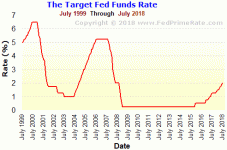
Between2008 and 2015, the Fed kept the rate at zero. Recession ended in June 2009.
Fed Chair Janet Yellen (February 2014?February 2018)
2015: GDP = 2.9%, Unemployment = 6%, Inflation = 0.7%
Dec 17
0.5%
Growth stabilized so Fed began raising rates.
2016: GDP = 1.6%, Unemployment = 4.6%, Inflation = 2.1%
Dec 15
0.75%
Fed maintained steady increase in rates.
2017: GDP = 2.2%, Unemployment = 4.1%, Inflation = 2.1%
Mar 16
1.0%
Fed was steady on its path of normalizing its benchmark rate.
Jun 15
1.25%
^
Dec 14
1.5%
^
Fed Chair Jerome Powell (Since February 2018)
2018: GDP = 2.95, Unemployment = 3.9%, Inflation = 1.9%
Mar 22
1.75%
Fed projects steady growth.
Jun 14
2.0%
^
Sep 27
2.25%
^
Dec 19
2.5%
Fed stopped raising rates in 2019.
https://www.pgpf.org/analysis/2018/...ill-raise-interest-costs-on-the-national-debt