Poll: Not Ready for Disaster

Lumi

LOKI
Forum Member
Aug 30, 2002
21,104
58
0
58
In the shadows
Poll: Not Ready for Disaster

By AMANDA RIPLEY Monday, Aug. 21, 2006

Not this shit again ! :facepalm:

Well yes, I haven't stopped. My group has increased to 12, all well trained individuals.

I started a garden a couple weeks ago.

Together we have 6 gardens going with more in the works.

Anyways....

This article written in Time Magazine is from August 21, 2006. One year after Katrina, we all know what a Charlie Foxtrot that was.

I know there will be my usual antagonists and detractors, :0008 that's ok. Just read the article, watch the news, disasters are hitting daily. Do you think some of these people wish they has a cache of goodies somewhere?

People tend to think they will be lucky. Wind, rain and fire happen to other, less-fortunate individuals. In a new TIME poll of 1,000 American adults taken on the eve of the anniversary of Hurricane Katrina, fewer than one in five (16%) said they are personally "very well" prepared for a natural disaster or public emergency. Of the rest, about half explained their lack of preparation by claiming they don't live in an area at risk for disasters. Even among Gulf Coast residents, a mind-boggling 43% said they don�t face much risk.

The truth is humbling: About 91% of Americans live in places at a moderate-to-high risk of earthquakes, volcanoes, tornadoes, wildfires, hurricanes, flooding, wind damage or terrorism, according to an estimate calculated for TIME by the Hazards and Vulnerability Research Institute at the University of South Carolina. We increasingly live in dense, coastal cities and consequently get hit by more frequent, more costly disasters.

But our curious confidence in our own safety keeps us from planning for the predictable catastrophes we know are coming. Even though about half of those polled said they have personally experienced a natural disaster or other public emergency, only a third had a plan for how their family would communicate in a catastrophe. Likewise, only a third had bothered to buy additional insurance to protect themselves or their homes from disaster or made physical changes to their homes.

Still, 30% of the people polled said that Hurricane Katrina had motivated them to make some preparations in the past year. And that�s a good thing, since more than half disapprove of the job that federal and local governments have done to help in the recovery from Katrina. Ironically, those in the Gulf Coast states ? who should be most disappointed of all ? show slightly higher approval for the job government has done at all levels and have greater confidence that the government could handle a major disaster.

Interestingly, one last finding from the poll suggests that many people now feel less than lucky when it comes to New Orleans. A little more than half (56%) said they do not think parts of New Orleans that might flood again should be rebuilt. Currently, that means almost all of New Orleans. The locals hope, needless to say, that the feds will kick in enough money to improve their odds. "Luck," as baseball executive Branch Rickey once said, "is the residue of design."


Read more: http://www.time.com/time/nation/article/0,8599,1254641,00.html#ixzz1oAfQUQiz
 

Lumi

LOKI
Forum Member
Aug 30, 2002
21,104
58
0
58
In the shadows
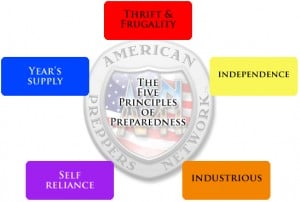
The Five Principles of Preparedness

The Five Principles of Preparedness

The following article has been generously contributed by Phil Burns of the American Preppers Network <sup>[1]</sup>. Phil and his family were recently featured on the Animal Planet show Meet the Preppers <sup>[2]</sup> and you can follow him at Phil801 on Facebook <sup>[3]</sup>.
Principles-of-Preparedness32-300x202.jpg
There are basic principles that keep us and our families grounded that are key to our happiness as a family unit while we Walk the Path of the Prepper <sup>[4]</sup>. There is safety and peace that comes from having car insurance, home insurance, medical insurance,etc. What many families frequently ignore is ?Standard of Living Insurance?. At its heart, this is whatPreparedness, Self-Reliance, Prepping <sup>[5]</sup> ? however you want to call it ? is. By Getting Started in Prepping <sup>[6]</sup>, or continuing in Prepping as the case may be, and following these five Principles of Preparedness we can provide our families with the assurance that we will be able to maintain a certain standard of living. This standard of living is dictated by the level of preparedness we are able to achieve and maintain.
For example, if a family falls into crisis and they have no preparations then once the average two weeks of supplies they have on hand has been used up, they will drop to a poverty standard of living. If that same family had a month?s worth of supplies stored up, they would have a buffer of a little more than a month before they suffered consequences of their situation. Likewise, if they had a year?s supply of essentials stored, they would effectively be giving themselves a year to be able to recover and plan in the event of a paradigm changing event.
Standard of Living Insurance, or Prepping, provides us with a hedge against calamity. There is much talk recently of ?Doomsday? events ? which are inappropriately and improperly titled. After all, Doomsday literally means the last day before the end of the earth. What point is there in preparing for that? Massive, widespread crisis, such as; an EMP, Nuclear War, Coronal Mass Ejection, Economic Collapse, and so on is a frequent topic as well. While these things are important to consider in preparing, it is a mistake to hyper-focus on them. There are many other immediate, closer and more likely scenarios that make sense to focus on such as the loss or major injury of a breadwinner, loss of a primary job, extended sickness, accidents and other personal calamities. These happen every single day and each of us likely knows someone to whom this has happened. These are the things that are most essential to develop a ?Standard of Living Insurance? against.
The most common effect of living an abundant life, as many of us do, is complacency. As we progress and develop disposable income the complacent tendency is to adjust our standard of living upwards by purchasing a bigger house, a new vehicle, a boat or other recreational toys instead of investing that money to insure the standard of living that we previously grew accustomed to. It is most prudent to instead, in times of largess, not expand your standard of living right away but to choose to ensure that if the current boon withdraws the family is not affected by it. Complacency however, leads us down the path of seeing increased income to the home as play, expendable, or rewarding money ? all of which it can be with the proper perspective. That perspective is to view this blessing as an opportunity to ?play? at increasing our stores as much as possible, to purchase as many ?expendable? goods as possible ? that can go into storage, or to ?reward? ourselves by adding a more expensive item to our storage that will significantly increase the amount of coverage our Standard of Living Insurance provides us. It also gives us the opportunity to scrutinize our funds and storage to determine if the family can splurge a little and enjoy some recreational time without it impacting the bottom line of our Standard of Living ? but adamantly without changing our cost of living.
Following the Principles of Preparedness allows heads of households to reduce stress, find peace and be comfortable in an ever-changing and tumultuous world.
Practice thrift and frugality
principles-1.jpg


Principle 1
The depression era saying of ?Use it up, Wear it out, Make it do, or Do without? sums up the practice of Thrift. Living thriftily is not a popular concept in our ?Staying up with the Jones?s? mentality, but the folly of that mentality is that if one thing goes wrong and your family slips into crisis, you will have to learn all about ?Staying above water?. Living thriftily is a very simple, effective and immediate method to increase your spending power. Imagine being, instead of a consumer; a creator, a repairer, or simply abstaining. It is phenomenally financially wasteful to eat at restaurants on a regular basis, in addition to being typically un-healthy; it also takes away from time spent together as a family creating a personal dining experience at home, together. Thrift is a practice of not wastinganything including time and money.
Frugality dictates that we live within our means and ?Waste not, want not?. It requires us to be prudent with how we spend our money and to cautiously and guardedly decide how to distribute it. Why do Americans work themselves so hard and as soon as the paycheck comes in, they throw it to the wind as quickly as they can ? leaving them with no reserves, no safety and no peace? It is because we have come to accept abundance as our standard. We foolishly assure ourselves that there will be a check next pay period ? which there normally is, until there is not. It is the high possibility that at some point something critical will happen in our lives that brings us to the conclusion that it is very likely that at some point, that check will not be there.
One massive waste that Americans have become very comfortable with is living on credit. We have become extremely complacent with our finances in this regard. Instead of doing without for a short time while we save, we finance everything and as a consequence, pay financing fees and interest that we somehow justify as necessary. It is not necessary that we ever pay financing fees or interest for anything, even a house, if we are willing to be prudent. Instant gratification is the bane of thrift and frugality. We Americans have deceived ourselves into believing that we ?deserve? to live a better lifestyle than our parents (which took them a lifetime to achieve) ? when in reality ? we DESERVE to be secure and at peace in our lifestyle. It is ironic that as a society, we will dicker over $3,000 on a new vehicle and then finance it for 5 years ? wherein we condemn ourselves to paying several times that in financing fees and interest.
What good have we done ourselves by shaving $3,000 of off $30,000 when we just finance it? If you?re willing to pay astronomical fees for the pleasure of immediate gratification, amortizing $3,000 does NOTHING to our monthly bill. A frugal person would take 3 years and save monthly as much as they would have paid out on their car payment with a little bonus savings here and there over time. In that short period of time they would accumulate enough cash that they could go into the car dealership and lay down a pile of $23,000 in cash and say they want to walk out with either their money or that $30,000 car. They?re going to walk out with the car because the dealer wants the instant gratification of the cash versus selling an amortized note at a discount.
Living a thrifty and frugal lifestyle is truly simple. Use it up. Wear it out. Make it do. Do without. Waste not. These things lead us to not being left wanting when a crisis strikes our family. These two highly empowering tools not only give us the ability to build up our Standard of Living Insurance, they also bring an assured peace and allow us to live a truly abundant lifestyle where we are in control of our money instead being a slave to lenders.
A Prepper who successfully follows this principle for a few years will find themselves in a position where they are able to spend time not working without it affecting the family in an adverse manner.
Seek to be Independent <sup>[7]</sup>

Principle Two
Debt can be crippling and crushing to a family, making them unable to move forward due to the demands of making payments on things they potentially don?t even own anymore. Seek to become Independent from debt! Learn to abhor the idea of being forced to labor and earn money that is not yours as a consequence of choosing to ?live a little better? by going into debt. Living independently means being free to choose what is pertinent for you and your family to do with your money.
As you avoid going into debt and gain greater control of your money, establish savings that will grow and serve you as you become the master of your money. Learn to budget and responsibly manage your money as it is a very powerful tool to either enslave or empower you. You can begin to build wealth while you?re getting out of debt by putting together a wise plan like the ones Dave Ramsey teaches in his Financial Peace University <sup>[8]</sup>.
Independence doesn?t just mean money though. Seek to be Independent of the influences of the world such as; caffeine, alcohol, drugs, tobacco, un-healthy yet addictive food, medications (where possible) and so on. All of these things not only make you a personal slave to addictions, it also indentures your wallet to spending wasteful amounts of money to satiate your personal weaknesses. Strive to become Independent of all these things and you will not only find a healthier you, you will also increase your income as you free a daily outgo to servicing your demons.
Live Independent of the entrapping influences of society as much as possible. Free your mind of thinking you need a better looking car, a prettier house or better clothes. Do what works for YOU, not what you think others will think highly of. Live independent of the fear of judgment of others and become secure in your own person. There seems to be a farcical belief in our society that we should appear as wealthy as possible. The idiocy of this belief is that it fails to take into account just how damaging it is to our self-esteem, our lives and our livelihood. Break free of these childish societal ?norms? and live a life independent of the influence of advertisers, marketers and peer pressure!
Prepper families who learn to live independently will find themselves prospering greatly ? in ways that may not be apparent to the enslaved masses of society.
Become Industrious
principles-3.jpg


Principle Three
Learn, Explore, Do. Manage your circumstance to your advantage, be enterprising and fully explore opportunities that come your way. Seek always to discover ways to create benefit to you and your family. When opportunity presents itself, work hard at redefining and reshaping yourself, your position and your knowledge to be worthy of the success that opportunity can provide. Be resourceful, always looking for a new way to create what you need in order to succeed.
Common ways to be industrious include furthering your education ? your whole life ? and constantly working to develop new skills. By exploring opportunities, we are able to assess their potential, weigh risk and make a decision as to whether our conclusions merit committing to an opportunity or walking away from it. By improving ourselves constantly, we open up even more opportunity that can potentially bring success.
Idly standing by and waiting for success to land in your lap is a poor strategy. Being industrious means getting up and attempting something ? even if it has the potential to fail. The Farmer who fails to put in a crop because he doesn?t think there was enough snowfall during the winter loses out when spring rains finally bring plenty of water. When you commit to something, work hard at it; throw in everything you?ve got. Getting up and going is truly the only way to end up somewhere else.
Preppers who industriously seek out opportunity will soon find the one that will create a change in the direction their lives have been heading.
Strive Towards Self-Reliance
principles-4.jpg


Principle Four
The Principle of Self-Reliance is predicated by and builds upon the first three principles. They are unavoidably intertwined and interdependent. Self-Reliance is, in its simplest form, being able to create or provide all needed things as the result of labor using a developed skill or talent and being able to provide resources as a result of a judicious practice of storing needful things. Therefore, becoming Self-Reliant is the actual process of developing skills and talents while putting away resources.
When combined with Thrift and Frugality, Self-Reliance is providing needed things for yourself that you would otherwise have had to pay money for such as; growing a garden, sewing or repairing clothes, building furniture, building a home, fixing your vehicle and so on. It is being willing to enjoy the fruits of your labor versus the blandness of buying something commercially produced. It is accepting things for their functionality, not for the logo that was stamped on them in a plant somewhere. It is being willing to use something that may be less than perfect in its manufacture but is pure in intent and purpose, knowing that the next one you create you will be able to work out flaws and produce something better.
Self-Reliance, when combined with Independence, drives us to be truly reliant on ourselves in all areas. It teaches us to discover a vocation where we are able to create an expandable income using our talents and labor instead of falling into a career where our income is constricted by salaries and our progress in hindered by being boxed into a job description. A truly independent person creates income opportunities for themselves and others while staying free and clear of debt and interest. A Self-Reliant person builds their own storage and is not dependent on a grocery store to be stocked and operational for them to feed themselves and their family.
Your Industriousness should be more than simply financially motivated. Self-Reliance is the act of being free of needing others, including companies, the government, or your community to provide for or support you. It is learning how to; make soap, grow your own food, provide your own energy, defend yourself, create the things you need and so on. It requires research, learning, experimenting, failing, experimenting more and finally succeeding ? in gaining a new skill, accomplishing something new or developing a new vocation. An industrious and Self-Reliant person is truly a creator and experiences the joy of creation on a daily basis.
A Prepper who begins to become Self-Reliant experiences a mental shift and begins to see things such as a grocery store as a warehouse that is utilized to stock up their own storage.
Aspire to have a year?s supply of every needful thing
principles-5.jpg


Principle Five
The natural outgrowth of becoming truly Self-Reliant is to feel compelled to store things up that are essential for our family?s ensured safety, comfort and existence. Every needful thing teaches us to consider the possibility of storing up a supply of every item that we purchase which we truly need. What is a need? Simply put, it is something that it would be difficult or impacting to have to live without. This includes; food, clothing, water, heat, power, home medical supplies, fire starters, light and so on.
It is obviously not prudent to just purchase a year?s supply of every needful thing. Instead, it is a goal that is pursued relentlessly by the Self Reliant Person and is adjusted for each item of consideration. For example, it is quite inexpensive and easy to acquire a year?s supply of ketchup ? at most a family will probably use 2 bottles a month. Therefore, purchasing 24 bottles would give you a year?s supply. However, a year supply of something like water, which is consumed every day, requires a very different approach. It is not feasible to store a year supply of water unless you have your own water tower. There are other options available though which include such things as; drilling a well, installing a rain catchment system, being situated near a body of water. Several of these options would require filtering the water that you acquire. For the money spent on a filtering system, such as a Berkey filter, it becomes prudent to purchase filtering capability for the system that will last several years. Each item is adjusted in quantity and time by its own consideration.
One year is not a magic number. It is, however, a measure which provides us with a lengthy buffer to recover from whatever has happened. It also allows us to be charitable towards others who have fallen on hard times without it creating a severe impact on us. Imagine an unprepared neighbor or friend having their bread winner incapacitated for a period of time and not being able to provide for themselves. You are not impacted by their crisis and because you have a year?s supply stored up, you have the opportunity to assist them by opening your storage to them and allowing them to take what they need without it causing you an economic impact and with very little added risk to yourself.
Begin by striving to build up a 3 month supply, then double it and double it again. Once you?ve accomplished the first three months, you will have an idea of the amount of time and money it will take to acquire a year?s supply.
The Prepper who is striving to build a year?s supply of every needful thing will experience a dramatic reduction in stress and inverse increase in peace as they begin meeting goals on the path to achieving this principle.
The impact of living The Principles of Preparedness

When teaching these Principles, the question is inevitably asked ?What if nothing ever happens that I need my supplies for?? To which I respond, ?That would be wonderful!? Most people don?t get it right away, but let?s consider it.
Consider if you adjusted your life and lived for years under these principles. What impact would there be if nothing happened that required you to survive off your stores? Might it be possible that in following these principles you will have created a new life for yourself that is infinitely better than it would be otherwise? Would you possibly have spent that time living in peace, without stress and with a much higher level of confidence, satisfaction and self -esteem? I can testify to you that this is indeed what will happen! In fact, the mere application of these principles in your life will allow you to weather small crises without them even registering a bump in the continuity of your life. When you are living a Self-Reliance lifestyle with a full year?s supply, not having an income for a month is inconsequential. If you fully commit to living these principles, do you see how this would be the outcome? Would that serve you to be able to live that way?
Consider also that as you develop a year supply of every needful thing, you are to live off of that supply. You don?t just package things up and leave them in a corner to gather dust. You consume your supply each month and at the end of four weeks, go to the ?warehouse? (aka grocery store, etc.) and replenish your supply with six weeks worth of what was consumed. This allows you to continuously grow your storage with little to no visible impact to you. And, if times are tough financially, you can extend to 8 or 12 weeks without it stressing your family.
As you become these Principles, you will experience breaking free of the slavery of debt, a ?career?, of ?keeping up with the Jones?s? and most importantly, the stress of trying to live month to month. What you will find instead is that you are able to fully experience life and truly enjoy the blessings of your family.
All the while knowing that the secret to a happy life is wrapped up in a little concept called being a ?Prepper?!
- Inspired by a talk by James E. Faust

 

Lumi

LOKI
Forum Member
Aug 30, 2002
21,104
58
0
58
In the shadows
The Nation?s Supply and Delivery of Fresh Drinking Water is in Peril: Water Bills to

The Nation?s Supply and Delivery of Fresh Drinking Water is in Peril: Water Bills to

The Nation?s Supply and Delivery of Fresh Drinking Water is in Peril: Water Bills to Triple Across USA

J. D. Heyes
NaturalNews.com
March 5th, 2012

With wages stagnant or declining, gasoline and electricity prices on the rise and food prices steadily increasing, the last thing American families need is another increase in a basic necessity. Yet, a new report says that?s exactly what you?re going to get: Water bills that will likely double or triple over the next few years, thanks to the nation?s crumbling water system infrastructure.
A new study and report by the American Water Works Association (AWWA) entitled, Buried No Longer: Confronting America?s Water Infrastructure Challenge, improving and expanding the nation?s underground water systems will cost upwards of $1 trillion over the next 25 years. And, as is always the case, water system users are going to get soaked with the bill.
What does that mean in real dollars and cents? Right now the average family household pays about $400 a year. The fixes that are needed over the next quarter century mean that bills could rise anywhere from $300-$550 a year, meaning water bills could skyrocket to $900 a year or more.
Crumbling infrastructure
Experts will tell you that investing now, rather than later, is a good idea and cheaper in the long run. But that?s hard to swallow for wage earners whose incomes have been stuck in neutral or worse, declining for the past decade. Add to that a raft of new tax hikes and cuts in benefits, and hard-hit Americans are in no mood to fork out even more money in new fees and rate increases.
But that doesn?t change the fact that, without improvements, the nation?s supply and delivery of fresh drinking water is in peril. In fact, the AWWA believes spending to fix the pipes and other infrastructure is likely to rise from $13 billion a year today to $30 billion in 2040.
?Delaying the investment can result in degrading water service, increasing water service disruptions, and increasing expenditures for emergency repairs. Ultimately we will have to face the need to ?catch up? with past deferred investments, and the more we delay the harder the job will be when the day of reckoning comes,? said the report.
Not all of the expense of this upgrade will come from higher water bills, though much of it will. Some communities, the report said, will be double-tapped, so to speak.
?Other communities will need to collect significant ?impact? or development fees to meet the needs of a growing population. Numerous communities will need to invest for replacement and raise funds to accommodate growth at the same time. Investments that may be required to meet new standards for drinking water quality will add even more to the bill,? it said.
Higher prices for everything
Is this information new? Why, all of a sudden, is water infrastructure such a big concern? Well, nothing about this is new. In fact, the AWWA warned about the nation?s crumbling water infrastructure, and the need to replace, in a report 10 years ago.
?Like many of the roads, bridges, and other public assets on which the country relies, most of our buried drinking water infrastructure was built 50 or more years ago, in the post-World War II era of rapid demographic change and economic growth. In some older urban areas, many water mains have been in the ground for a century or longer,? the report said.
?Given its age, it comes as no surprise that a large proportion of US water infrastructure is approaching, or has already reached, the end of its useful life.?
As unemployment remains stubbornly high at about 9 percent, as gasoline prices rise to nearly $3.75 a gallon on average nationwide, and as wages continue to remain stagnant or decline, you and your family are about to take on another cost increase: higher water bills.
Sources for this article include:
http://www.awwa.org
http://washingtonexaminer.com
http://money.cnn.com/2011/02/16/news/economy/middle_class/index.htm
http://abcnews.go.com
http://www.washingtonpost.com
 

Lumi

LOKI
Forum Member
Aug 30, 2002
21,104
58
0
58
In the shadows
Report: Chance of a Catastrophic Solar Storm Is 1 in 8; Would Take Down Power Grid, F

Report: Chance of a Catastrophic Solar Storm Is 1 in 8; Would Take Down Power Grid, F

Report: Chance of a Catastrophic Solar Storm Is 1 in 8; Would Take Down Power Grid, Food Transportation, Water Utilities, Financial Systems

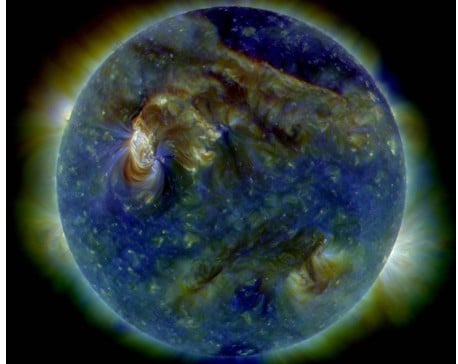
flare2-e1331063838321.jpg


According to a recent study published by Space Weather: The International Journal of Research and Applications, we have roughly a 12% chance of getting hit with a solar storm so powerful that it could take down the national power grid and yield catastrophic consequences for the general population. Pete Riley, a senior scientist at Predictive Science in San Diego, is the author of the study which looks at the probability of the occurrence of extreme weather events:
Via: On the probability of occurrence of extreme space weather events
Key Points
  • Probability of a Carrington event occurring over next decade is ~12%
  • Space physics datasets often display a power-law distribution
  • Power-law distribution can be exploited to predict extreme events
By virtue of their rarity, extreme space weather events, such as the Carrington event of 1859, are difficult to study, their rates of occurrence are difficult to estimate, and prediction of a specific future event is virtually impossible. Additionally, events may be extreme relative to one parameter but normal relative to others. In this study, we analyze several measures of the severity of space weather events (flare intensity, coronal mass ejection speeds)?
?
By showing that the frequency of occurrence scales as an inverse power of the severity of the event, and assuming that this relationship holds at higher magnitudes, we are able to estimate the probability that an event larger than some criteria will occur within a certain interval of time in the future. For example, the probability of another Carrington event occurring within the next decade is ∼12%.
The 1859 Carrington Event, as described by Wired Science, may have been a marvel to observers and caused some setbacks in the developing telegraph infrastructure at the time, but a similar occurrence today could be a global game changer:
At the time of the Carrington Event, telegraph stations caught on fire, their networks experienced major outages and magnetic observatories recorded disturbances in the Earth?s field that were literally off the scale.
In today?s electrically dependent modern world, a similar scale solar storm could have catastrophic consequences. Auroras damage electrical power grids and may contribute to the erosion of oil and gas pipelines. They can disrupt GPS satellites and disturb or even completely black out radio communication on Earth.
During a geomagnetic storm in 1989, for instance, Canada?s Hydro-Quebec power grid collapsed within 90 seconds, leaving millions without power for up to nine hours.
The potential collateral damage in the U.S. of a Carrington-type solar storm might be between $1 trillion and $2 trillion in the first year alone, with full recovery taking an estimated four to 10 years, according to a 2008 report from the National Research Council.
The post-storm effects of such an event are underestimated by the majority of the world?s population, including our political leadership. Like an electro magentic pulse attack, according to the National Research Council a massive enough solar storm could have long term effects that ?would likely include, for example, disruption of the transportation, communication, banking, and finance systems, and government services; the breakdown of the distribution of potable water owing to pump failure; and the loss of perishable foods and medications because of lack of refrigeration.?
The worst case scenario has been outlined by the Center for Security Policy, which suggests that an EMP, or a solar storm that results in similar magnetic discharge across the United States, could potentially leave 90% of Americans dead within the first year:
?Within a year of that attack, nine out of 10 Americans would be dead, because we can?t support a population of the present size in urban centers and the like without electricity,? said Frank Gaffney, president of the Center for Security Policy. ?And that is exactly what I believe the Iranians are working towards.?
In the documentary Urban Danger, Congressman Roscoe Bartlett warns of the threat posed by a downed power grid and urges his fellow citizens to take action to protect themselves for the inevitable results that would follow:
We could have events in the future where the power grid will go down and it?s not, in any reasonable time, coming back up. For instance, if when the power grid went down some of our large transformers were destroyed, damaged beyond use, we don?t make any of those in this country. They?re made overseas and you order one and 18 months to two years later they will deliver it. Our power grid is very vulnerable. It?s very much on edge. Our military knows that.
?
There are a number of events that could create a situation in the cities where civil unrest would be a very high probability. And, I think that those who can, and those who understand, need to take advantage of the opportunity when these winds of strife are not blowing to move their families out of the city.
Source: Congressman Warns: ?Those Who Can, Should Move Their Families Out Of the City?

<iframe width="560" height="315" src="http://www.youtube.com/embed/GGE1omIaRMI" frameborder="0" allowfullscreen></iframe>
 

Lumi

LOKI
Forum Member
Aug 30, 2002
21,104
58
0
58
In the shadows
A Poor Man's Guide to Prepping and Food Storage, by T.P.

A Poor Man's Guide to Prepping and Food Storage, by T.P.

A Poor Man's Guide to Prepping and Food Storage, by T.P.

Friday, Mar 9, 2012

I started not to write this piece- not because I feel any shame about my approach to survival and prepping, but largely because I will be misunderstood or dismissed- as I have been whenever I try to enlighten friends and co-workers of the need to have a survival plan. But I feel it may help others who are not wealthy enough to buy thousands of dollars worth of MREs or hundreds of pounds of hard red wheat and a grinder... and frankly, because I do not welcome the competition for my supply of food and supplies.

Many years ago I began prepping for Y2K. Nothing happened then, but the exercise was of undeniable importance in my life. I had been keeping a pantry for years, because being self-employed leads to a life cycle of feast or famine. At least for me.

I used the last of the dry goods and kerosene from my Y2K prep stash in early 2011.

I provide services for businesses now. My job involves a lot of driving, and a lot of contact with grocery stores. I discovered a long time ago that grocery stores, drug stores, and discount stores throw away tons of usable and consumable food and other necessities. Gleaning these supplies takes some work and the willingness to deal with a little mess, but for me it has been well worth it. I bet I haven't spent a hundred bucks for grocery items in over two years- mostly for cooking oil and spices.

Just this last week I have put up 13 pints of homemade Rotel, 20 pounds of peaches, 100 or so pounds of stew meat, and quantities of canned salsa, tomatoes, etc, etcetera, all free.

As a side note: saving money on food, light bulbs, shampoo, etc., has allowed me to spend a lot more on firearms, ammo, and other important items. I now have three freezers and three refrigerators full of food- not to mention the flour, sugar, and other dry goods I have stored, all free. In the process of doing so, I have provided a lot of food to several needy families who understand what I do, and are grateful for the assistance.

As another side note, this will be the first year I have grown a garden in my new home, due to all the time I have spent on another project that took months to complete- but all I grow this year will be canned and/or shared with others. I have been saving heirloom seeds for years, and have now gathered enough old tires to grow vegetables here- the soil is shallow and requires me to do raised bed gardening.

I keep chickens for the eggs, although I get enough free eggs that I give away tons of them through the year. Cartons of eggs with one broken are thrown out every week. I wash the eggs, repack the whole ones in the cartons, and put the cracked ones in plastic tubs for immediate use as omelets or scrambled eggs or to use in batters or breads.

So, the rest of this piece will essentially be a guide to dumpster diving, and a guide to harvesting the fantastic wealth of consumables that are available to those who will seek out these sources. Understand this- if I made enough money to buy AR-15s, MREs, and Mountain House entrees- I probably would. I don't. But that doesn't mean that I can't be prepared for disasters or lean times. I just had to find a way to make use of what is available to me- a willingness to do what I can to survive, and the knowledge that free food is out there for those willing to glean it. And isn't that what survival prepping is all about? Learning to make the best use of skills and resources, learning new skills, and possibly making do with what you have when the time comes? It may not be the ideal way, but it works for me and mine, and it is what I can do. Also, there is a certain satisfaction in enjoying a fine, nourishing meal of the best kind--free.

On to the specifics.

I get tons of produce. It is generally just fine, but may have a few blemishes, like the produce you would get from an organic garden. I determined long ago that I like fruits and veggies on the very ripe side, as it tastes best. One good example- bananas with spots are much tastier than ones that aren't much past green- but produce that needs to be used immediately isn't saleable in a grocery store!

Another thing: veggies that are sold in prepackaged sacks, like potatoes and onions, apples and oranges, are thrown out if just one of them gets mashed or is less than perfect. All of the others in the bag are still perfectly good. Potatoes, onions, turnips, etc, that sprout are also thrown out. I get my seed potatoes and onions this way. Every time a shipment of greens- turnip, mustard, collards- arrives, the last shipment is thrown out. Greens are a vital source of vitamins and minerals in your diet! I use one of my water bath canners about twice a week to process greens for freezing.

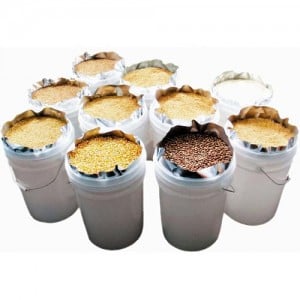
Last year I got almost a hundred pounds of free flour that had been damaged by a fork lift. I froze the flour for two weeks to kill any weevils, then packed it in five gallon buckets for storage.

Now about meat. This will take some extra time to discuss.

Every week I get a lot of meat that is thrown out because it is near or past its sale date. Some of it is not consumable, and this I feed to the dogs. Their guts are designed by God for the purpose of consuming scavenger fodder. The vast majority of the hamburger I get is slightly brown, but perfectly useable. I freeze it, and when I get enough, can it as chili (no beans) or plain burger. The meats that require careful consideration are chicken and pork. Any that is questionable is fed to the dogs- they love it. Meats that are heavily preserved, like sausage and wieners, are usually good. Just recently, I got 90 pounds of hot fogs! I put up many quarts of pickled wieners, and made a Boston Baked Bean sauce and canned the rest with that. Add that to some cooked dry beans, and you have beanie-weanie.

Now I want to deal with the greatest source of protein that I have found. Every butcher shop throws out lots of what I call "tailings" every week. This is fresh beef and pork, and consists of cuts that are not perfect, and so cannot be sold, and the leftovers after cutting that aren't complete enough to package and sell. This free meat is fresh and good, but does require some effort and a sharp knife to harvest. I have to trim away fat, gristle and bone to get all of it- but I get a lot of perfectly good "soup" meat this way- cut up like "stew beef". Any hunter who has processed his own deer will know what I'm talking about. You can get the back strap, loins, and roasts easily enough, but you have to work for the remaining meat- although beef and pork doesn't have all the "striffin" that venison does.

Unfortunately, this free meat is not best harvested all year 'round- unless you happen to be there when it is discarded. In the summer months, the likelihood of rapid spoilage becomes a factor.

Incidentally, all the venison I have harvested for the last few years has also been "free"- road kill that I have picked up. It helps to be able to tell how long an animal has been dead, and there are actually books on the subject to help the novice determine just that. [JWR Adds: But note that collecting road kill is illegal in many states.]

The last area to address is that of nonfood consumables, like shampoo and light bulbs. Like bagged produce, when a package of bulbs has been dropped and one is broken, then all are usually discarded. Drug stores and the like frequently throw out large quantities of shampoos and conditioners. I have years worth of these items stashed away- free for the taking.

Now for some details on the practicality of dumpster diving. Some stores will absolutely prosecute you for doing so. Wal-Mart is one of them. As for most of the grocery stores I hit- at one time or another I have been "caught" in the act of harvesting their refuse. I just speak to the employee in very friendly terms about how this harvesting saves me so much money on the feed bill for my "hogs" and usually they are very receptive about my future harvesting of their refuse. The "hogs" I'm referring to are, of course, of the two-legged variety. I never mention that, and it bothers my conscience not one iota to withhold that detail. My feeling is that they need know no more than that about my life and circumstances. Having to explain why you're in a dumpster can be a bit awkward, for lack of a better word. But no more so than being caught swiping a bit of the icing off the cake before the guests arrive... In the times to come, I may be faced with situations that force decisions of even greater gravity, and if so I will feel blessed if all it costs me is an awkward moment. I'm sure everyone is eventually faced with a choice they would rather not make, but must to ensure their family's well being. If I let a little thing like feeling embarrassed stop me from procuring supplies, I won't be very adequate in my attempts to stop the coming tyranny from destroying my family and should join those who are relying on God alone to save them from starvation and/or persecution. Yes, I rely on Him. But I still have to do my part. Just my opinion. Your mileage may vary.

Well, there you have it. This is how I have managed to save up a couple of years of survival goods for me and mine.

I hope it provides at least one family with the insight on a way to be prepared for the worst without having a lot of disposable income.
 

Lumi

LOKI
Forum Member
Aug 30, 2002
21,104
58
0
58
In the shadows
Prepping for the Financially Challenged: A One Month Survival Plan For Under $300

Prepping for the Financially Challenged: A One Month Survival Plan For Under $300

Prepping for the Financially Challenged: A One Month Survival Plan For Under $300

Tom Chatham
<!-- Date --> March 12th, 2012
<!-- Web Site condition -->The American Dream Lost

The following article has been generously contributed by Tom Chatham, author of the newly released book The American Dream Lost ? Economic Survival Strategy for a New Paradigm <sup>[1]</sup>.

Many people are now waking up to the possibility that the future may not provide the great recovery we all expect it to be. They are begining to sense that something is wrong with the economy and it will not get better. Their first thought is the question, What do I do to protect myself and my family? They usually answer that question with the thought, maybe these preppers aren?t so crazy after all. How do you prep with very little money?

Many start answering this question with buy this and buy that but that is not the first step to prepping. Every situation is different so your preps need to reflect your situation. The first thing you need to do is get a legal pad or a note book to write in and answer these basic questions.
  • Do you own or rent?
  • Do you live in an apartment or a home with a yard?
  • Is your home paid for or could you lose it if your income were cut off?
  • Do you have some place else to go if things get too bad or you lose your home?
  • Can you plant a garden or fruit trees in your yard?
  • Can you own livestock or even a few chickens?
  • How much can you afford per month to buy supplies?
These questions are just a start but they will determine what you will need to get by in a difficult situation.
An apartment dweller will have no need to get seeds and garden tools immediately while it might make perfect sense to someone in the country with a few acres of their own land. If you live in the suburbs and have a small yard you might be able to plant some fruit trees but what happens if you lose your home to foreclosure? Would the money for those trees have been spent better somewhere else? You need to decide what your emergency will involve and what your basic needs will be because of it.
Lets look at an apartment dweller for a minute. They depend on water from the city, food from the grocery store, power for heat, light and cooking and sanitation, all of which has to be brought into the city or pumped out of the city on a continuous basis. If all of these systems shut down for any length of time you are now stranded in a cave on a cliff with a long staircase to traverse each way. Assuming that everyone is in the same situation as you and you are not evicted from your home, what supplies will you need to shelter in place and how long will they last?
Being in an apartment you are limited to the types of supplies you may be able to store. For instance it would be a waste of money to invest in a generator if you know you can?t store a 30 day supply of gas. The two primary supplies you need no matter where you are involve water and food. In a system wide failure water would be the first thing you would run out of. You can only live about three days without water so it is a critical storage item. The only problem with water is that it?s heavy and takes up a lot of room if you want a several month supply. For someone in an apartment this is out of the question so how do you get around this? The solution has to be to store a small supply and have a plan to resupply what you need. The cheapest way to go is to get a supply of five gallon plastic food grade buckets to store water in. As a secondary storage device get a few thirty gallon trash cans and some food grade liners for them. These can be filled just prior to an emergency if you have any warning. Another secondary storage medium would be your bath tub. This can hold fifty gallons or more to last you quite a while. In addition to storage containers you need to get a good water filter. A gravity fed system is good but a portable reverse osmosis system is better. You may need to forage for water during a long emergency and you don?t want to contaminate your clean buckets with unfiltered water that you will have to carry home. Also you will need to filter water in your tub or other container that may not be completely clean. The reason to have some five gallon buckets is that you may need to carry water up to your apartment and more than five gallons is more than most people would be able to handle at one time.
The next thing you need to have on hand is a supply of food. The cheapest things to start off with that will keep you fed are the following items. You might want to get 3lbs of rice, 3lbs of dried beans, 5lbs of cornmeal, 42oz of oatmeal, 2lbs of powdered milk, 26oz of mash potato flakes, 30 packages of ramen noodles and 12 cans of vegetables. All of these things will cost you about $35.00 and provide one person with three meals a day for 30 days. This list is meant to prevent desperation on your part for the least amount of money not necessarily a perfectly balanced menu. A good multivitamin can fill in any shortfalls of this menu. This short list provides you with a reasonable amount of food for a very small investment and all of it will fit in two five gallon containers to allow for easy transport if you decide to relocate with it.
Another item you might want to get depending on your location is a good quality cold weather sleeping bag. This is a must if you are living in a cold climate without a dependable heat source. You can survive in a very cold place for a very long time if you have the means to stay warm and get a good nights sleep.
The next item you should have is a propane stove, at least a single burner unit, and at least a one pound canister of propane for each week for the duration you plan for. This will allow you the means to heat water and cook food and also provide heat on a limited basis. To make your fuel go as far as possible you also want to have a small pressure cooker so you can cook things like beans and rice quickly.
For light you can have a 100 hour liquid paraffin candle that will provide you with 3 hours of light every night for a month. You want to have a large box of strike anywhere matches and a disposable lighter to light your stove and candle. A hand crank LED light with a radio and cell phone charging port would be a good addition to this kit.
The final thing you would need is a sanitation system. With the power off, you might be able to flush your toilet with your water stores but the pumps that carry the sewage away will not be working so the sewer lines will eventually back up. To avoid this you need to have a portable toilet with disposable linings that you can utilize until the power returns or you relocate. A simple totable toilet and a few liners can be had for under thirty dollars. You can also get disposable liners that fit your regular toilet bowl that you can use.
Depending on how much you spend on your sleeping bag and pressure cooker, you can get everything listed here for around three hundred dollars. For that price you would be able to shelter in place for a month. If you increase the amount of food, propane and candles you get, you could shelter in place for months.
Security is not covered here because it is something that could fill an article of its own. These are the basic things you should have for an apartment if you plan to stay in place for any length of time. These limited supplies can be the difference between remaining safe and healthy and becoming desperate. The small quantity of supplies listed here would be easy to relocate with even if you had to travel on foot. In the next article we?ll talk about expanded preps for apartments and things for single family homes.
Tom Chatham is the author of the newly released book The American Dream Lost ? Economic Survival Strategy for a New Paradigm <sup>[1]</sup>.
 

Lumi

LOKI
Forum Member
Aug 30, 2002
21,104
58
0
58
In the shadows
Gardening ? The Ultimate Food Storage Backup

Gardening ? The Ultimate Food Storage Backup

Gardening ? The Ultimate Food Storage Backup

Riverwalker
Stealth Survival
March 6th, 2012

The importance of gardening is sometimes overlooked when considering a long term food storage plan. The ability to grow your own food will ultimately make your ability to provide a true long term food source for your family a reality.
Gardening does require a lot of more effort on your part and presents challenges that will test your skills in self reliance. The rewards for your efforts are well worth the time and effort it requires. Nothing tastes quite like fresh vegetables from the garden.
While it may seem easier to stack cans of food on a shelf, you will eventually need to acquire gardening skills to be fully self reliant. When the stores in your pantry start to diminish, you will have the knowledge and ability to restore your pantry without a trip to the grocery store.
There are some limitations on gardening depending upon where you live. The different types of soil and weather conditions will play a large part in which direction your gardening efforts should take. You will need to learn what will grow and when according to the conditions in your area. You can then focus your efforts to take advantage of these conditions for your maximum benefit.
One of the easiest ways to get started with gardening is by learning from your friends, neighbors and relatives. Most will readily share their experiences. You will be able to learn quickly what plants are successful and which ones will most likely be doomed to failure before you even start. You can also learn the best times of the year to plant and what can be done to improve or maintain your soil to get the maximum production from your garden. There is no need to re-invent the wheel when it comes to gardening.
Another advantage that comes from developing your garden skills is the barter factor. Fresh garden produce is one of the easiest items to barter. If you get to the point where you start to experience real success in your gardening, the extra foods items that can be traded for other items you may need. You can trade food for just about anything from anybody. If they?re a little hungry at the time, it?s even easier.
Gardening will also allow you the opportunity to ?customize? your food storage to fit your family?s needs. You can concentrate your efforts on food items that grow easily in your area that your family enjoys eating and that are easy to preserve for future use.
 
Bet on MyBookie
Top