Short Term Emergency Check List

Lumi

LOKI
Forum Member
Aug 30, 2002
21,104
58
0
58
In the shadows
Short Term Emergency Check List

supply-list-300x199.jpg


ESSENTIALS:

Flashlight

Battery-operated radio

2-way radio or other form of communication

Extra Batteries

First Aid Kit (one for your home and one for each car)

Note: As a precaution, do not include candles. Candles cause more fires after a disaster.

WATER:
3 gallons of water per person, minimum, in a food-grade, plastic container.

Water purification tablets

Additional water for sanitation

FOOD:
Minimum 5-day supply of non-perishable food that requires no refrigeration or preparation and little or no water.

Dry cereal

Peanut butter

Canned fruits

Canned vegetables

Canned juice

Ready-to-eat canned meats

Ready-to-eat soups (not concentrated)

Quick energy snacks

SANITATION:


Disinfectant

Household chlorine bleach

Soap, liquid detergent

Toilet paper, towelettes, paper towels

Personal hygiene items

Cloth towels (at least 3)

Feminine supplies

Plastic bucket with tight lid

Plastic garbage bags, ties (for personal sanitation use)

CLOTHING:
Plastic garbage bags, ties

Sunglasses

Rain gear

Sturdy shoes or work boots

Blankets or sleeping bags

Complete change of clothing and footwear per person

TOOLS & SUPPLIES:
Whistle

Aluminum foil

Crowbar

Compass

Paper, pencil

Plastic sheeting

Medicine dropper

Needles, thread

Signal flare

Matches in a waterproof container

Assorted nails, wood screws

Pliers, screwdriver, hammer

Plastic storage containers

Heavy cotton or hemp rope

Cash, traveler?s checks, change

Map of the area

Non-electric can opener, utility knife

Cell phone with charger

Mess kits, or paper cups, plates and plastic utensils

Tape, duct tape and plumber?s tape or strap iron

Patch kit and can of seal-in-air for tires

Shut off wrench, to turn off household gas and water

FOR BABY:


Formula

Diapers

Bottles

Medication

Powdered milk

Baby food

PETS:


Food, water

Non-tippable food and water containers

Leash, harness, carrier

Records of vaccinations

Pet medications

IMPORTANT DOCUMENTS:
Important telephone numbers

Record of bank account numbers

Family records (birth, marriage, death certificates)

Inventory of household valuables

Copy of will, insurance policies, contracts, deeds, stock and bonds

Records of credit card account numbers and companies

Copy of passport, social security cards and immunization records

FAMILY MEDICAL NEEDS:
Insulin

Prescription drugs in original containers

Heart and high blood pressure needs

Denture needs

Extra eye glasses

Contact lenses and supplies

ADDITIONAL ITEMS:


Family photos

Jewelry

Irreplaceable personal items
 

Lumi

LOKI
Forum Member
Aug 30, 2002
21,104
58
0
58
In the shadows
5 Ways To Keep Your Vehicle Evacuation Ready

5 Ways To Keep Your Vehicle Evacuation Ready

5 Ways To Keep Your Vehicle Evacuation Ready

Anyone who had the displeasure of evacuating knows of the frustration and heightened stress levels you experience. Not only do you have to ensure you have ample supplies, but you also have to deal with the mass exodus of the city.


Quite simply, it is not fun and not something you want to take lightly. The longer it takes for you to load up your car and leave, the longer it will take to get to your destination. When my family evacuated Houston for Hurricane Rita, a regular 4-hour trip to Dallas took them 13 hours! There were times when the highway was at a standstill for hours at a time. There were many drivers who had to evacuate their vehicles because they ran out of gas, which also added to the frustration of the evacuees.

The main goal when you decide to prepare for any type of emergency is to relieve any extraneous stress or frustration. When planning for an evacuation, look at your vehicle as your lifeline. Having a vehicle that is well stocked and evacuation ready is your ticket to a less chaotic and stressful encounter.

Here are 5 ways to prepare for and maintain your evacuation vehicle:

1. Have vehicle bug out supplies. Keep your basic survival needs in mind and plan to have enough supplies for 3 days. The items chosen should be light weight and functional so that, if need be, carrying the kit will not be a strain due to unnecessary items. Initially, the most important part of preparing is to have a well thought out a plan. This plan should be in place before you evacuate. In addition, if you have children, have some child friendly activities or books packed away to keep their attention diverted. There is nothing more excruciating than the question, ?Are we there yet??

2. Keep your vehicle properly maintained. That means checking and changing the oil on a regular basis, ensuring the tires are inflated, brakes are working, the headlights work, and that the vehicle has been inspected. This is pretty self explanatory. Whatever vehicle is chosen for evacuation reasons needs to be at optimum performance.

3. Keep your gas tank full. When my vehicle gets to half full, I typically fill it up. Not only does this ensure that I could get a far distance from my home, but it also saves on gas money. Not to mention, in a evacuation scenario, the lines to the gas stations are going to be filled with frustrated individuals which could lead to run ins, thus delaying your evacuation further.

4. Make sure you have extra navigational items. Items such as GPS, maps and compasses included in your vehicle evacuation supplies can ensure that you know where to go and how to get there. To take this a step further, having non-electric navigational items can also help if your electric circuits are disrupted.

5. Have multiple pre-planned evacuation locations. Road blocks, heavy congestion, and even car accidents can delay your evacuation and having a plan A, B, or C will keep your options open. Therefore, create multiple escape routes that do not require you to travel through any major cities that are largely populated ? this will cut down on traffic jams. Before you leave, listen to the radio and the news to see which highways are open and plan accordingly. In addition to pre-planned evacuation routes, find evacuation routes that you would have to take on foot. No one wants to think about evacuating on foot, but it could be your only option in some cases.
 

Lumi

LOKI
Forum Member
Aug 30, 2002
21,104
58
0
58
In the shadows
Pet First Aid Kit

Pet First Aid Kit

Pet First Aid Kit

Preparing for emergencies does not stop with securing the doors and latches. Our furry friends need some extra TLC during these times to better cope with changes taking place and the disaster itself. When unexpected emergencies arise, pets tend to have increased anxiety and can react irrationally. Animals have instincts about severe weather changes and will often isolate themselves if they are afraid. If they are left outside when these instincts kick in, they may run away to find safety. This increases the chance of pets getting lost, injured or even killed. By preparing for these changes in our pet?s behavior, we can help them feel more secure, and give them what they need to cope with the situation at hand.

What Your Pets Need Before a Disaster Threatens
Knowing how your pet will react before, during and after a storm is the first step in ensuring their safety. Take your pet inside the home before the disaster occurs. This will help them find a secure and quiet spot for them to ride out the disaster in. Also, as a contingency plan, it is always good to have your pet?s medical documentation and emergency identification cards on hand, or included along with your emergency documents. Additionally, having some first aid supplies set aside for your pets may help ensure their safety if they happen to become injured.

Suggestions for your pet?s first aid kit:

?Phone numbers to the pet?s veterinarian
?Latex gloves
?Gauze rolls for wrapping wounds or for muzzling an injured pet.
?Gauze sponges
?Non-stick bandages, towels or towels cut in to strips to control bleeding.
?Adhesive tape, hypoallergenic
?Elastic cling bandages
?Water-based sterile lubricant
?Eye-wash or sterile saline wash
?Topical antibiotic ointment
?Petroleum jelly
?Antiseptic towelettes
?Diphenhydramine (antihistamine) ? *Should be approved by your veterinarian
?Q-tips
?Milk of Magnesia or activated charcoal to absorb poison. *Call the pet?s vet first administering this.
?Hydrogen Peroxide to clean wounds and induce vomiting. *Call the pet?s vet before administering this.
?Thermometer to check your pet?s temperature.
?Eye dropper or large syringe without the needle to administer any medications orally.
?Materials to make a splint.
?Cold pack
?Small scissors
?Safety pins
?Tweezers
?Magnifying glass
?Emergency blanket
?Muzzle
?Leash
?Penlight with batteries
Ensuring our pets are as safe as the other members of the family will help all family members cope with the stressful situation. The American Red Cross offers Pet First Aid courses that could further assist you in caring for your pets when they become injured. At the very least, those who have pets should pick up a first aid manual for pets. The American Red Cross offers a pet first aid manual that can be bought online.
 

Lumi

LOKI
Forum Member
Aug 30, 2002
21,104
58
0
58
In the shadows
Essential Emergency Preps: Thermo-lite 2.0 Bivvy Bag

Essential Emergency Preps: Thermo-lite 2.0 Bivvy Bag

Essential Emergency Preps: Thermo-lite 2.0 Bivvy Bag


146-hi2.jpg


When I take my children camping, I use my survival gear as much as I can to see what items are good and what I need to stock up. While on a camping trip this weekend, my child spilled a drink on his sleeping bag right before he went to sleep. Although the night time temperatures were going to be in the lower 50′s, he would have had a hard time sleeping. So I did what every mother would do, I gave up my sleeping bag. I was not overly concerned about hypothermia with the temperatures being what they were, but I did try to conserve as much body heat as possible by layering my clothing. I also had some light blankets that I used to try to maintain my body heat, but there were gaps in the blankets and cold air kept getting through. I finally grabbed for my thermo-lite bivvy. After sealing up the bivvy, I immediately started conserving my body heat and stayed warm all night.

This essential prep can be used as an emergency shelter, sleeping bag or can be an extra layer added to your existing sleeping bag if you are expecting a cold night. The thermo-lite bivvy reflects 80% of your body heat and the fabric used to make this product is both waterproof and windproof. It is made of vacuum-metalized polyethylene, and is surprisingly durable. It is also lightweight and is reasonably priced. To be true to my review of this product, the only complaint that I had was that it made some noise when you moved. However, my main priority at the time was to stay warm, and this bivvy sack was outstanding in that department.

146-hi1.jpg


This prep is considered ultralight at 6.9 ounces, and is a great back up that could also be added to your 72 hour kits or your vehicle-72 hour supplies. Other product reviews have complained of a build up of condensation when users tried them. I did notice I had some light moisture when I got out of the bivvy, but it was not extreme condensation that made me overly cold. If I did not have this bivvy sac on hand, I would have had a long, miserable and cold night.

As preppers, we want to have back ups for our back ups so that all of our needs are met. And having a back up for your sleeping bag is essential. I highly recommend this product and hope that you all invest in some sort of an emergency sleeping bag for your reserve supplies. Because you never know when you or a family member will need an emergency sleeping bag.
 

Lumi

LOKI
Forum Member
Aug 30, 2002
21,104
58
0
58
In the shadows
How to Make Homemade Fire Starters

How to Make Homemade Fire Starters

How to Make Homemade Fire Starters

Having the means to make a fire in a moments notice is essential in a survival situation. An external heat source can help deflect hypothermia, or even cook a hot meal when you really need it. Carrying firestarters with you while you are away from home can be a great way to add a little survival insurance to whatever situation you happen to find yourself in.
Figure-1-225x300.jpg

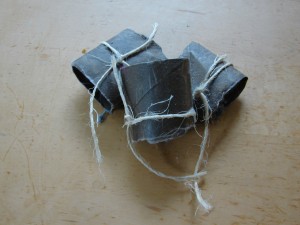
To save a few dollars, I make my own fire starters out of household items that I would normally throw away. To be thorough in my preparedness endeavors, I have put them in each of my family?s 72 hour kit, in our vehicle emergency supplies, and in our camping gear. To make the fire starters, all you really need are 4 items:
- cardboard toilet paper roll or paper towel roll
- dryer lint or cotton balls
- worn down candle stubs or crayons
- natural twine
Instructions

1. Melt the crayons or candle wax down until liquefied. This makes the fire starter windproof.
2. Stuff the dryer lint into the cardboard roll and tie with a piece of natural twine. The twine will be used as a place to light the finished fire starter.
3. Dip the stuffed cardboard roll into the wax and roll it around until it is completely covered in wax.
4. Set dipped cardboard onto a paper towel or piece of paper to dry.
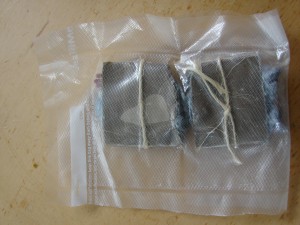
5. Once the fire starters are dry, I typically cut the cardboard rolls in half and vacuum seal them along with a few matches.
Figure-2-300x225.jpg
Figure-33-300x225.jpg

Change It Up If You Like

This recipe can be changed around to suit your needs. If you do not have cardboard rolls, use cardboard egg cartons or cut up an old cardboard box into strips to roll the dryer lint up in.
Another method is to not use the cardboard at all. Just roll the lint up into a ball formation and dip the dryer lint into the wax and allow it to dry.
If you do not have candle wax, try using melted crayons, old canning wax or use paraffin wax.
Another method of making good fire starters is by dipping cotton balls into petroleum jelly. This method is a good one, but I like to find ways to re-purpose the trash that I already have on hand.
How to Make a Good Fire with a Fire Starter

Once the firestarters are lit, they will burn effortlessly so that you can add moss, small twigs, leaves and dry kindling to help the fire grow larger. Depending on how well the fire starters are stuffed, they will typically burn for 5 minutes on their own. This should give you plenty of time to get a fire started.
 

Lumi

LOKI
Forum Member
Aug 30, 2002
21,104
58
0
58
In the shadows
Buy 3 Get the 4th FREE!

Get prepared BEFORE the next disaster.


Tornados, floods, hurricanes, earthquakes, tsunamis, manmade disasters like economic collapse, war or even unemployment are all possible and could happen to you at any time. Disasters come in many shapes and sizes but the one constant is that they happen suddenly and without warning.
For over 30 years we have been helping people just like you secure yourself and your family for the uncertainty of tomorrow. By taking advantage of our limited BUY 3 get the 4th FREE offer now, you can easily increase your food supply and get even deeper savings!
 

Duff Miver

Registered User
Forum Member
Jul 29, 2009
6,521
55
0
Right behind you
You don't need all that crap:

A quality .30 - '06 sighted in @ 200 yards and a decent pistola will get you anything and everything you need in an emergency.

And that's lots easier to pack and transport.

The man who has that will eat your Granola and smoke your weed.. :facepalm:
 

Lumi

LOKI
Forum Member
Aug 30, 2002
21,104
58
0
58
In the shadows
I was hoping that this thread would be bullshit free, but then I also was hoping I would be taller.

So duff,

This thread is a "heads up thread" not a smack talking thread. Please do it somewhere else.
 

Lumi

LOKI
Forum Member
Aug 30, 2002
21,104
58
0
58
In the shadows
<object style="height: 390px; width: 640px"><param name="movie" value="http://www.youtube.com/v/8CO5VSSgQCc?version=3"><param name="allowFullScreen" value="true"><param name="allowScriptAccess" value="always"><embed src="http://www.youtube.com/v/8CO5VSSgQCc?version=3" type="application/x-shockwave-flash" allowfullscreen="true" allowScriptAccess="always" width="640" height="390"></object>
 

THE KOD

Registered
Forum Member
Nov 16, 2001
42,564
315
83
Victory Lane
5 Ways To Keep Your Vehicle Evacuation Ready

Anyone who had the displeasure of evacuating knows of the frustration and heightened stress levels you experience. Not only do you have to ensure you have ample supplies, but you also have to deal with the mass exodus of the city.


Quite simply, it is not fun and not something you want to take lightly. The longer it takes for you to load up your car and leave, the longer it will take to get to your destination. When my family evacuated Houston for Hurricane Rita, a regular 4-hour trip to Dallas took them 13 hours! There were times when the highway was at a standstill for hours at a time. There were many drivers who had to evacuate their vehicles because they ran out of gas, which also added to the frustration of the evacuees.

The main goal when you decide to prepare for any type of emergency is to relieve any extraneous stress or frustration. When planning for an evacuation, look at your vehicle as your lifeline. Having a vehicle that is well stocked and evacuation ready is your ticket to a less chaotic and stressful encounter.

Here are 5 ways to prepare for and maintain your evacuation vehicle:

1. Have vehicle bug out supplies. Keep your basic survival needs in mind and plan to have enough supplies for 3 days. The items chosen should be light weight and functional so that, if need be, carrying the kit will not be a strain due to unnecessary items. Initially, the most important part of preparing is to have a well thought out a plan. This plan should be in place before you evacuate. In addition, if you have children, have some child friendly activities or books packed away to keep their attention diverted. There is nothing more excruciating than the question, ?Are we there yet??

2. Keep your vehicle properly maintained. That means checking and changing the oil on a regular basis, ensuring the tires are inflated, brakes are working, the headlights work, and that the vehicle has been inspected. This is pretty self explanatory. Whatever vehicle is chosen for evacuation reasons needs to be at optimum performance.

3. Keep your gas tank full. When my vehicle gets to half full, I typically fill it up. Not only does this ensure that I could get a far distance from my home, but it also saves on gas money. Not to mention, in a evacuation scenario, the lines to the gas stations are going to be filled with frustrated individuals which could lead to run ins, thus delaying your evacuation further.

4. Make sure you have extra navigational items. Items such as GPS, maps and compasses included in your vehicle evacuation supplies can ensure that you know where to go and how to get there. To take this a step further, having non-electric navigational items can also help if your electric circuits are disrupted.

5. Have multiple pre-planned evacuation locations. Road blocks, heavy congestion, and even car accidents can delay your evacuation and having a plan A, B, or C will keep your options open. Therefore, create multiple escape routes that do not require you to travel through any major cities that are largely populated ? this will cut down on traffic jams. Before you leave, listen to the radio and the news to see which highways are open and plan accordingly. In addition to pre-planned evacuation routes, find evacuation routes that you would have to take on foot. No one wants to think about evacuating on foot, but it could be your only option in some cases.

................................................................

for a real emergency evacuation

1 Buy a moped so you can slink through all that traffic.

Fawk the provisions if you are running from a nuclear fallout threat. There is no time anyway.

Fawk the wife if she cant fit on the back of the moped. Leave her ass

Fawk the kids ( as yyz would say "them brats dont deserve to go anyway )


Get yourself out alive..
 

THE KOD

Registered
Forum Member
Nov 16, 2001
42,564
315
83
Victory Lane
How to Make Homemade Fire Starters

Having the means to make a fire in a moments notice is essential in a survival situation. An external heat source can help deflect hypothermia, or even cook a hot meal when you really need it. Carrying firestarters with you while you are away from home can be a great way to add a little survival insurance to whatever situation you happen to find yourself in.
Figure-1-225x300.jpg

To save a few dollars, I make my own fire starters out of household items that I would normally throw away. To be thorough in my preparedness endeavors, I have put them in each of my family?s 72 hour kit, in our vehicle emergency supplies, and in our camping gear. To make the fire starters, all you really need are 4 items:
- cardboard toilet paper roll or paper towel roll
- dryer lint or cotton balls
- worn down candle stubs or crayons
- natural twine
Instructions

1. Melt the crayons or candle wax down until liquefied. This makes the fire starter windproof.
2. Stuff the dryer lint into the cardboard roll and tie with a piece of natural twine. The twine will be used as a place to light the finished fire starter.
3. Dip the stuffed cardboard roll into the wax and roll it around until it is completely covered in wax.
4. Set dipped cardboard onto a paper towel or piece of paper to dry.
5. Once the fire starters are dry, I typically cut the cardboard rolls in half and vacuum seal them along with a few matches.
Figure-2-300x225.jpg
Figure-33-300x225.jpg

Change It Up If You Like

This recipe can be changed around to suit your needs. If you do not have cardboard rolls, use cardboard egg cartons or cut up an old cardboard box into strips to roll the dryer lint up in.
Another method is to not use the cardboard at all. Just roll the lint up into a ball formation and dip the dryer lint into the wax and allow it to dry.
If you do not have candle wax, try using melted crayons, old canning wax or use paraffin wax.
Another method of making good fire starters is by dipping cotton balls into petroleum jelly. This method is a good one, but I like to find ways to re-purpose the trash that I already have on hand.
How to Make a Good Fire with a Fire Starter

Once the firestarters are lit, they will burn effortlessly so that you can add moss, small twigs, leaves and dry kindling to help the fire grow larger. Depending on how well the fire starters are stuffed, they will typically burn for 5 minutes on their own. This should give you plenty of time to get a fire started.
.............................................................

I hate to throw coals on the fire Illum

but what if I forgot to pack matchs or a lighter

:shrug: :shrug:
 

THE KOD

Registered
Forum Member
Nov 16, 2001
42,564
315
83
Victory Lane
I was hoping that this thread would be bullshit free, but then I also was hoping I would be taller.

So duff,

This thread is a "heads up thread" not a smack talking thread. Please do it somewhere else.

........................................................

Duff don't walk on the grass for Gods sake.
 

Lumi

LOKI
Forum Member
Aug 30, 2002
21,104
58
0
58
In the shadows
Curative Properties of Carrots

Curative Properties of Carrots

Curative Properties of Carrots


It has been said, and I know not by whom, that medicine in the future will be preventative rather than remedial, based on the best diet for our health, not on drugs. This article will explore this issue in relation to carrots. Please remember that carrots nourish the body?they do not heal it. If God built into our bodies the ability to heal themselves, He planned that we would use the ingredients found in the things that we eat to feed this healing process. Herbs do not heal, nor do they force the body to maintain and repair itself. They simply nourish and support the body in the functions that God created it to do from the beginning.

Medicinal Uses

Carrots have been credited with many medicinal properties. They are said to be cleansing for our intestinal tract and for flushing our urinary tract. They have been used for chronic coughs, dysentery, windy colic, chronic renal disease, as an antidiarrheal, for re-mineralizing, as an anti-anemic, and as an overall tonic. Carrots are rich in alkaline elements which will purify and revitalize the blood. They feed the entire system and help it maintain the acid-alkaline balance within the body. Carrots have also been attributed with the ability to aid good eyesight. Grated, raw carrots applied as a compress to burns have been known to cool and sooth the affected areas. Drinking carrot juice is highly energizing and is particularly beneficial to the liver.

Drinking an infusion of carrot seed is said to be useful as a diuretic, to help stimulate the appetite, reduce colic, relieve fluid retention, and is beneficial in ridding one of menstrual cramps. Making tea from the dried flowers has also been useful in treating edema. In ancient times carrot seed tea was used as a contraceptive.

Appling the leaves mixed with honey can be useful to cleanse wounds and running sores. Chewing a carrot immediately after meals will kill all harmful germs in the mouth, clean the teeth, remove any particles of food lodged between the teeth, and help prevent cavities and bleeding gums. Carrot soup has been thought to relieve diarrhea and help with tonsillitis.

In times past grated carrot was given to children to expel worms. Carrot pulp was placed on open wounds to help heal and prevent infection. Some have also said that carrots are able to improve memory and relieve nervous tension. An old English superstition says that the small purple flower in the center of the wild carrot (Queen Anne?s Lace) was useful for curing epilepsy. [1]

Wild carrot tea has been used for kidney and bladder ailments, gout, edema, kidney and gall stones, and also obstructions of the intestines and colon. Carrots in one form or another were once served at every meal for liver dysfunction and disease.

Many common ailments can be relieved or greatly reduced by eating carrots, such as allergies, anemia, and arthritis. Tea made from carrot seeds has been used to promote the onset of menstruation. It has also been effective in treating some skin ailments, including broken veins/capillaries, bruises, burns, creeping impetigo, wrinkles, and sun damage. Carrots can aid in stimulating milk flow for nursing mothers. They have also been proven effective against roundworms and dandruff.

Pureed carrots are invaluable in babies with diarrhea, providing them with necessary nutrients and natural sugars. Scientists have also found a compound in carrots ? falcarinol ? that is effective in preventing the development of some cancers. Raw carrots are good for enhancing fertility and may overcome sterility with regular use as many causes of sterility are dietary in nature, caused by eating food in which the enzymes have been destroyed by pasteurizing.

Treatments:

Digestive Disorders: Chewing carrots increases saliva production and speeds up the digestive process, supplying the necessary enzymes, vitamins, and minerals. Regular ingestion of carrots can prevent gastric ulcers and other digestive disorders. Carrot juice is a natural and effective treatment for maladies like intestinal colic, colitis, appendicitis, peptic ulcers, and indigestion.

Constipation: Carrot juice mixed with spinach juice and a little lemon juice is an effective treatment for constipation. The spinach juice cleanses the bowels. The effectiveness of this treatment must build up in the system and should reach full effectiveness in about two months? time. The bowels will then be emptying regularly. The proper mixture is 2 ounces spinach juice to 10 ounces carrot juice and 1 tablespoon lemon juice.

Diarrhea: Carrot soup is an effective, natural treatment for diarrhea, supplying the necessary fluid to fight against dehydration. It will help to rebuild the required sodium, potassium, calcium, sulphur, and magnesium needed by the body. It is also a good source of pectin and helps to coat the intestines to prevent inflammation. It will stop the growth of harmful bacteria and prevents vomiting. It is especially beneficial for use in children. Cook one pound of carrots in 6 cups water and ? teaspoon salt until soft. Puree and give the patient two to three tablespoons every half hour. You will notice improvement within 24 hours.

Thread Worms: Carrots are beneficial in the elimination of thread worms as it is harmful in nature to all parasites. A small dish, ? to ? of a cup grated carrot taken by itself each morning will quickly clear these worms.

Contraindications:

Excessive consumption of carrots, its juice and/or in its powdered form, and other carotene-rich foods can cause the skin to turn yellow or orange, especially in the palms of the hands, soles of the feet and behind the ears. Reducing the amounts ingested will allow this coloring to dissipate. The leaves of carrot plants have furocoumarins that may cause an allergic reaction known as contact dermatitis, especially when wet. Together with exposure to sunlight the sufferer may also experience a mild case of photo dermatitis. Wild carrot seed has also been used as an early abortifacient and historically was at times used as a natural ?morning after? contraceptive tea. Queen Anne?s Lace has been used for this purpose for many, many years.

Please remember that this article is for general information purposes only, and not intended as medical advice. You should always consult a physician for health-related issues.
 

Lumi

LOKI
Forum Member
Aug 30, 2002
21,104
58
0
58
In the shadows
Top Post-Collapse Barter Items And Trade Skills

Top Post-Collapse Barter Items And Trade Skills

Top Post-Collapse Barter Items And Trade Skills

The concept of private barter and alternative economies has been so far removed from our daily existence here in America that the very idea of participating in commerce without the use of dollars or without the inclusion of corporate chains seems almost outlandish to many people.However, the fact remains that up until very recently (perhaps the last three to four decades) barter and independent trade was commonplace in this country. Without it, many families could not have survived.

Whether we like it or not, such economic methods will be making a return very soon, especially in the face of a plunging dollar, inflating wholesale prices, erratic investment markets, and unsustainable national debts. It is inevitable; financial collapse of the mainstream system ALWAYS leads to secondary markets and individual barter. We can wait until we are already in the midst of collapse and weighted with desperation before we take action to better our circumstances, or, we can prepare now for what we already know is coming.

In today?s ?modern? globalist economy, we have relied upon centralized and highly manipulated trade, forced interdependency, senseless and undisciplined consumption, endless debt creation, welfare addiction, and the erosion of quality, as a means to sustain a system that ultimately is DESIGNED to erode our freedoms not to mention our ability to effectively take care of ourselves. We have been infantized by our financial environment. In the near future, those who wish to live beyond a meager staple of government handouts (if any are even given) will be required to make a 180 degree reversal from their current lifestyle of dependency and immediate gratification towards one of self sufficiency, personal entrepreneurship, quality trade, and a mindset of necessity, rather than unfounded excess.

This means that each and every one of us will not only be driven to form barter networks outside the designated confines of the mainstream, we will have to become active producers within those networks. Each and every one of us will need to discover practical goods and skills that will be in high demand regardless of economic conditions. Being that our society has all but forgotten how this kind of trade works, let?s examine a short list of items as well as proficiencies that are sure to be highly sought after as the collapse progresses?


Top Priority Goods

To be sure, this list is a summary of items that will have high value during and after a breakdown scenario. I welcome readers to post their own ideas for trade goods below this article. The following is merely a framework which you can use to get started, and was compiled using actual accounts of post collapse trade from the Great Depression, to Bosnia, to Argentina, to Greece, etc. These are items and skills that people were literally begging for after financial catastrophe occurred in numerous separate events.

Water Filtration: Stock up on water filters. Learn how water filtration works. Even make your own water filters using cloth, activated charcoal, and colloidal silver. Everyone will want to trade with you if you have extra filtration on hand. During economic breakdowns, especially in countries like Argentina, and Bosnia, which had more modern, city based populations, the first thing to disappear was clean water. Always. In some cases, the tap water still runs, but is filled with impurities, and needs to be boiled. Boiling does not remove bad tastes or smells, however, and clean filtered water will be in demand.

Seeds: Non-GMO seeds are a currency unto themselves. They can last for years if stored properly, and everyone will want them, even if they don?t have land to plant them. Get enough for yourself, and then purchase twice as much for trade.

Fresh Produce: Ever heard of scurvy? Probably. Ever had scurvy? Probably not. Believe me, you don?t want to have it. Your body essentially begins to fall apart slowly, and the result is an ugly boil and sore filled complexion, the loss of teeth and hair, and the eventual failure of internal organs. Don?t think you can live on beef jerky and canned beans for months on end. You need fresh vegetables and fruits, and the vitamins they supply. Anyone with a well managed garden and a few fruit trees is going to do very well in barter. Vitamin supplements would also be a practical investment.

Long Shelf Life Foods: This one should be obvious, but you may be surprised how many preppers, even though aware of the danger in the economy, do not have ample stored foods.The rationalizations abound, but usually, you are dealing with a person who has a heavy hunting background, and believes he will be able to procure whatever food he wants whenever he wants with his trusty bolt action rifle and a few hours in the woods. Don?t fall into this foolish trap. Thousands if not millions of other hungry, destitute people will likely have the same idea, combing the forest for deer, only running into (and perhaps shooting at) each other. In every single account of modern economic collapse I have read, the people involved kick themselves brutally for not stocking more food that didn?t require refrigeration. Even those that were moderately prepared stated that they wished they had stored twice as much as they did.

Sealed food kits would be highly valued trade items, as long as they contained necessities like grains (wheat or rice store well), salt (the human body will not function without salt), honey or maple syrup (the body needs sugars), and powdered milk, peanut butter, or any other foods with fat content (the body needs fats). Prepackaged freeze-dried foods are more expensive to stock, but they are, of course, easy to trade.

Food Producing Animals: Chickens are great for eating, but they also produce eggs. Cows and Goats can be slaughtered, but they also produce milk. Sheep can be easily herded towards your dinner plate, but they also produce wool. Rabbits make a good stew, but they also produce lots of other rabbits. In terms of barter, these animals will be life savers, as well as a solid source of trade income. Dual purpose livestock are really where it?s at for those who have even an acre of land, and many of them (except cattle) tend to feed themselves easily if left to wander your property. You can trade eggs, milk, wool, etc, that they produce. Not to mention, fetch serious value for trading the animal itself.

Solar Power: Solar power is so overlooked by most barter organizations and survivalists in general that it?s astonishing. If every home in America had at least two large solar panels on the roof, I would not be half as worried about collapse as I am today. My suspicion is that many preppers believe that after a breakdown, we will all return to some kind of Agrarian pre-electric age where everything is lit with oil lamps. This is silly. If I have my LED lamp with rechargeable batteries, I?m certainly not going to rely on less effective burning lamps that depend on a finite fuel supply. And, I?m certainly not going to give up the advantages of nightvision, radio communications, or refrigeration if I can help it. The key is to ensure that you have a continuous means of diverting electricity to these goods. This already exists in the form of solar power.

Depending on your budget, you can purchase solar panels that can be folded and carried with you for charging batteries, or, you can purchase entire arrays and battery banks that run your whole house. Those without electricity WILL want electricity, and solar is an excellent barter item. Wind generators, as well as water driven generators (as used often in Bosnia) are also a consideration. People that have the knowledge to set up these systems for others will not have trouble finding trading partners.

Firewood: Even with solar power, home heating will become a major concern for every household during and after a breakdown. If you can avoid running your battery bank out on inefficient space heaters, you will. The best way to do this is with a wood stove, or a fireplace.Those without any electricity will scour their immediate areas for loose wood, then move on to chopping down random trees for fuel. This is one of the few instances, ironically, that those in urban environments would have an advantage, being that dry wood for burning is literally everywhere in the city. During the Great Depression, families would often sneak into abandoned homes and apartment buildings to dismantle sticks of furniture, or even the walls, to use as firewood.

A small, well insulated home can be heated with as little as two cords of wood every winter.Larger drafty homes require as much as twenty cords per winter. A ?cord? of wood is a stack of split timber around four feet wide, four feet high, and eight feet long. This wood is ?aged?, or dried for at least a year after being cut, so that it burns cleaner, and creates much more heat than freshly felled timber. When the general public begins to rediscover the need for aged cord wood, those with timberland will have a prized commodity on their hands for barter.

A disciplined cutting routine would be essential. Only cutting enough timber (of the right maturity) to create a decent supply while not erasing the whole forest for a single year of profit.Those traders with the correct knowledge will do very well in a barter economy.

Gasoline And Oil: This is a tough one, because its hard to predict how much petroleum the U.S. will be able to import or produce on its own during a collapse, and its very difficult to store for long periods of time. If you hear news that the wars in the Middle East have expanded even further, or that OPEC is decoupling from the dollar, you might want to run to the nearest station and fill as many storage cans as possible, along with a little bit of added ?gas saver? which helps keep it stable longer. Initially, people will be dueling to the death for gas and oil. I have little doubt. After the price hits $15, $30, $60 a gallon due to hyperinflation, and a little time passes, I think people will begin finding ways to live without it, or they will reduce its use to emergency tasks.

Desire for gas will always be there, especially in agricultural areas where one tractor could help sow the seeds that feed an entire town. But beyond storage, I would suggest learning ways to distill your own corn ethanol and alcohol based fuels. This is where the real barter potential is.

Silver And Gold: I placed precious metals in the middle of this list for a reason. Concerns in a collapse situation will be varied, and the manner in which a derailment progresses will also determine the order of needs in a barter community. In a Mad Max scenario where there is little to no community, or the construction of any semblance of economy is impossible; sure, gold and silver will not be very high on most people?s lists. Has this ever happened in recorded history? No. Gold and silver have remained common currencies for thousands of years despite any catastrophe. This is why I have to laugh at those people who undercut precious metals or claim that because you ?can?t eat them? they will not be important. In Argentina, in the midst of complete meltdown and monetary chaos, when people were shooting each other in the streets for food on a daily basis, gold and silver became king, and still are.

Barter networks that have formed in Argentina love to trade for anything made out of gold or silver, because precious metals are the only tangible form of currency in existence there. Being able to trade goods is fantastic, but sometimes, you may not have what another person wants.Do you go out to find someone who does, trade with them, then, try to find the guy who turned you down? No. If you have any meaningful localized commerce in place, then you should also have a common medium of exchange, and precious metals are the only thing that safely fits the mold, because they cannot be artificially reproduced or fabricated. Their rarity and their longevity make them the perfect method of common trade. Even if the worst of the worst occurs, rebuilding will result in the immediate resurgence of trade, and the immediate need of a new currency. Gold and silver will come back, as it always has, and always will. Every potential barter network should be including gold, silver, and maybe copper, on its list of accepted alternative currencies, and the values of said metals should be weighed by the inherent supply and demand of the community. The ?official? market value ( which is very manipulated) should only be used as a loose guide.

Firearms And Ammo: Another obvious one. The problem is, the selection of calibers is so varied within the U.S. that stocking anything that will be needed by everyone is very difficult. The only recourse is to stick with common military calibers, such as 9mm, 40 S&W, 45 ACP, .223, 7.62 by 39, 7.62 by 51 (.308), 12 gauge, .410, and 20 gauge shotgun shells, and the ever pervasive .22. Stocking these calibers will result in a much greater chance of trade.

I can think of no instance of societal disintegration that did not lead to horrible violence. In places where firearms are outlawed, the carnage is always much worse. Criminals easily get their hands on weapons, while law abiding citizens are left defenseless. Governments take liberties with the people, while the populace cowers. Accounts of torture, rape, murder, and genocide, are abundant in the face of hard economic times. EVERYONE should be armed, and as reality sets in, even those who clamored to outlaw guns will be clamoring to get one.

Of course, laws today very strictly regulate our ability to barter firearms, but post collapse, no one will care much.

Ammo reloading will be a useful skill in light of the fact that homemade manufacture of ammo is very difficult. The nationwide ammo supply will dwindle very quickly, except for those pockets of people who smartly stockpile for trade.

Body Armor: That?s right. Any kind of body armor is as good as gold in a collapse environment.People in countries across the world wish they had it, and would trade almost anything for it.When you live in a place where a random gun shot (a minute by minute occurrence in many countries), from a criminal?s weapon, or more likely a police or military weapon, could bounce off the curb or through your car windshield, and into your chest, you begin to respect the necessity of Kevlar. The fact that body armor is relatively cheap and is easily obtained in the U.S. should be taken advantage of by barter networks. This advantage may not exist in a couple of years.

Tazers And Pepper Spray: Easy to purchase and stockpile here in America. Better than nothing when facing armed attackers. Disables without death (in most cases), and easier on the conscience. Trades well.

Various Tools: A garden hoe may be a novelty item to most suburbanites and city dwellers now, but soon, it will be a mainstay tool. If you have extra, they will come to you for barter. I?m not going to list every tool in existence here, but I suggest using common sense. What tools do you see being required for daily use? What would YOU need post collapse?

Pesticides: I?m big on organic food and healthy eating, but if my life is on the line, I?m spraying my crops down with whatever poison I can find. Unless you have years of experience with natural pest deterrence methods, then I suggest you do the same, especially in that first year of calamity. A hoard of locusts could annihilate your crop within a day given the chance, and should be dealt with using the most powerful means available.

Cockroach and rat poisons will also be huge sellers, guaranteed. Vermin thrive in unkempt human environments, whether in the country or the city, and with them comes disease.Diseases you thought had disappeared off the face of the Earth, like bubonic plague or small pox, will make a comeback in cities, where streets of death and sewage act like enormous Petri dishes (remember New Orleans after Katrina? Imagine if that had never been cleaned up).

Stock pesticides, even if they offend your environmental sensibilities. You?ll use them, trust me.And, people will trade whatever they can for them.

Warm Clothing: The world is awash in textiles and clothing. Using clothes as your primary means of trade is not necessarily the best plan. However, most of the clothes made around the world are very poor quality, and are not designed for harsh environments. Clothes made specifically for harsh cold or rough wear are harder to some by, and are often very expensive.This is where you would want to focus your investments.

Gortex, for instance, could give you incredible bartering potential. Wool socks are a rarity (how many people do you know with more than two pairs of wool socks?). Water resistant and water proof jackets and overcoats, boots, well made hiking shoes, and waterproofing chemicals and sprays will be needed within trade networks. The ability to make these items, or repair them, will also be valued.

Medicines: This is another difficult item to procure, mainly because doing so often gets you flagged as a possible drug dealer. Certain items aren?t too hard to come by and store, though, and could be life saving barter material in the future. Antibiotics are handed out like candy by doctors today, so storing any extra you have away for trade may be a good strategy. Painkillers are another medical miracle that doctors seem to sprinkle out of helicopters without a second thought. With the risk of injury increasing one hundred fold after a financial tsunami, I suspect even mere aspirin would put a smile on the face of any barter networker.

Eventually, natural medicines and herbs are going to have to move to the forefront, as industry medicines begin to disappear, or become so expensive they are unobtainable. Stocking such herbs and vitamins would be smart, for protecting oneself, not to mention, its savvy business sense.

Toiletries: Yes, yes, we all hear about how great toilet paper will be as a barter item, and how preppers plan to demand cows, trucks, and beach-front property, in return for packages of the silken quilty-soft huggable rolls of goodness. I don?t disagree that it will be highly desired at first. People don?t change their habits that quickly. But let?s face it; toilet paper is a luxury item in a post collapse environment, not a necessity. People are going to eventually go back to older methods of hygiene, like using strips of washable cloth. It might sound gross to us now, but hey, did you think we were going to start using poison ivy and pinecones?

Stock toilet paper, but don?t treat it as a priority. Focus more on cleaning items like soap, toothpaste, and bleach, as well as chemicals that cause human waste to quickly biodegrade.Staying clean is VERY important, because the alternative is catching a nasty bacterial infection that may kill you, when in more peaceful and comfortable times, it may have just given you slightly irritating intestinal distress. The rest of the country will come around to this way of thinking in short order, and many people will come to you for the cleaning goods you stockpiled.

Specialty Items: There are many circumstances that are hard to predict, circumstances that could severely affect barter markets and what items come into demand. For example; a nuclear event, as is in progress in Japan, could just as easily strike the U.S. There are 104 nuclear power plants in the U.S., not to mention the threat of a small nuclear attack (or false flag). The market for goods such as potassium iodide pills and Geiger counters would explode (potassium iodide suppliers were inundated with orders from around the world after Fukushima). How many people do you know with a Geiger counter? I?m one of the few I know with one, and I know preppers across the country! In the wake of a fallout situation, knowing what is contaminated with radiation and what isn?t, knowing if it?s even safe to go outside, is imperative. Having an extra Geiger counter could help you barter your way into any number of goods.

A biological event might bring medical grade particulate masks to the top of people?s lists, as well as disinfectants and even hazmat suits. It?s an ugly thing to imagine, but for those who plan to engage in independent trade, it?s a likelihood that must be considered.


Top Priority Skills

Provided below is a brief list of skills which have served people well in various economic downturns, and will do the same for you in this country. Keep in mind that almost any skill that other people cannot do well has potential for trade, but some skills are more sought after than others. In my research, it is those people who are able to produce their own goods as well as effectively repair existing goods that have the greatest potential for survival in a barter market.Next, are those people who have specific abilities that are difficult to learn and who have the knack for teaching those abilities to others. If you do not have any of these skills, or perhaps only one, then it would be wise to begin learning at least one more now. Keep in mind that competition will very much exist in a barter economy, so knowing as many skills as possible increases your chances of success.

Mechanic, Engine Repair

Welding

Blacksmithing

Firearms Repair, Ammo Reloading

Construction

Architect, Home Reinforcement

Agriculture, Farming Expertise, Seed Saving, Animal Care

Bee Keeping

Doctor, Medical Assistant

Veterinarian

Well Construction, Water Table Expertise

Engineer, Community Planning, Manufacturing, Electrical

Firearms Proficiency, Security, Self Defense Planning

Martial Arts Training

Wild Foods Expert

Hunting

Chemist

Sewing, Textiles

Soap Making, Candle Making, Hygiene Products

Small Appliance Repair

Electronics Repair

HAM Radio Expert

Homeschooling, Tutoring

Again, there are definitely many more trades of value that could be learned. This list is only to help you on your way to self sufficiency and entrepreneurship in an Alternative Market.Unfortunately, too many Americans have absolutely no skills worth bartering in a post collapse world.

Bringing Back The American Tradesman

Barter networking is a powerful tool for countering the affects of depression, hyperinflation, stagflation, globalization, and beyond. But, networks require that participants actually have necessary goods and services to trade. In only half a century or less, American culture has been sterilized of nearly all its private trade skills. We have lost our desire to produce, and have been relegated to the dregs of a retail nightmare society dependent entirely on consumption and debt. This is going to change, one way, or another.

We can change on our own, or we can wait until fear and desperation force us to make hard choices. I would rather forgo the desperation and the painful fall into the gutter. It makes little sense.

The bottom line is, if you wish to survive after the destruction of the mainstream system that has babied us for so long, you must be able to either make a necessary product, repair a necessary product, or teach a necessary skill. A limited few have the capital required to stockpile enough barter goods or gold and silver to live indefinitely. The American Tradesman must return in full force, not only for the sake of self preservation, but also for the sake of our heritage at large.Without strong, independent, and self sufficient people, this country will cease to be.


--------------------------------------------------------------------------------


It maybe hard for most of you to believe :shrug: , but I actually have a group of friends :0008 that are qualified in most of these skills, and the group gets larger.

I will let you guess what my specialties are?
 

Lumi

LOKI
Forum Member
Aug 30, 2002
21,104
58
0
58
In the shadows
Final Survival Preparations

Final Survival Preparations

Final Survival Preparations

SPECIAL NOTE: I originally published this article back in August of 2010 at Neithercorp Press, however, with the escalation of recent economic events, I feel it is a good idea to republish all my past survival pieces here at Alt-Market for those who are still learning how to prep, or looking for new ideas. Stay tuned for more survival articles in the coming week.

Many Americans rarely if ever consider the issues of fundamental survival. By ?survival?, I do not mean having a successful career, a low rate mortgage, a savings account, pension fund, nest-egg, etc. These are illusory means of survival in an economy not based in reality, but held together by deceptive government policies and a general lack of awareness in the population. The system we live in today is flawed in every sense, in terms of debt to savings, government spending versus government revenue, monetary policy, stock market value versus concrete company earnings, reported unemployment versus real unemployment, and numerous other factors. In my years observing and writing on our financial system, I have not found a single sector of the economy that is NOT in disarray or on the verge of complete collapse (except precious metals and certain other commodities). None of the methods for self-sustainment we are accustomed to today are even remotely practical under such conditions. Any American hoping to protect his family?s well being, or their freedoms, must realize and accept one simple fact:

The world we live in today is not necessarily the world we will live in tomorrow. Assumptions can kill?

There is nothing paranoid about survival preparation. Actually, those people who really believe that they are completely safe from any national catastrophe, or that they can rely on the Federal Government for total support during a crisis, are either terrifyingly stupid, or bewilderingly insane. In light of FEMA?s performance during the Katrina incident, an ill-conceived trust in our bureaucracy to protect us is utterly outdated and foolish. In fact, FEMA?s actions only made the situation in New Orleans worse, and caused substantial loss of life. NEVER, ever, put your fate in the hands of strangers, especially strangers from government organizations that have little to no vested interest in your well-being.

In previous articles such as ?Surviving Economic Collapse: Tips, Tactics, And Gear?, we covered the Big Four in survival; food, water, shelter, and self-defense. For those who have not yet established themselves in these four essentials, I highly suggest they stop reading this article now and come back to it after they have begun dealing with the above issues. The following information is meant for those who are already well on their way towards survival preparedness, covering more advanced strategies and gear.

For the sake of being thorough, let?s briefly rehash the Big Four?


Shelter: The issue of shelter is highly dependent on which strategy you plan to use during a crisis; ?homestead? or ?retreat?. If you feel that your best bet is to remain at home and fortify your position there, then you are what I would call a ?homestead survivalist?. If you feel that the place you live now will not be safe or is not defendable during a collapse, then you will probably make plans to fall back to a ?retreat? location. Each strategy has advantages and disadvantages.

Homesteaders have the advantage of setting up their survival situation where they are everyday, plus they probably know the surrounding terrain like the back of their hand. During a collapse, Homesteaders don?t have to worry about the dangers of traveling to a safe location since they already live in a protected area, and they don?t have to worry about how to transport all their supplies. However, some homesteaders do not make a backup plan, and tend to put all their eggs into one basket. Homesteaders should not assume that they will be able to stay where they are permanently, and should always have a retreat setup as well.

Retreatists are survivalists who have taught themselves to make no assumptions and to rely on ingenuity rather than a vast supply of goods. They know how to streamline, organize, and make do in expert fashion. They have a preset location (or several) that they have scouted and deemed prime for safety. They also have the advantage of mobility in the event that one location is compromised. Their obstacles though are many. Getting to a retreat location can be very difficult without foresight into what is happening in the country around them. If they miss the signs of imminent collapse, they can be caught with their pants down and unable to go anywhere. Also, Retreatists have severe logistical concerns; moving supplies to the retreat, dealing with limited resources due to space limitations, sacrificing extra food and gear for speed, etc. There are inventive ways to counter these problems, but they will always exist for the Retreatist to some extent.

Despite common perceptions on survival, people in the country are not necessarily any better off than people in the city, they just have a different set of problems. City survival is possible, but requires greater planning in terms of water collection, food storage, and defense. Cities also become pits of disease during collapse. Fires can burn down entire blocks including your retreat if it?s not protected. Rioting and looting will be widespread, but if you know how to stay out of sight, the chaos could actually camouflage you. Collapses in cities historically bring out hoards of amateur snipers, making extended foot travel during the day nearly impossible. Country dwellers will have to contend with the masses of wandering refugees from the cities looking for protection and sometimes handouts. Dealing with otherwise harmless people who are starving and unprepared will bring up considerable conflicts of conscience. How much can you help without putting yourself in jeopardy? Which people deserve to be helped, and which people represent a liability? The answer will be different for every survivalist. Country survivalists who do not have an adequate community of people for defense are at serious risk. Looters can be vicious beyond imagining. Study the history of the Bosnian/Serbian breakdown during the mid 1990?s for insights into this. Any country retreat without solid defense will be overrun by people whose only care is their own survival. Some men will stop at nothing to get what they want. History is filled with nightmarish examples?

Food: Homesteaders would likely rely more on bulk foods and grains, since they have more room and time to store. Retreatists would rely more on freeze-dried and very lightweight meals that are easy to transport and are individually packaged to make them resistant to the elements. A mixture of both is preferable. A three year supply or more would be nominal for the survivalist, but many do not have the money to afford this kind of preparation. Anyone who does not have at the very least a six month to one year supply of food equaling over 2000 calories a day per person will be in trouble. The less stored food you have, the more effort you will have to make to find supplemental foods in your immediate area (wild edibles, hunting, snaring, etc.). If you have a family, the food problem is greatly multiplied.

Water: Homesteaders should have water barrels stored, and a nearby water source or well. Water storage is easy, requiring inexpensive plastic barrels and a small amount of bleach or water-saver chemical to kill microbes. Rain gutters connected to barrels make a very effective water collection system. Filters should be used as needed to make the water safe for drinking.

Retreatists will not be carrying much water. Two weeks worth maybe if they are in a car, far less if they have the misfortune of having to hike to their retreat. The Retreatist will be very reliant on rivers, streams, lakes, ponds, and rain, and should plan his route to intersect natural water sources. Small rain collection systems are easy to make using a thick garbage bag or poncho, some tree branches, and a container. The Retreatist should have a portable water filter, such as a Katadyn, with at least two filters minimum. If the Retreatist has planned correctly, his retreat location will already have natural water sources very close by when he arrives.

Self Defense: Everyone thinks they are a gun expert. We all have that uncle or cousin who hunts on a regular basis (or plays a lot of video games) and has a memorized list of weapon types and calibers to drone on about whenever the subject of survival arises. It seems there are as many strategies for survival self defense as there are survivalists, and everyone disagrees with everyone else. The fact is, many hunters are not necessarily good survivalists by default, and people who get all their insights from video games or playing airsoft are quite literally doomed. All I can say is, research the issue for yourself and take the measures that seem the most logical. Take random and unsolicited advice from know-it-alls with a grain of salt. The following is a general self defense strategy that I found works for me, meets practical standards, and may work for you?

There are three types of survival firearms; primary, secondary, and hunting, and you should try to stock all of them. The weapon you choose as your primary is of the utmost importance. Only a designated combat effective rifle will do, and the longer its range, the better. Combat rifles are normally designed around one of three different common calibers: .223, 7.62 by 39, or .308. They are made to take a beating and to be fired repeatedly without failing. They can also be expensive. Make the sacrifice, save the extra money, and buy a well made combat arm. It is your life that is at stake.

I believe the .308 is the best choice of the three common military calibers, because of its incredible range, accuracy, and stopping power. Range, in my personal opinion, is the key to self defense.

Secondary arms, like pistols or pistol caliber carbines, leave more leeway for choice, and so do hunting rifles. Never rely on a pistol caliber weapon, shotgun, or hunting rifle, as your principal means of self defense. Pistols and shotguns do not have significant range and will be soundly outmatched by anyone with a combat effective rifle. Hunting rifles are NOT made for the heavy fire rate necessary in a defensive situation and break easily under strenuous conditions. Always choose the right tool for the correct situation.

Now that we have gone lightly over the basics, let?s look at some gear and other items for the advanced survivalist?


Advanced Gear

The equipment and strategies listed below are not a paramount concern, and it is possible to do without them. Those who feel they don?t have the savings necessary to purchase more expensive items should focus on the Big Four. That said, it would make your life much easier if you had this gear in your inventory.

Advanced First Aid: The best first aid strategy is to be careful and not get hurt in the first place, but no one can foresee everything. During a collapse in a gun heavy environment like the U.S., the survivalist should expect to encounter people with bullet wounds, or to be wounded himself. A first aid kit should be equipped with a scalpel, sutures with silk or biodegradable thread, irrigation syringe, extra-long tweezers, a clean plastic bag to deal with a punctured lung, trauma bandages and pads with high absorption, and Celox blood stopper.

A lack of sterility is one of the greatest killers in combat first aid. Always ensure that tools and bandages are sterile, otherwise they will do more harm than good. Any kind of anesthetic is difficult to come by in a collapse scenario. Every account I have researched on countries that have collapsed in the past show that hospitals are either quickly looted or they run out of medications within weeks. If you are prescribed pain medications such as codeine for certain ailments, or antibiotics, you should store some of them in your first aid kit. Otherwise, alcohol can be consumed by the patient if he does not have a stomach wound, and herbal immune boosters like Echinacea or Elderberry can be used later to help fight infection.

?Snivel? Kit: Almost every household has one of these. A ?snivel? kit is simply a minor first aid kit with band-aids, aspirin, Neosporin, etc. It fits into a small bag and can easily be nestled into the corner of your backpack. However, many snivel kits lack certain items which could come in very handy. Poison Oak/Ivy soap wash might save you a lot of pain and discomfort if you are constantly in wooded areas. QuickClot-Sport is a great item for stopping blood loss on minor to medium range injuries. Echinacea/Elderberry tea packets to prevent colds or improve immunity. Migraine medicine for those people who have chronic sinus issues or who have become chemically addicted to caffeine, artificial sweeteners, alcohol, etc. Remember, you may have very limited access to your once daily Diet Pepsi, Nutrasweet, or wild turkey, in a survival situation. Your best bet is to cut yourself off from these or any other chemical dependencies now before an event occurs. And, not to contradict myself, but you may want to include caffeine pills in your snivel kit for emergencies in which you MUST stay awake for very long hours. This is, of course, a last resort.

Sanitation: Don?t count on running water during a collapse. In fact, expect a blitzkrieg of sanitation problems within the first few days of any breakdown. Overflowing or stagnant sewer systems, inoperable water treatment facilities, complete loss of water pressure, and that?s just for starters. Think about the effect of millions of Americans letting loose wherever they please all at once without following proper latrine procedures because they are too dumb to know any better! I think I might rather deal with looters!

Setting up your latrine and waste water area downhill from your retreat is the first step in ensuring the clean soil and tranquil air of your area is not disturbed, but there are extra methods as well. Using bleach powder or lime can help. Also, using biodegradable products such as RV-Trine Bacterial Formula, or degradable Wag Bags, will not only neutralize odors and diseases, they introduce good bacteria which breakdown waste products and make the soil usable after a short time.


Bushbuddy Stove: These stoves are made by a company in Canada and are not available in your local sporting goods store. They can be purchased at a few places online. Its design is similar to the pack stoves used by mountain climbers in severely cold climates such as Everest, which circulate and re-circulate the heat produced by a very small amount of fuel, making them extremely efficient. The great thing about the Bush Buddy is that you can use tinder and twigs straight from the ground, and you need no extra fuel beyond that to boil water within minutes. It also releases far less smoke or light than an open fire, in the event that you wish to remain unseen. I still have my Coleman duel-fuel stove, but my Bush Buddy weighs almost nothing and is my first choice for pack use. My initial impression of the Bush Buddy was that it looked like a soda-can stove and that I had spent too much money. After using it, though, I can say it was well worth the cost.

Brunton Solar Panels: Brunton makes some great products but my favorite has to be their folding solar panels similar to those used by the U.S. Military in the field to charge various electronic items. These aren?t just solar panels, they are extremely resilient, hard to damage, compact solar panels that work even when it?s cloudy outside! The mid-range panels do have some problems running items such as 15 min battery chargers. I have found that by hooking the panels into a Brunton battery pack, then connecting the battery pack to the charger, you can refill your reusable batteries all day long without any trouble. The only downside to this item is its high cost, but consider the advantages you will have in being able to recharge all your electronic gear whenever you wish without need of an active power grid.


Sanyo Eneloop Batteries: These things are awesome! Rechargeable up to 1000 times, and they hold an 85% charge for years while being stored. I have found no battery that works better. Also, the AA batteries slide into lightweight cartridges making them usable as C or D batteries! Batteries can be heavy and this saves a lot of weight. Absolutely fantastic technology that solves a lot of problems for the survivalist.

Night Vision: Night vision is not perfect. It?s not going to catch everything and without proper vigilance someone could still sneak up on you. However, it will give you an important edge and I believe it is worth the extra cash. There are many affordable models out there for less that $300 that work just as well as some higher grade goggles and scopes, and I recommend anyone interested in purchasing shop around carefully.

Thermal Vision: Thermal vision is still outrageously expensive for the average survivalist. Expect to spend at least $6000 for a cheaper model, and that?s on ebay! But, if you are a well funded survivalist then thermal is an excellent technology to have. It can still be evaded. Insurgents in Iraq and Afghanistan use thick blankets to reduce their body heat and avoid thermal detection, and a heavy duty emergency blanket which reflects back 90% of your body heat would work even better. The advantage to a survivalist using thermal though is that it is so expensive, and most would-be attackers would not expect you to have it.

Ammo Reloading: I have not yet delved into the field of ammo reloading, but I can certainly see the advantages of doing so in a collapse situation. Ammo will be at a premium, and anyone who has the ability to reload spent brass will have serious advantages in a barter economy. This also goes for anyone trained in gunsmithing. In a severe depression, or a total meltdown, people will be forced to relearn how to make their tools last longer. Gone will be the days of the Sunday jaunt to Cabelas to replace damaged items on the old credit card. People who know how to make things last will be the most sought after during financial upheaval.


Shortwave Radio: Many people already have cheap shortwave models in their inventory, but I recommend shelling out for a midrange model such as the Sony ICF-SW7600, or the Sangean ATS-909. Digital shortwave radios have the advantage of locking on to signals and memorizing them for later, not to mention the mid-range radios have much better reception. Many of them allow compact antenna to be connected as well, improving their range. During a collapse, you can be assured that FEMA guidelines will be fully implemented. These include continuity of government regulations which allow FEMA to take control of all mainstream radio, television, and internet. This is, of course, if power grids are still operational. Information lockdown will result, and you may find yourself completely in the dark as to what is actually going on outside your own small corner of the country. A shortwave radio can allow you to pick up news signals from across the world, and there is a possibility that at least one of them is not compromised with propaganda or disinformation. Another great aspect to shortwave is that it can also pick up HAM radio transmissions, which means if there are HAM?s out there broadcasting their own underground radio news shows, you will be able to hear them.

Ham Radio: If you feel that your calling in a post collapse environment will be the dissemination of unbiased information, HAM radio is the way to go. HAMs can have incredible range, and your services as a HAM will be appreciated by survivalists across the country. Dangers are present, though. Under martial law conditions, HAM broadcasters could be labeled a threat because of their ability to go outside government parameters for ?acceptable? news. Radio transmitter triangulation is unfortunately very easy for the FCC with the advent of advanced technologies, so unless you broadcast from a zone they can?t reach, or you move your transmitter constantly, they will find you. During a severe collapse though, our corporately controlled bureaucracy may have much bigger issues on their minds than little old you, and, the more HAMs out there broadcasting, the harder it will be for them to control information flow. Owning a HAM radio is perfectly legal, but operating it without a government license is strictly prohibited. I recommend NOT getting a license, for numerous and obvious reasons. Such rules are pretty irrelevant during an economic collapse, after all.


Cell Phone Jammer: This might sound a bit cloak and dagger, but if you think about all the tracking technology that is going into cell phones and GPS, as well as the possibility that many new cars may soon be required by law to carry ?black boxes? with GPS tracking, it makes sense to take precautions. Cell Phone Blockers emit signals that overpower cell phone reception within a certain radius, making phone calls, as well as tracking, impossible. Again, you never know when this may come in handy.

Edible Plants: I?m not sure how, but somewhere along the line it became taboo among many survivalists to discuss wild edibles. Many people now seem to turn their noses up at the idea and I suspect it is an overreaction to the ?crazy hermit? label that is often forced on anyone who openly admits to being a survivalist. Survivalists today have advanced far beyond the old clich? of the lone wolf ?Rambo? who thrives in the boonies with nothing but a bowie knife, his wits, and a stylish headband. Yet, we are still constantly accused of pursuing that kind of lifestyle by clueless yuppies. In response, many survivalists have abandoned all talk of wild edible foraging for fear of perpetuating the characterization.

Lately, I hear claims that wild edible foraging is futile, and that you will rarely find such plants anyway. This is silly, and simply not true. Edible plants are EVERYWHERE, including your own backyard. It would be fantastically ignorant not to use them to your advantage.

I recommend picking at least four easily identifiable edible plants native to your part of the country. Take hikes and learn how to spot them, and then try eating them. In this manner, you can ensure you will never be without food. Below are four edible plants common everywhere in the U.S.


Dandelion- During the Great Depression, migrant workers would sometimes live on dandelion soups and broths in between rare full meals in order to get the vitamins they needed to survive. It is without a doubt impossible to walk across a field without finding hundreds of dandelions. Young leaves can be used in salad or boiled, and the roots can be peeled and roasted.

Chickweed- Another weed that grows literally everywhere and is easily identifiable. Rich in Vitamin C. Good for salads or can be boiled.

Cattail- Easily identifiable and common to marshy areas around the U.S. Spring buds, underground stems, and young shoots can be eaten raw or steamed. Underground stems can also be dug up in winter and ground into flour.

Wild Parsnip- Provides a root similar to cultivated parsnips. Can be boiled or roasted.

Survival Reference Materials

There are plenty of great how-to survival books and writers out there for you to choose from and I can?t list them all, but here are some of my favorites, along with some books that reinforce the common sense of survival preparedness.

Tappan On Survival ? by Mel Tappan: Mel Tappan was one of the best survival writers ever. His books have inspired numerous other preparedness researchers for years. He had a Ph.D. in English and Humanities from Stanford, moved on to investment counseling, corporate finance, and president of a mutual fund. Alarmed by the trends in our economy he saw as an insider led him towards the survivalist lifestyle. In ?Tappan On Survival?, he correctly predicted exactly how our economy is faltering today, and it was compiled in the 1980?s, over two decades in advance!

The Survival Retreat ? by Ragnar Benson: Great book focusing exclusively on the how and the why of retreat survival. Offers a solid overview of steps needed to start on the path towards building a solid retreat plan.

Living On A Few Acres ? by U.S. Department Of Agriculture: Very informative book on the workings of a small non-corporate multi-crop farm.

An Instant Guide To Edible Plants ? by Pamela Forey and Cecilia Fitzsimons: Nice compact wild plant guide with detailed illustrations and plant usage information.

Stress Fire ? by Massad Ayoob: This book was published in the mid 1980?s, but as far as I know, Ayoob still writes successfully in the firearms defense field. ?Stress Fire? is a valuable guide to common police tactics for dealing with being shot at, a distinct possibility for anyone living in a post collapse world.

Sniper Training ? by Desert Publications: No book is going to teach you how to hit a target center mass at a thousand yards in high wind. That takes a precision rifle, and lots of practice. However, ?Sniper Training? does offer valuable tips for breathe control, camouflage, evasion, tracking, and counter tracking. Better to know these things and never use them, than to not know them and suddenly need them.

Atomic Warfare Defense ? by Navy/Army: A military guide to surviving nuclear attack (no ?duck and cover? in here).

The Guerilla And How To Fight Him ? by Marine Corps Gazette: This one is very old, but still useful. The U.S. military used to be a lot more honest when writing about its enemies way back when, and this book holds a lot of no-nonsense information on guerilla fighting. No government injected opinions or biased rhetoric, just cold hard info on the strengths and weaknesses of the guerilla strategy along with the examination of various combat scenarios throughout history.

Street Survival Tactics For Armed Encounters ? by Ronald Adams: This is basically a textbook for police recruits. Excellent information on surviving a gunfight, along with instinctive shooting techniques. As far as the police are concerned, this book is dated, and focuses on single officer or partner encounters with multiple assailants. Today, police rely much more on ?shock and awe? SWAT team tactics rather than those displayed in this book. The survivalist though is more liable to be far outnumbered by his opponents, making the mechanical by-the-numbers methods of SWAT tactics less effective and the ?shock and awe? philosophy rather useless. The intuitive strategies in ?Street Survival? seem much more practical for the average prepper.

Wire Antennas ? by William Orr: Fantastic book on building your own HAM antenna, even those that are completely invisible to others. My favorite hidden antenna idea; using your metal rain gutters as a broadcaster!

Safe Area Gorazde ? by Joe Sacco: This is not a survival book. It?s not even a real book, it?s a comic, but don?t let that fool you. ?Safe Area Gorazde? is journalist Joe Sacco?s animated account of the war in Eastern Bosnia from 1992-1995, including his many interviews with survivors. If you want to know what total societal breakdown will look like in the U.S., read this book. Refugees, wandering droves of bandits and murderers, military slaughters, war crimes, gas attacks, betrayal from friends and neighbors; its all here and it all really happened in a once Westernized and relatively modernized culture. Have a family member who thinks your survivalist lifestyle is ?loopy?? Make them read this. It will horrify them, and perhaps force them to open their eyes a little.

Awareness And Purpose Are The Keys To Survival

It may sound peculiar, but the strongest survivalists are very often those people who have moved beyond simple self preservation. They are aware of the bigger picture, and they have a goal they strive to attain. Survival for its own sake is nowhere near enough in a cultural wasteland with no principles and no freedom. In reality, it behooves each and every survivalist to abandon the ?every man for himself? mentality and think in terms of community, and a solidarity of ideals. Building a future in which liberty is the foundation and individualism is encouraged makes surviving much easier for us all in the long run, because it helps to guarantee impending crises will not harm us for generations to come. Survival is not a purpose in itself. Survival is a means to achieve a better tomorrow. Whether we as survivalists like it or not, our destinies demand something more. We have responsibilities to a greater cause, and that cause needs us now more than ever. Regardless of the chaos we encounter in the near term, logic and conscience require that we think beyond and act accordingly, so that our descendants do not have to clean up the mess we refused out of one sided self interest to confront.
 

Lumi

LOKI
Forum Member
Aug 30, 2002
21,104
58
0
58
In the shadows
The Art Of The Bug-Out Bag

The Art Of The Bug-Out Bag

The Art Of The Bug-Out Bag

Monday, 09 May 2011 00:00 Brandon Smith


SPECIAL NOTE: I originally published this article back in September of 2010 at Neithercorp Press, however, with the escalation of recent economic events, I feel it is a good idea to republish all my past survival pieces here at Alt-Market for those who are still learning how to prep, or looking for new ideas. Stay tuned for more survival articles in the coming week.

The bug-out-bag is probably the most clich?d emergency preparation in the history of survivaldom. Some people focus so much on compiling their BOB that they lose track of much more important survival matters, while others are so biased against the ?bug out? concept that they refuse to even consider putting one together. In the world of survival research, preppers sometimes position themselves on the far ends of the opinion spectrum. To be sure, some strategies simply do not work and will never work, and to be uncompromising in those instances is reasonable, especially when you are dealing with such extremes as economic collapse. However, in my endless war against ?assumption?, I would point out that rigidity in thinking often leads to tragedy for those in the midst of a social breakdown. Adaptability is the key to survival, and because of this, we cannot discount certain options out of hand.

The bug-out-bag should not be a primary concern of the survivalist, but it should be somewhere on their list. First and foremost, those who wish to prepare for a collapse event or other disaster should focus on survival location (where will you be safest? At home, or at a retreat?), food storage (a year?s worth for each person in your family or group is really the bare minimum, though some retreatists have the skill to get by on less), water allocation (if the tap stops running, how will you maintain a water supply? Remember, the average person can die after three days without water), and self defense (how are you going to defend the supplies you have from those wandering looters who did not prepare? How many people do you know that you can actually count on to stand their ground when the situation grows truly frightening?) If you haven?t already addressed these important issues, having a BOB will do you no good.

Have you ever watched a boxing or martial arts match and known immediately which guy was going to lose? That?s how I feel about those people who are obsessed with the bug-out strategy. They have lost before the fight has even begun.

On the other hand, there are those preppers who believe they are so safe in their survival location that they can?t be bothered with secondary retreats or even a bug-out-bag. This is equally foolish. As intuitive and as well researched as survivalists are, we still have no way of knowing what would really happen in the event of a total meltdown. Could your homestead be the future site of a refugee highway? Could your retreat and your independence be considered a threat by ?authorities? intent on restoring their brand of order? Could a poorly maintained campfire on one side of your county set a forest fire that sweeps through to the other side, right through your home where you have staked all your survival hopes? There are an infinite number of reasons why you may one day have to leave your primary retreat location, possibly without warning. No one is invincible, and sometimes it?s better to walk away and live to fight another day. This is where the BOB comes in?
The bug-out-bag offers you a CHANCE at survival when all else seems lost. This is its purpose. The more ingenuity invested in the design of your BOB, the better your chance will be. Finding items and tools that streamline efficiency, space, weight, or serve two or more functions at once is crucial in organizing a high performance pack. In this way, building a BOB becomes a sort of art form. In this article, we will go over some great methods for taking your bug-out-bag to the next level.


Bug Out Bag Essentials
Most people who frequent survival sites are well aware of BOB basics. For the sake of those who are new to the concept, I?ll rehash most of these items (we all started somewhere). It?s possible I will forget to include some gear that people find essential. Hey, there?s a lot to remember! By all means, please leave a comment listing the items you believe should be included, but don?t send me emails admonishing me for my negligence (I once left out ?toilet paper? in a survival gear article and received dozens of finger-wagging letters in my mailbox).

The items below should adequately cover the Big Four; food, water, shelter, and self defense, as well as the special tools used in their acquisition, and those items required for personal health.

Bug-Out Backpack: A lot of people forget to include research on the ?bag? part of the ?bug-out-bag?. Your choice of pack is probably the most important of all, and will affect your comfort and efficiency throughout any survival situation. Things to consider include size, durability, as well as how much you can honestly carry over long distances.

Most hiking packs are categorized by size, which measures their carrying capacity in liters. Smaller packs, or ?daypacks? are usually between 15 and 35 liters, multi-day packs range between 40 to 75 liters. For your purposes, a multi-day pack is the best choice.

Some packs are set on a frame which helps your body in supporting the weight of your gear over long distances. I have found though that a frame is not absolutely necessary and tends to be a matter of preference. Military ?molle? wear also offers the ability to easily strap compatible pouches onto your existing bag

There seems to be quite an ongoing debate among survivalists as to the ?appearance? of the BOB pack. On one side, people hold that military grade bags in camo should be standard. On the other, people scoff at the idea of hiking across the countryside in military gear, possibly scaring the bejeezus out of everyone you come across. My personal take; go for the military style gear, or at least look for very subdued and earthy colors. I find that the anti-military gear argument is rather faulty. In a collapse scenario that is so disastrous it calls for a survivalist to ?bug out?, it seems rather unlikely that the average person you run into will be in a position to care about what you are wearing, let alone be able to do anything about it. If a prepper was to run around in combat duds and a camo
combat pack today, I would call him crazy. In a social breakdown tomorrow, I would call him smart.

Camo makes you less visible. I?m not sure what the problem is here. Unless you enjoy being chased relentlessly by thugs and maniacs, I suggest choosing a military surplus pack over that nifty new bright red JanSport.

Bug-Out Food: Food acquisition is probably the most difficult obstacle in a bug-out scenario. Weight and space are at a premium. You could load up enough food in your pack to last you a week or more, but that would leave little space for anything else. This is where you have to apply the art of efficiency.

What you are looking for are food items that cover a wide range of health requirements, contain a high amount of calories, and take up very little space. I have found that protein and energy bars, trail mixes, chocolates, and jerky, are all perfect for the BOB. Peanuts and other legumes are very high in calories (some trail mixes contain over 1000 calories in a single cup). Protein bars usually hold around 250 to 300 calories in a very small package, not to mention, they are a good source of necessary vitamins and minerals. Jerky is not very high in calories, but it does give you protein and that satisfying feeling of ?fullness?, which is sometimes just as important. Chocolate is high in calories, fats, and sugars. In our regular environment where active people are rare, we are taught to avoid these things, but in a survival situation, you want as much calories, sugar, and fat as you can get!

Despite these space saving foods, your supplies will run out quickly, likely far faster than you had hoped. Prepare for this eventuality carefully. Memorize the wild edible plants common to your region of the country, and carry a small edible plant guide for good measure (never forget, dandelions are your friend). Be sure to carry snare wire for catching small game, and a small fishing kit with extra hooks, sinkers, and strong line.

Survival fishing is not a leisure activity. You will not need a rod and you will not be sitting around waiting for a bite. Staking a line across a river with several baited hooks for the day is your best chance of catching at least one if not several fish, all while your out making better use of your time. Gill Nets are also an option, though illegal for sport fishing in most states today, it is doubtful you will care much during a collapse.
Hunting will be difficult. Carrying more than one standard firearm when bugging out is not recommended, and if you have to choose only one, take your primary defense weapon. There are options, though. A combat rifle in .308 can also be loaded with hunting ammo for large game, serving two purposes at once. Another option, for smaller game, is the Henry AR-7 .22 rifle, which weighs less than a full canteen, collapses down into its waterproof floating stock, and is acceptably accurate out to 50 yards:


While perhaps a little too bulky to fit inside your pack, it could still be easily strapped to the side of your pack and the extra weight is negligible. 200 rounds of .22 LR ammo weighs virtually nothing and can be nestled into your BOB without trouble.

Bug-Out Water: Water is a weight killer. Don?t expect to carry much. Plan your bug-out route to intersect natural water sources, and carry at least one thick plastic sheet, garbage bag, or poncho for rain collection in conjunction with your canteen. Water purifying tablets are great in the short term, but a portable water filtration unit is a must for longer term situations, especially when dealing with very dirty water sources. The Katadyn Hiker Pro is one of the most common units used today and the filters are widely available in sporting goods stores:


There are many other brands available, but I would stress using filters that are common, mainly because you are more likely to find replacement filters for trade in a post-collapse environment. Be sure to stock at least one extra filter cartridge to avoid having to make this trade too soon.

Bug-Out Shelter: Hopefully, if you have to bug out, you already have a pre-planned destination. There is nothing more dangerous than wandering around aimlessly during a collapse hoping to stumble across a good situation. As you travel, you will need temporary shelters to get you to that designated primary shelter.
Hiking anywhere takes a lot of energy, and you will probably need to set camp at some point along the way. In a group, you can sleep in shifts while others stand watch. If you are alone, the safety hazards are considerable. Sleeping at all will take effort due to the pressing uncertainty in the back of your mind, especially when a single moment of unconsciousness could leave you vulnerable.
Carrying a tent, even a top of the line lightweight all-season tent, is not realistic during a bug-out trek. The extra weight could be used for more important items, such as food, and one can easily build a makeshift shelter from available materials. 550 paracord is extremely useful in shelter construction. Plastic zip ties also work well. Dead wood from the forest floor supplies the rest. Choosing the right location is the number one priority. On high ground, in treacherous terrain, away from water sources, is actually ideal. The harder it is for you to get to your temporary shelter, the harder it will be for other people to get there as well. Terrain alone can deter most would be attackers.

Generally, looters and other undesirables look for easy prey on easy ground.


Using existing rock formations, fallen trees, caves, etc. helps to obscure your presence, and covering your shelter with live mosses and vegetation blends its shape in with the surroundings. A heavy duty thermal blanket can be used to insulate your shelter during cold nights. Light and fire discipline cannot be overstated, which is another reason why eating foods that require no preparation is important, at least a majority of the time. The goal is to avoid altercation, to go as unnoticed as possible until you reach your primary retreat.

Bug-Out Health: Without your health, you aren?t worth much to anyone, especially yourself. A bug-out event favors those who are energetic, athletic, and immune system conscious. Before an event even occurs, you should already be focusing on improving the mechanics of your body to the utmost precision. You should be a fine tuned and flexible machine (or at least as close as you can get). This includes the old guys out there who are grumbling at me as they read this. I?m not old, but I?m not so young anymore either. If you are serious about survival preparation, exercise a little everyday, and I mean EVERYDAY, especially jogging for endurance.

Get off the garbage prepackaged foods filled with poisonous chemicals and preservatives. Go organic if you can afford it. Quit smoking, quit drinking (at least cut down. No one can resist a good beer every once in a while, not even me), quit heavy drug use (this includes illegal and legal psychotropic substances), and get in shape for heaven?s sake! I know, it sounds like I?m telling you to have no fun. I?m not. I?m telling you to have a little less fun for the sake of your own survival. It?s worth it, trust me.

Pack wool socks. If you damage your feet due to cold, and lose your mobility, you will not survive.

Frostbite is a notorious problem in survival situations.

Include a ?snivel kit? in your pack for minor illness and injury, with bandages, aspirin, pepto chewables, etc. I hate to say it, but diarrhea will probably be a more formidable enemy than any looters you might come across in a bug-out scenario. Normally, it?s just a minor irritation, but during a collapse, it could easily dehydrate and kill you. Packing preventative medications and choosing your water sources carefully could save you from a most excruciating experience.
Use herbal supplements or teas, like Echinacea and Elderberry, to maintain a resilient immune system. I have not used any antibiotics or vaccinations in a decade and I am rarely ill. Your immune system can handle almost anything if you take care of it properly.

Pack a camper towel and biodegradable liquid camper soap. Stay clean as often as possible. Take good care of your teeth! Imagine a tooth problem during a bug-out! Carry non-fluoride baking soda toothpaste and a brush. Use a dab of peroxide to kill germs. Not only does this save you from tooth loss, it also keeps your smile pretty, which seems irrelevant, but during a collapse, you need every advantage. Flash a rotted gnarly grin at someone who could help you, and they will instinctively want to walk the other way, no matter how nice you act. That?s just how people are. Keeping teeth white during a collapse? Try eating wild strawberries or strawberries from a garden if you can.

Strawberries are filled with malic acid, which removes plaque.


Rest when you are sick, even if it takes a few days. Do not try to push on until you have battled your cold or flu back. Otherwise, it will stick with you for weeks, and even cause serious damage.


Bug-Out Tools: Here is a broad list of items every bug-out-bag should have, in no particular order?

Lighter
Magnesium Striker
Waterproof Matches
Canteen
Snare Wire
Fishing Kit
2 Compasses
Compact Binoculars
Topographical Map (know the terrain you are heading towards)
Camper Knife/Fork/Spoon Combo
Camp Knife (for work)
Combat Knife (for defense)
Leatherman Multi-tool
Wire Saw (get one with leather straps, not metal rings)
Folding Camper Saw (for bigger jobs)
550 Paracord
Plastic Zip Ties
Carabiners (numerous uses)
Small Sewing Kit (pack extra needles)
Snivel Kit (don?t forget Quick-Clot and poison oak/ivy soap)
Folding Shovel
Small Knife Sharpening Stone
Compact Mess Kit (get steel for durability and stay away from aluminum)
TOILET PAPER!!! (get a thick roll, cut out the cardboard center, and smash it down)
Poncho
2 Thick Emergency Thermal Blankets
Small Camp Stove (I recommend the Bushbuddy Stove)
Water Purification Tablets
Katadyn Water Filter
LED Flashlight (cover light with small piece of clear red plastic to reduce visibility)
Rechargeable Batteries
2 Pairs of Wool Socks (even if you bug-out in the Summer)
Solid Leather Boots (wear these, and make sure they?re worn in before an event occurs)
Small Survival Guide (helps you to remember possible strategies)
Wild Edible Plant Guide
Paper
Pen

This seems like an incredible amount of items to carry around on your back, but all of it should fit quite easily into your BOB if you use the space wisely, and the weight should not be an issue. Pack contents will also vary depending on personal survival strategies, but most of these tools should be present in your bag regardless of conditions.

Advanced Bug-Out Gear
So now that you have all your essentials organized, and have found that you actually still have room in your pack for more goodies, you?re wondering what items could give you that extra edge, that advantage that tips the odds in your favor. Let?s go over a few special pieces of gear that could make bugging out much easier.

Combat Rifle: When defending a retreat, you have the option of a battery of firearms if you wish. Assault rifles, pistols, and shotguns for short range, scoped bolt actions and semi automatics for long range. However, in a bug-out event, you may only be able to carry one weapon, so it had better cover as many areas of defense as possible.

The temptation here is to grab a pistol and a few boxes of ammo and enjoy the reduced weight. I recommend against this. I also recommend against AK?s, AR-15?s, Shotguns, and other weapons that lure us with their light weight, but reduce our range considerably. Long range calibers can still be used for short range combat, and they do something smaller calibers can?t; keep opponents at bay for hundreds of yards. I?m sure there are plenty of survivalists who will turn their noses up at this article now and go back to cleaning their AK, but remember, we are talking about a bug-out. I?m not giving the thumbs down to your precious AK or AR-15, I?m only saying they are not optimal for a bug-out situation. Here are some rifles I believe are?


Springfield M1A: The .308 is a heavy bullet which diminishes the number of rounds you can carry comfortably in your pack, but its range and penetration abilities easily make up for this. The M1A is a precision weapon which utilizes the .308 round masterfully. Hitting center mass out to 300 yards with only iron sights is very do-able, and a thousand yards is feasible with a decent scope. You?ll notice that every rifle I have chosen on this list is semi automatic. Some might argue that bolt actions offer greater accuracy, but this is debatable, especially where the M1A is concerned. You want a weapon that is versatile. Having the option of putting more rounds down range faster is part of this.


AR-10: Although I am not a fan of the AR format, especially with the reports coming from the front lines in Afghanistan and Iraq of rampant weapon failures, I believe my concern lay far more with the .223 round, and less with the weapon that fires it. The AR-10 fires the .308 while at the same time having the reduced recoil advantages of the AR-15. The AR is also easily modified, something that the M1A cannot boast. Extra care should be taken in keeping any AR clean and well oiled, but this weapon is a high performer if you do so.


FNAR: An excellent semi-auto rifle platform with considerable range and accuracy. Must be scoped however (which adds weight, and scope maintenance) and does not come with iron sights. Very durable and very few reports of malfunction.


CETME: This is the super saver of the bunch, usually costing about half as much as the other three rifles. Fires .308, but not quite as accurate as the M1A. Also does not have the recoil reduction of the AR-10, so it will tenderize your shoulder pretty good. A lot of practice at the range will get you used to that, though, and its affordability certainly leaves more cash for you to purchase other items.

Ammo supply for a BOB is really dependent on how much weight you can handle. Carrying as much as possible without having to remove other important items is suggested. A minimum of four magazines for your weapon should also be stowed, along with supplemental parts (like firing pins) if you can find them.


OTiS Tactical Cleaning System: This thing is fantastic! If you get excited about tools that streamline efficiency and space like I do, the OTiS gun cleaning set will drop your jaw. The entire kit, including the flexible fiber cleaning rod, fits into a tiny package about the size of a small cheeseburger. No joke. And, it holds brushes for every firearm imaginable, including the shotgun, as well as a tube of cleaning/oiling solution. I recommend packing a little extra oil and cleaning patches, but otherwise, I can?t think of a single bad thing to say about OTiS. Incredible space saver for your BOB.


The Art Of The Bug-Out Bag

Monday, 09 May 2011 00:00 Brandon Smith

backpacker4.jpg

SPECIAL NOTE: I originally published this article back in September of 2010 at Neithercorp Press, however, with the escalation of recent economic events, I feel it is a good idea to republish all my past survival pieces here at Alt-Market for those who are still learning how to prep, or looking for new ideas. Stay tuned for more survival articles in the coming week.
The bug-out-bag is probably the most clich?d emergency preparation in the history of survivaldom. Some people focus so much on compiling their BOB that they lose track of much more important survival matters, while others are so biased against the ?bug out? concept that they refuse to even consider putting one together. In the world of survival research, preppers sometimes position themselves on the far ends of the opinion spectrum. To be sure, some strategies simply do not work and will never work, and to be uncompromising in those instances is reasonable, especially when you are dealing with such extremes as economic collapse. However, in my endless war against ?assumption?, I would point out that rigidity in thinking often leads to tragedy for those in the midst of a social breakdown. Adaptability is the key to survival, and because of this, we cannot discount certain options out of hand.
The bug-out-bag should not be a primary concern of the survivalist, but it should be somewhere on their list. First and foremost, those who wish to prepare for a collapse event or other disaster should focus on survival location (where will you be safest? At home, or at a retreat?), food storage (a year?s worth for each person in your family or group is really the bare minimum, though some retreatists have the skill to get by on less), water allocation (if the tap stops running, how will you maintain a water supply? Remember, the average person can die after three days without water), and self defense (how are you going to defend the supplies you have from those wandering looters who did not prepare? How many people do you know that you can actually count on to stand their ground when the situation grows truly frightening?) If you haven?t already addressed these important issues, having a BOB will do you no good.
Have you ever watched a boxing or martial arts match and known immediately which guy was going to lose? That?s how I feel about those people who are obsessed with the bug-out strategy. They have lost before the fight has even begun.
On the other hand, there are those preppers who believe they are so safe in their survival location that they can?t be bothered with secondary retreats or even a bug-out-bag. This is equally foolish. As intuitive and as well researched as survivalists are, we still have no way of knowing what would really happen in the event of a total meltdown. Could your homestead be the future site of a refugee highway? Could your retreat and your independence be considered a threat by ?authorities? intent on restoring their brand of order? Could a poorly maintained campfire on one side of your county set a forest fire that sweeps through to the other side, right through your home where you have staked all your survival hopes? There are an infinite number of reasons why you may one day have to leave your primary retreat location, possibly without warning. No one is invincible, and sometimes it?s better to walk away and live to fight another day. This is where the BOB comes in?
The bug-out-bag offers you a CHANCE at survival when all else seems lost. This is its purpose. The more ingenuity invested in the design of your BOB, the better your chance will be. Finding items and tools that streamline efficiency, space, weight, or serve two or more functions at once is crucial in organizing a high performance pack. In this way, building a BOB becomes a sort of art form. In this article, we will go over some great methods for taking your bug-out-bag to the next level.

Bug Out Bag Essentials
Most people who frequent survival sites are well aware of BOB basics. For the sake of those who are new to the concept, I?ll rehash most of these items (we all started somewhere). It?s possible I will forget to include some gear that people find essential. Hey, there?s a lot to remember! By all means, please leave a comment listing the items you believe should be included, but don?t send me emails admonishing me for my negligence (I once left out ?toilet paper? in a survival gear article and received dozens of finger-wagging letters in my mailbox).
The items below should adequately cover the Big Four; food, water, shelter, and self defense, as well as the special tools used in their acquisition, and those items required for personal health.
Bug-Out Backpack: A lot of people forget to include research on the ?bag? part of the ?bug-out-bag?. Your choice of pack is probably the most important of all, and will affect your comfort and efficiency throughout any survival situation. Things to consider include size, durability, as well as how much you can honestly carry over long distances.
Most hiking packs are categorized by size, which measures their carrying capacity in liters. Smaller packs, or ?daypacks? are usually between 15 and 35 liters, multi-day packs range between 40 to 75 liters. For your purposes, a multi-day pack is the best choice.
Some packs are set on a frame which helps your body in supporting the weight of your gear over long distances. I have found though that a frame is not absolutely necessary and tends to be a matter of preference. Military ?molle? wear also offers the ability to easily strap compatible pouches onto your existing bag
There seems to be quite an ongoing debate among survivalists as to the ?appearance? of the BOB pack. On one side, people hold that military grade bags in camo should be standard. On the other, people scoff at the idea of hiking across the countryside in military gear, possibly scaring the bejeezus out of everyone you come across. My personal take; go for the military style gear, or at least look for very subdued and earthy colors. I find that the anti-military gear argument is rather faulty. In a collapse scenario that is so disastrous it calls for a survivalist to ?bug out?, it seems rather unlikely that the average person you run into will be in a position to care about what you are wearing, let alone be able to do anything about it. If a prepper was to run around in combat duds and a camo combat pack today, I would call him crazy. In a social breakdown tomorrow, I would call him smart.
Camo makes you less visible. I?m not sure what the problem is here. Unless you enjoy being chased relentlessly by thugs and maniacs, I suggest choosing a military surplus pack over that nifty new bright red JanSport.
Bug-Out Food: Food acquisition is probably the most difficult obstacle in a bug-out scenario. Weight and space are at a premium. You could load up enough food in your pack to last you a week or more, but that would leave little space for anything else. This is where you have to apply the art of efficiency.
What you are looking for are food items that cover a wide range of health requirements, contain a high amount of calories, and take up very little space. I have found that protein and energy bars, trail mixes, chocolates, and jerky, are all perfect for the BOB. Peanuts and other legumes are very high in calories (some trail mixes contain over 1000 calories in a single cup). Protein bars usually hold around 250 to 300 calories in a very small package, not to mention, they are a good source of necessary vitamins and minerals. Jerky is not very high in calories, but it does give you protein and that satisfying feeling of ?fullness?, which is sometimes just as important. Chocolate is high in calories, fats, and sugars. In our regular environment where active people are rare, we are taught to avoid these things, but in a survival situation, you want as much calories, sugar, and fat as you can get!
Despite these space saving foods, your supplies will run out quickly, likely far faster than you had hoped. Prepare for this eventuality carefully. Memorize the wild edible plants common to your region of the country, and carry a small edible plant guide for good measure (never forget, dandelions are your friend). Be sure to carry snare wire for catching small game, and a small fishing kit with extra hooks, sinkers, and strong line.
Survival fishing is not a leisure activity. You will not need a rod and you will not be sitting around waiting for a bite. Staking a line across a river with several baited hooks for the day is your best chance of catching at least one if not several fish, all while your out making better use of your time. Gill Nets are also an option, though illegal for sport fishing in most states today, it is doubtful you will care much during a collapse.
Hunting will be difficult. Carrying more than one standard firearm when bugging out is not recommended, and if you have to choose only one, take your primary defense weapon. There are options, though. A combat rifle in .308 can also be loaded with hunting ammo for large game, serving two purposes at once. Another option, for smaller game, is the Henry AR-7 .22 rifle, which weighs less than a full canteen, collapses down into its waterproof floating stock, and is acceptably accurate out to 50 yards:

While perhaps a little too bulky to fit inside your pack, it could still be easily strapped to the side of your pack and the extra weight is negligible. 200 rounds of .22 LR ammo weighs virtually nothing and can be nestled into your BOB without trouble.
Bug-Out Water: Water is a weight killer. Don?t expect to carry much. Plan your bug-out route to intersect natural water sources, and carry at least one thick plastic sheet, garbage bag, or poncho for rain collection in conjunction with your canteen. Water purifying tablets are great in the short term, but a portable water filtration unit is a must for longer term situations, especially when dealing with very dirty water sources. The Katadyn Hiker Pro is one of the most common units used today and the filters are widely available in sporting goods stores:

There are many other brands available, but I would stress using filters that are common, mainly because you are more likely to find replacement filters for trade in a post-collapse environment. Be sure to stock at least one extra filter cartridge to avoid having to make this trade too soon.
Bug-Out Shelter: Hopefully, if you have to bug out, you already have a pre-planned destination. There is nothing more dangerous than wandering around aimlessly during a collapse hoping to stumble across a good situation. As you travel, you will need temporary shelters to get you to that designated primary shelter.
Hiking anywhere takes a lot of energy, and you will probably need to set camp at some point along the way. In a group, you can sleep in shifts while others stand watch. If you are alone, the safety hazards are considerable. Sleeping at all will take effort due to the pressing uncertainty in the back of your mind, especially when a single moment of unconsciousness could leave you vulnerable.
Carrying a tent, even a top of the line lightweight all-season tent, is not realistic during a bug-out trek. The extra weight could be used for more important items, such as food, and one can easily build a makeshift shelter from available materials. 550 paracord is extremely useful in shelter construction. Plastic zip ties also work well. Dead wood from the forest floor supplies the rest. Choosing the right location is the number one priority. On high ground, in treacherous terrain, away from water sources, is actually ideal. The harder it is for you to get to your temporary shelter, the harder it will be for other people to get there as well. Terrain alone can deter most would be attackers. Generally, looters and other undesirables look for easy prey on easy ground.

Using existing rock formations, fallen trees, caves, etc. helps to obscure your presence, and covering your shelter with live mosses and vegetation blends its shape in with the surroundings. A heavy duty thermal blanket can be used to insulate your shelter during cold nights. Light and fire discipline cannot be overstated, which is another reason why eating foods that require no preparation is important, at least a majority of the time. The goal is to avoid altercation, to go as unnoticed as possible until you reach your primary retreat.
Bug-Out Health: Without your health, you aren?t worth much to anyone, especially yourself. A bug-out event favors those who are energetic, athletic, and immune system conscious. Before an event even occurs, you should already be focusing on improving the mechanics of your body to the utmost precision. You should be a fine tuned and flexible machine (or at least as close as you can get). This includes the old guys out there who are grumbling at me as they read this. I?m not old, but I?m not so young anymore either. If you are serious about survival preparation, exercise a little everyday, and I mean EVERYDAY, especially jogging for endurance.
Get off the garbage prepackaged foods filled with poisonous chemicals and preservatives. Go organic if you can afford it. Quit smoking, quit drinking (at least cut down. No one can resist a good beer every once in a while, not even me), quit heavy drug use (this includes illegal and legal psychotropic substances), and get in shape for heaven?s sake! I know, it sounds like I?m telling you to have no fun. I?m not. I?m telling you to have a little less fun for the sake of your own survival. It?s worth it, trust me.
Pack wool socks. If you damage your feet due to cold, and lose your mobility, you will not survive. Frostbite is a notorious problem in survival situations.
Include a ?snivel kit? in your pack for minor illness and injury, with bandages, aspirin, pepto chewables, etc. I hate to say it, but diarrhea will probably be a more formidable enemy than any looters you might come across in a bug-out scenario. Normally, it?s just a minor irritation, but during a collapse, it could easily dehydrate and kill you. Packing preventative medications and choosing your water sources carefully could save you from a most excruciating experience.
Use herbal supplements or teas, like Echinacea and Elderberry, to maintain a resilient immune system. I have not used any antibiotics or vaccinations in a decade and I am rarely ill. Your immune system can handle almost anything if you take care of it properly.
Pack a camper towel and biodegradable liquid camper soap. Stay clean as often as possible. Take good care of your teeth! Imagine a tooth problem during a bug-out! Carry non-fluoride baking soda toothpaste and a brush. Use a dab of peroxide to kill germs. Not only does this save you from tooth loss, it also keeps your smile pretty, which seems irrelevant, but during a collapse, you need every advantage. Flash a rotted gnarly grin at someone who could help you, and they will instinctively want to walk the other way, no matter how nice you act. That?s just how people are. Keeping teeth white during a collapse? Try eating wild strawberries or strawberries from a garden if you can. Strawberries are filled with malic acid, which removes plaque.
Rest when you are sick, even if it takes a few days. Do not try to push on until you have battled your cold or flu back. Otherwise, it will stick with you for weeks, and even cause serious damage.

Bug-Out Tools: Here is a broad list of items every bug-out-bag should have, in no particular order?
Lighter
Magnesium Striker
Waterproof Matches
Canteen
Snare Wire
Fishing Kit
2 Compasses
Compact Binoculars
Topographical Map (know the terrain you are heading towards)
Camper Knife/Fork/Spoon Combo
Camp Knife (for work)
Combat Knife (for defense)
Leatherman Multi-tool
Wire Saw (get one with leather straps, not metal rings)
Folding Camper Saw (for bigger jobs)
550 Paracord
Plastic Zip Ties
Carabiners (numerous uses)
Small Sewing Kit (pack extra needles)
Snivel Kit (don?t forget Quick-Clot and poison oak/ivy soap)
Folding Shovel
Small Knife Sharpening Stone
Compact Mess Kit (get steel for durability and stay away from aluminum)
TOILET PAPER!!! (get a thick roll, cut out the cardboard center, and smash it down)
Poncho
2 Thick Emergency Thermal Blankets
Small Camp Stove (I recommend the Bushbuddy Stove)
Water Purification Tablets
Katadyn Water Filter
LED Flashlight (cover light with small piece of clear red plastic to reduce visibility)
Rechargeable Batteries
2 Pairs of Wool Socks (even if you bug-out in the Summer)
Solid Leather Boots (wear these, and make sure they?re worn in before an event occurs)
Small Survival Guide (helps you to remember possible strategies)
Wild Edible Plant Guide
Paper
Pen
This seems like an incredible amount of items to carry around on your back, but all of it should fit quite easily into your BOB if you use the space wisely, and the weight should not be an issue. Pack contents will also vary depending on personal survival strategies, but most of these tools should be present in your bag regardless of conditions.
Advanced Bug-Out Gear
So now that you have all your essentials organized, and have found that you actually still have room in your pack for more goodies, you?re wondering what items could give you that extra edge, that advantage that tips the odds in your favor. Let?s go over a few special pieces of gear that could make bugging out much easier.
Combat Rifle: When defending a retreat, you have the option of a battery of firearms if you wish. Assault rifles, pistols, and shotguns for short range, scoped bolt actions and semi automatics for long range. However, in a bug-out event, you may only be able to carry one weapon, so it had better cover as many areas of defense as possible.
The temptation here is to grab a pistol and a few boxes of ammo and enjoy the reduced weight. I recommend against this. I also recommend against AK?s, AR-15?s, Shotguns, and other weapons that lure us with their light weight, but reduce our range considerably. Long range calibers can still be used for short range combat, and they do something smaller calibers can?t; keep opponents at bay for hundreds of yards. I?m sure there are plenty of survivalists who will turn their noses up at this article now and go back to cleaning their AK, but remember, we are talking about a bug-out. I?m not giving the thumbs down to your precious AK or AR-15, I?m only saying they are not optimal for a bug-out situation. Here are some rifles I believe are?

Springfield M1A: The .308 is a heavy bullet which diminishes the number of rounds you can carry comfortably in your pack, but its range and penetration abilities easily make up for this. The M1A is a precision weapon which utilizes the .308 round masterfully. Hitting center mass out to 300 yards with only iron sights is very do-able, and a thousand yards is feasible with a decent scope. You?ll notice that every rifle I have chosen on this list is semi automatic. Some might argue that bolt actions offer greater accuracy, but this is debatable, especially where the M1A is concerned. You want a weapon that is versatile. Having the option of putting more rounds down range faster is part of this.

AR-10: Although I am not a fan of the AR format, especially with the reports coming from the front lines in Afghanistan and Iraq of rampant weapon failures, I believe my concern lay far more with the .223 round, and less with the weapon that fires it. The AR-10 fires the .308 while at the same time having the reduced recoil advantages of the AR-15. The AR is also easily modified, something that the M1A cannot boast. Extra care should be taken in keeping any AR clean and well oiled, but this weapon is a high performer if you do so.

FNAR: An excellent semi-auto rifle platform with considerable range and accuracy. Must be scoped however (which adds weight, and scope maintenance) and does not come with iron sights. Very durable and very few reports of malfunction.

CETME: This is the super saver of the bunch, usually costing about half as much as the other three rifles. Fires .308, but not quite as accurate as the M1A. Also does not have the recoil reduction of the AR-10, so it will tenderize your shoulder pretty good. A lot of practice at the range will get you used to that, though, and its affordability certainly leaves more cash for you to purchase other items.
Ammo supply for a BOB is really dependent on how much weight you can handle. Carrying as much as possible without having to remove other important items is suggested. A minimum of four magazines for your weapon should also be stowed, along with supplemental parts (like firing pins) if you can find them.

OTiS Tactical Cleaning System: This thing is fantastic! If you get excited about tools that streamline efficiency and space like I do, the OTiS gun cleaning set will drop your jaw. The entire kit, including the flexible fiber cleaning rod, fits into a tiny package about the size of a small cheeseburger. No joke. And, it holds brushes for every firearm imaginable, including the shotgun, as well as a tube of cleaning/oiling solution. I recommend packing a little extra oil and cleaning patches, but otherwise, I can?t think of a single bad thing to say about OTiS. Incredible space saver for your BOB.

Brunton 26 Folding Solar Panels: The Brunton 26 is just the right size for your bug-out-bag; not too big, but not so small that it has trouble charging your electronic items. I have this system myself and have no complaints. A small intermediary battery pack may be necessary though when connecting to such items as 15 minute battery chargers, so that current is properly regulated. I can think of numerous electronics that are useful during a collapse, and these durable solar panels ensure they will always be operational.
Two Way Radios: If you travel by yourself, these aren?t very practical to carry, but if you are working in a group, they are a must. There are many models to choose from, but finding a set with security and private channel options is a priority, ensuring that other people will not be listening in on your conversations. They often advertise a range of 15 miles or more, but their real range when not in perfectly flat terrain usually ends up being around 2-3 miles, which should still be adequate for your purposes.

Night Vision, IR Flashlight: I?ve written quite a bit about night vision for the survivalist, and I think the advantages are obvious. I suggest buying a decent but cheaper model, and then finding a powerful IR Flashlight. Night vision uses IR rays like an invisible spotlight, and adding another IR flashlight could increase your range greatly.
Mini-Digital Video Camera: This serves several purposes. It can be used for surveillance and for mapping dangerous areas. Instead of sitting in a hazardous place drawing a site picture, you can walk up, take a minute of video, and then walk away for later viewing. Another use; video diary. If you are alone in a survival situation, you might find yourself losing your mental composure. Talking to the camera and recording your thoughts might take the edge off the tension and help you get through alive. Finally, you never know what you might see on your trek. Perhaps things no one would believe if you told them. Video evidence might be important, even during a collapse.
Shotgun Signal Alarm: A cheap trip wire device that sets off a blank 12 gauge shell, or sometimes a flare. Gives you a heads up and a head start on anyone moving towards your camp. Also can deter those who now know that you know that they are coming.
Smoke Grenade: These are perfectly legal to own and not too difficult to find on the web for purchase. Especially useful during an ambush in which you are at a severe disadvantage. Gives you an opportunity to make a clean getaway, or at least buys you time to find a better tactical position.

NukAlert Key Chain: You never know what you might run into during a collapse, especially if international tensions are involved. A meter which is always running and alerts you when approaching dangerous radioactivity could save your life. Though most highly volatile gamma radiation falls to safe levels after two weeks of initial exposure, you should still be concerned about consumption of affected substances. Irradiated water sources, for instance, are undetectable to the eye, and without a device like the NukAlert, you would never know what you were drinking. The device is very small, and is also designed to be immune against an Electromagnetic Pulse.
The Most Important Bug-Out Tool Of All
I could probably go on for another several pages about gear options and items, but that would be overlooking the most important tools of all; your brain, and your spirit.
Smart survivalists, with a solid knowledge base and a powerful intuition, are the most likely to succeed under the worst of conditions. Intelligent, logical, and precise action can turn a catastrophe into any other day, and this is no exaggeration. Most catastrophes befall those who are unprepared, those who lack knowledge. For the smart survivalist, a catastrophe is simply an obstacle he has already trained to remove, and nothing to be overly frightened of.
The spirited survivalist draws on an inexhaustible well of determination. He is like a human avalanche, bursting through any barrier no matter how impassable it might seem. He never stops. He never gives up. He knows there is ALWAYS a way, an answer to any problem. He understands that most people who die in survival situations die on the inside first. They give in to the elements psychologically, and the rest follows from there.

A bug-out event is definitely one of the worst scenarios I can think of, mainly because it involves so many unknowns. But, with a well planned BOB, a level head, and a defiant heart, nothing is impossible. You can live through it. Never forget it. It can be done!

The Brunton 26 is just the right size for your bug-out-bag; not too big, but not so small that it has trouble charging your electronic items. I have this system myself and have no complaints. A small intermediary battery pack may be necessary though when connecting to such items as 15 minute battery chargers, so that current is properly regulated. I can think of numerous electronics that are useful during a collapse, and these durable solar panels ensure they will always be operational.

Two Way Radios: If you travel by yourself, these aren?t very practical to carry, but if you are working in a group, they are a must. There are many models to choose from, but finding a set with security and private channel options is a priority, ensuring that other people will not be listening in on your conversations. They often advertise a range of 15 miles or more, but their real range when not in perfectly flat terrain usually ends up being around 2-3 miles, which should still be adequate for your purposes.


Night Vision, IR Flashlight: I?ve written quite a bit about night vision for the survivalist, and I think the advantages are obvious. I suggest buying a decent but cheaper model, and then finding a powerful IR Flashlight. Night vision uses IR rays like an invisible spotlight, and adding another IR flashlight could increase your range greatly.

Mini-Digital Video Camera: This serves several purposes. It can be used for surveillance and for mapping dangerous areas. Instead of sitting in a hazardous place drawing a site picture, you can walk up, take a minute of video, and then walk away for later viewing. Another use; video diary. If you are alone in a survival situation, you might find yourself losing your mental composure. Talking to the camera and recording your thoughts might take the edge off the tension and help you get through alive. Finally, you never know what you might see on your trek. Perhaps things no one would believe if you told them. Video evidence might be important, even during a collapse.

Shotgun Signal Alarm: A cheap trip wire device that sets off a blank 12 gauge shell, or sometimes a flare. Gives you a heads up and a head start on anyone moving towards your camp. Also can deter those who now know that you know that they are coming.

Smoke Grenade: These are perfectly legal to own and not too difficult to find on the web for purchase. Especially useful during an ambush in which you are at a severe disadvantage. Gives you an opportunity to make a clean getaway, or at least buys you time to find a better tactical position.


NukAlert Key Chain: You never know what you might run into during a collapse, especially if international tensions are involved. A meter which is always running and alerts you when approaching dangerous radioactivity could save your life. Though most highly volatile gamma radiation falls to safe levels after two weeks of initial exposure, you should still be concerned about consumption of affected substances.

Irradiated water sources, for instance, are undetectable to the eye, and without a device like the NukAlert, you would never know what you were drinking. The device is very small, and is also designed to be immune against an Electromagnetic Pulse.

The Most Important Bug-Out Tool Of All

I could probably go on for another several pages about gear options and items, but that would be overlooking the most important tools of all; your brain, and your spirit.

Smart survivalists, with a solid knowledge base and a powerful intuition, are the most likely to succeed under the worst of conditions.

Intelligent, logical, and precise action can turn a catastrophe into any other day, and this is no exaggeration. Most catastrophes befall those who are unprepared, those who lack knowledge. For the smart survivalist, a catastrophe is simply an obstacle he has already trained to remove, and nothing to be overly frightened of.

The spirited survivalist draws on an inexhaustible well of determination. He is like a human avalanche, bursting through any barrier no matter how impassable it might seem. He never stops. He never gives up. He knows there is ALWAYS a way, an answer to any problem. He understands that most people who die in survival situations die on the inside first. They give in to the elements psychologically, and the rest follows from there.

A bug-out event is definitely one of the worst scenarios I can think of, mainly because it involves so many unknowns. But, with a well planned BOB, a level head, and a defiant heart, nothing is impossible. You can live through it.

Never forget it. It can be done!


Of course there will be those who say, "why do you need all of this when all you need is a .308 and a good pistol and take all of these good?"

Do you really think you can pull that off? :mj07:

 

Lumi

LOKI
Forum Member
Aug 30, 2002
21,104
58
0
58
In the shadows
Excellent Prepping Site and List

Excellent Prepping Site and List

Excellent Prepping Site and List

Get Prepped Newsletter ? April 29, 2011


MESSAGE FROM TESS

Dear Reader,
Because preparedness is something very dear to me, I have made it a personal goal of mine to get as many prepared as I can. I have challenged my readers to beef up their preparedness efforts in order to get ready for life?s unexpected events.
This newsletter is an extension of that challenge. I have created a new Ready Nutrition series specifically for this newsletter called Prepped in 52 Weeks. This series will help each of you begin creating a preparedness foundation that you and your family can rely on when unexpected situations present themselves. On this 52 long week journey, each week we will build upon our existing preparedness items as well as, focus on a different preparedness layer. This week, we will focus on your basic needs ? food and water.
Thanks for being a part of Ready Nutrition! Remember to friend us on Facebook and follow us on Twitter! We are always around. And invite your friends and family to do the same as well!
Regards,
Tess Pennington
<HR>
PREP OF THE WEEK

Week 1 of 52: Two Weeks of Food and Water

FEMA suggests that each family have a 2 week supply of food and water for their home. Starting a food supply does not have to be a budget breaker. By slowly accumulating emergency supplies, you will not feel the financial ?burn? compared to having to pay for everything up front. Therefore, keeping in mind what type of emergencies that you are planning for, if there are any family members with medical needs, how long you want your food supply to last, and so on, will help you make the best choice for your family.
Taking time to read the nutritional information on the back of the food source and knowing other considerations, will help a person make the best choices for their needs. If a person needs to use their stashed food supply, having foods high in vitamins, nutrients, and proteins will provide their body with what it needs for needed energy and mental clarity.
Preps to buy for Week 1:
  • 1 gallon of water per day for each family member (But enough for 2 weeks and remember that having more water stored up is better than being short on your supply)
  • 2 jars of peanut butter
  • 2 cans of juice per family member
  • 2 cans of meat per family member
  • 2 cans of soup or stew for each family member
  • 3 non perishable items such as saltine crackers, graham crackers, etc.
  • 1 hand operated can opener
  • Permanent marker
  • Additional supplies for infants or elderly ? 2 weeks worth (diapers, wipes, children?s medication, formula, protein/calorie drinks, prescription medications, extra pair of glasses)
For those who have pets:
1 large container of dry food ? This amount should last 2 weeks or longer
Action Items:
  • Date perishable goods with a marker
  • If possible, set aside $20 to use for emergencies
  • Make a disaster plan and decide what types of disasters you are planning for (weather related, natural disasters, economic or personal disasters)
  • Decide upon an out-of-area contact who can coordinate information with friends and family members.
  • Once the out-of-area contact has been decided, email or call the newly designated emergency contact and provide phone numbers and names of family members for them to call.
<HR>
 
Bet on MyBookie
Top