http://www.moneychoice.org/wp-content/uploads/2013/03/8.-One-Hundred-Trillion-Dollars-?-Zimbabwe.jpg
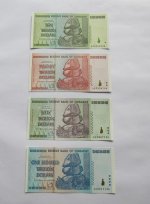
In mid-January 2009, Zimbabwe began printing 100 trillion dollar banknotes. According to the Reserve Bank of Zimbabwe, this was with the ?convenience of the public? in mind. At the time, the country had the highest inflation rate in the world, and the bill pictured above was worth about US$300. In July 2008, the inflation rate reached a stunning 231 million percent ? a single loaf of bread cost roughly 300 billion Zimbabwean dollars.
Doctors and nurses went on strike, and many teachers abandoned their jobs, asking to be paid in foreign currency. Foreign tender was finally legalized in late-January 2009, and by April the Zimbabwean dollar was defunct. Currently, the one hundred trillion dollar banknote can be purchased on Amazon for US$1.25.
In mid-January 2009, Zimbabwe began printing 100 trillion dollar banknotes. According to the Reserve Bank of Zimbabwe, this was with the ?convenience of the public? in mind. At the time, the country had the highest inflation rate in the world, and the bill pictured above was worth about US$300. In July 2008, the inflation rate reached a stunning 231 million percent ? a single loaf of bread cost roughly 300 billion Zimbabwean dollars.
Doctors and nurses went on strike, and many teachers abandoned their jobs, asking to be paid in foreign currency. Foreign tender was finally legalized in late-January 2009, and by April the Zimbabwean dollar was defunct. Currently, the one hundred trillion dollar banknote can be purchased on Amazon for US$1.25.