UFO secrets revealed
- Thread starter vinnie
- Start date
You are using an out of date browser. It may not display this or other websites correctly.
You should upgrade or use an alternative browser.
You should upgrade or use an alternative browser.


I am a total believer that UFO's exist.
I have read alot of information about the existance of UFO's over the years.
I was surprised the other day to stumble on a story that it was reported that Eisenhower went missing for a time and when questioned the reporters were told he had to visit a dentist.
The story goes that in actuality Eisenhower was visting with alien beings at a summit like meeting.
They got pissed at Eisenhower when he requested information on defense systems.
What shocked me was that was the first time I had ever read anything about that.
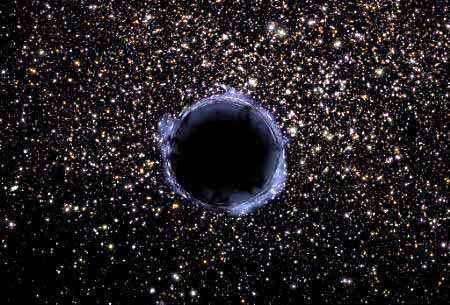
My theory is that the alien ships are able to fly into black holes in space. The ones that suck in all gravity and crush things. They however, know which ones to stay away from. The black holes take them into other universes that we have no knowledge of.
Just too much goverment lieing about it.
I guess if a summit was called with all the leaders of the world to meet with alien beings, our world would change completely at that moment.
There would be no need to go to work. Everyone would just wait to see what the outcome would be. Fear is not good for goverments. Goverments do not like to lose control.
I have read alot of information about the existance of UFO's over the years.
I was surprised the other day to stumble on a story that it was reported that Eisenhower went missing for a time and when questioned the reporters were told he had to visit a dentist.
The story goes that in actuality Eisenhower was visting with alien beings at a summit like meeting.
They got pissed at Eisenhower when he requested information on defense systems.
What shocked me was that was the first time I had ever read anything about that.
My theory is that the alien ships are able to fly into black holes in space. The ones that suck in all gravity and crush things. They however, know which ones to stay away from. The black holes take them into other universes that we have no knowledge of.
Just too much goverment lieing about it.
I guess if a summit was called with all the leaders of the world to meet with alien beings, our world would change completely at that moment.
There would be no need to go to work. Everyone would just wait to see what the outcome would be. Fear is not good for goverments. Goverments do not like to lose control.
Last edited:
President Eisenhower Meets the Aliens?
William L. Moore, Gazette, Hollywood, California, March 29, 1989
Summary: The story about Eisenhower's February 1954 trip to Palm Springs for a winter holiday, and his subsequent late Saturday night disappearance, has fueled rumors that Eisenhower traveled to nearby Edwards Air Force Base to meet with aliens. One of the best recounting of this rumor was done by William Moore a prominent California researcher who traveled to the Eisenhower Library to do research and actually interviewed the wife of one of the key witnesses to the story.
One of the first conclusions an impartial observer must make about the subject of UFOs is that rumors and circumstance play far too great a role in what ought to be a more exacting quest for knowledge. It is just such an observation which once led Dr. Carl Sagan to comment dryly that UFOs "are more a matter for religion and superstition than they are for science."
While this dismissal is perhaps unscientific in its own right, the point is well taken. Attend any gathering of "UFO people" you want, and simply listen. Rumors abound. Perhaps worse, however, is that some of these rumors manage to circulate for years (even decades) without anyone making a reasonable effort to get to the bottom of them.
One of the most persistent of these is a story that President Eisenhower visited Edwards Air Force Base in early 1954, and either viewed the bodies of dead aliens and the wreckage of their craft, or met with live aliens on some sort of diplomatic mission to earth.
The story takes many forms, with the common thread being that Ike mysteriously disappeared one evening while on a vacation to Palm Springs, and that he was spirited to Edwards to view (or meet) aliens. It is said that he returned by dawn and shortly thereafter ordered absolute secrecy about anything having to do with UFOs.
No doubt one of the reasons that this particular rumor has continued to circulate for such a long time is that there are a number of verifiable facts associated with it--some of them rather curious.
For example, President Eisenhower did indeed make a trip to Palm Springs between February 17th and 24th, 1954, and on the evening of Saturday, February 20th, he did disappear! When members of the press learned that the president was not where he should be, rumors ran rampant that he had either died or was seriously ill.
The story even managed to get onto a press wire before being killed moments later. To quell the fuss, White House Press Secretary James Haggerty called an urgent late evening press conference to announce "solemnly" that the president had been enjoying fried chicken earlier that evening, had knocked a cap off a tooth, and had been taken to a local dentist for treatment.
When Ike turned up as scheduled the next morning for an early church service, the matter seemed ended. Although the Palm Springs trip was billed as a "vacation for the president", the trip appears to have come up rather suddenly.
In addition, it is a matter of record that Ike had returned from a quail shooting vacation in Georgia less than a week before leaving for Palm Springs.
While the incidence of a local dentist being called upon to treat a president of the United States is unusual enough that it should constitute a rather memorable event for those involved, the dentist's widow, in a June, 1979 interview, was curiously unable to recall any specifics relating to her husband's alleged involvement in the affair--not even the time of day it had occurred. Yet her memory appeared flawless when asked to relate details of her and her husband's attendance (by presidential invitation) at a steak fry the following evening, where her husband was introduced as "the dentist who had treated the president".
This would appear to suggest a cover story, the details of which would have easily been repeated at the time, but quite naturally forgotten 25 years later. Research at the Eisenhower Library has uncovered two other facts inconsistent with the dentist story.
The first is that while the library maintains an extensive index of records relating to the president's health, there is no record of any dental work having been performed at all during February, 1954. A file on "Dentists" contains nothing concerning any such incident either. Secondly, there is a large file containing copies of all sorts of acknowledgments which were sent by the White House to people who had something to do with the Palm Springs trip.
There are letters, for example, to people who sent flowers, people who met the airplane, people who had offered to play golf, etc. There is even a thank you letter to the minister who presided over the Sunday service Ike attended. Yet there is no record of any acknowledgment having been sent to "the dentist who treated the president."
If the matter were as routine as Haggerty attempts to make it appear, then the absence of these records seems strangely inconsistent. The rumor of the president's alleged visit to Edwards is not a new one. UFO contactee fringe writers began making unsupported claims about it less than two months after Ike's trip.
So did a bizarre fellow from the Hollywood hills named Gerald Light, who, in an April 16, 1954 letter to the head of a Southern California metaphysical organization, actually claimed to have been at Edwards where he saw Ike, the saucers and the aliens. Light's letter has been controversial for years and copies of it have turned up in all sorts of places, including the National Enquirer.
Investigation into Mr. Light's background, however, turned up the fact that he was an elderly mystic who believed that psychic "out-of-body-experiences" were a logical extension of the reality of life and should be treated as such. In the final analysis, Light's alleged visit to Edwards was just such an experience.
And so the story ends. Clearly something unusual occurred involving the president on the evening of February 20, 1954. Whether it was a trip to the dentist, a trip to see flying saucers, or something altogether different and unrelated, no one can say. It's the stuff rumors are made of.
.................................................................
:SIB
William L. Moore, Gazette, Hollywood, California, March 29, 1989
Summary: The story about Eisenhower's February 1954 trip to Palm Springs for a winter holiday, and his subsequent late Saturday night disappearance, has fueled rumors that Eisenhower traveled to nearby Edwards Air Force Base to meet with aliens. One of the best recounting of this rumor was done by William Moore a prominent California researcher who traveled to the Eisenhower Library to do research and actually interviewed the wife of one of the key witnesses to the story.
One of the first conclusions an impartial observer must make about the subject of UFOs is that rumors and circumstance play far too great a role in what ought to be a more exacting quest for knowledge. It is just such an observation which once led Dr. Carl Sagan to comment dryly that UFOs "are more a matter for religion and superstition than they are for science."
While this dismissal is perhaps unscientific in its own right, the point is well taken. Attend any gathering of "UFO people" you want, and simply listen. Rumors abound. Perhaps worse, however, is that some of these rumors manage to circulate for years (even decades) without anyone making a reasonable effort to get to the bottom of them.
One of the most persistent of these is a story that President Eisenhower visited Edwards Air Force Base in early 1954, and either viewed the bodies of dead aliens and the wreckage of their craft, or met with live aliens on some sort of diplomatic mission to earth.
The story takes many forms, with the common thread being that Ike mysteriously disappeared one evening while on a vacation to Palm Springs, and that he was spirited to Edwards to view (or meet) aliens. It is said that he returned by dawn and shortly thereafter ordered absolute secrecy about anything having to do with UFOs.
No doubt one of the reasons that this particular rumor has continued to circulate for such a long time is that there are a number of verifiable facts associated with it--some of them rather curious.
For example, President Eisenhower did indeed make a trip to Palm Springs between February 17th and 24th, 1954, and on the evening of Saturday, February 20th, he did disappear! When members of the press learned that the president was not where he should be, rumors ran rampant that he had either died or was seriously ill.
The story even managed to get onto a press wire before being killed moments later. To quell the fuss, White House Press Secretary James Haggerty called an urgent late evening press conference to announce "solemnly" that the president had been enjoying fried chicken earlier that evening, had knocked a cap off a tooth, and had been taken to a local dentist for treatment.
When Ike turned up as scheduled the next morning for an early church service, the matter seemed ended. Although the Palm Springs trip was billed as a "vacation for the president", the trip appears to have come up rather suddenly.
In addition, it is a matter of record that Ike had returned from a quail shooting vacation in Georgia less than a week before leaving for Palm Springs.
While the incidence of a local dentist being called upon to treat a president of the United States is unusual enough that it should constitute a rather memorable event for those involved, the dentist's widow, in a June, 1979 interview, was curiously unable to recall any specifics relating to her husband's alleged involvement in the affair--not even the time of day it had occurred. Yet her memory appeared flawless when asked to relate details of her and her husband's attendance (by presidential invitation) at a steak fry the following evening, where her husband was introduced as "the dentist who had treated the president".
This would appear to suggest a cover story, the details of which would have easily been repeated at the time, but quite naturally forgotten 25 years later. Research at the Eisenhower Library has uncovered two other facts inconsistent with the dentist story.
The first is that while the library maintains an extensive index of records relating to the president's health, there is no record of any dental work having been performed at all during February, 1954. A file on "Dentists" contains nothing concerning any such incident either. Secondly, there is a large file containing copies of all sorts of acknowledgments which were sent by the White House to people who had something to do with the Palm Springs trip.
There are letters, for example, to people who sent flowers, people who met the airplane, people who had offered to play golf, etc. There is even a thank you letter to the minister who presided over the Sunday service Ike attended. Yet there is no record of any acknowledgment having been sent to "the dentist who treated the president."
If the matter were as routine as Haggerty attempts to make it appear, then the absence of these records seems strangely inconsistent. The rumor of the president's alleged visit to Edwards is not a new one. UFO contactee fringe writers began making unsupported claims about it less than two months after Ike's trip.
So did a bizarre fellow from the Hollywood hills named Gerald Light, who, in an April 16, 1954 letter to the head of a Southern California metaphysical organization, actually claimed to have been at Edwards where he saw Ike, the saucers and the aliens. Light's letter has been controversial for years and copies of it have turned up in all sorts of places, including the National Enquirer.
Investigation into Mr. Light's background, however, turned up the fact that he was an elderly mystic who believed that psychic "out-of-body-experiences" were a logical extension of the reality of life and should be treated as such. In the final analysis, Light's alleged visit to Edwards was just such an experience.
And so the story ends. Clearly something unusual occurred involving the president on the evening of February 20, 1954. Whether it was a trip to the dentist, a trip to see flying saucers, or something altogether different and unrelated, no one can say. It's the stuff rumors are made of.
.................................................................
:SIB
I TOO believe and I have an actual UFO experience that I will share if you ask me in person but no one would believe me if I tried to explain it on here:scared
The universe is way too big to not think there could be life in other places:shrug:
The universe is way too big to not think there could be life in other places:shrug:


I TOO believe and I have an actual UFO experience that I will share if you ask me in person but no one would believe me if I tried to explain it on here:scared
The universe is way too big to not think there could be life in other places:shrug:
KOOZIE won't be there in a nano-second :mj07: ...notice I didn't use the 'G' word
...........................................................I TOO believe and I have an actual UFO experience that I will share if you ask me in person but no one would believe me if I tried to explain it on here:scared
The universe is way too big to not think there could be life in other places:shrug:
we will believe you . come on its just us guys in here. I think your safe in a Vinnie UFO thread.
just spill it and I will tell you mine. It happened in New England.
KOOZIE won't be there in a nano-second :mj07: ...notice I didn't use the 'G' word
No worries, still appreciate the gesture:00hour
Now I got another one on here that joins the butt munch group :nono:
'My dear friends:
I have just returned from Muroc [Edwards Air Force Base]. The report is true -- devastatingly true! I made the journey in company with Franklin Allen of the Hearst papers and Edwin Nourse of Brookings Institute (Truman's erstwhile financial advisor) and Bishop MacIntyre of L.A. (confidential names for the present, please). When we were allowed to enter the restricted section (after about six hours in which we were checked on every possible item, event, incident and aspect of our personal and public lives), I had the distinct feeling that the world had come to an end with fantastic realism. For I have never seen so many human beings in a state of complete collapse and confusion, as they realized that their own world had indeed ended with such finality as to beggar description. The reality of the ?other plane? aeroforms is now and forever removed from the realms of speculation and made a rather painful part of the consciousness of every responsible scientific and political group. During my two days' visit I saw five separate and distinct types of aircraft being studied and handled by our Air Force officials -- with the assistance and permission of the Etherians! I have no words to express my reactions. It has finally happened. It is now a matter of history. President Eisenhower, as you may already know, was spirited over to Muroc one night during his visit to Palm Springs recently. And it is my conviction that he will ignore the terrific conflict between the various 'authorities' and go directly to the people via radio and television -- if the impasse continues much longer. From what I could gather, an official statement to the country is being prepared for delivery about the middle of May. [5]
Of course no such formal announcement was made, and Light?s supposed meeting has either been the best-kept secret of the twentieth century or the fabrication of an elderly mystic known for out of body experiences. The events Light describes in his meeting in terms of the panic and confusion of many of those present, the emotional impact of the alleged landing, and the tremendous difference of opinion on what to do in terms of telling the public and responding to the extraterrestrial visitors, are plausible descriptions of what may have occurred. Indeed, the psychological and emotional impact Light describes for senior national security leaders at the meeting is consistent with what could be expected for such a ?life changing event?. A further way of determining Light?s claim is to investigate the figures he named along with himself as part of the community delegation, and whether they could have been plausible candidates for such a meeting.
..........................................................
I have just returned from Muroc [Edwards Air Force Base]. The report is true -- devastatingly true! I made the journey in company with Franklin Allen of the Hearst papers and Edwin Nourse of Brookings Institute (Truman's erstwhile financial advisor) and Bishop MacIntyre of L.A. (confidential names for the present, please). When we were allowed to enter the restricted section (after about six hours in which we were checked on every possible item, event, incident and aspect of our personal and public lives), I had the distinct feeling that the world had come to an end with fantastic realism. For I have never seen so many human beings in a state of complete collapse and confusion, as they realized that their own world had indeed ended with such finality as to beggar description. The reality of the ?other plane? aeroforms is now and forever removed from the realms of speculation and made a rather painful part of the consciousness of every responsible scientific and political group. During my two days' visit I saw five separate and distinct types of aircraft being studied and handled by our Air Force officials -- with the assistance and permission of the Etherians! I have no words to express my reactions. It has finally happened. It is now a matter of history. President Eisenhower, as you may already know, was spirited over to Muroc one night during his visit to Palm Springs recently. And it is my conviction that he will ignore the terrific conflict between the various 'authorities' and go directly to the people via radio and television -- if the impasse continues much longer. From what I could gather, an official statement to the country is being prepared for delivery about the middle of May. [5]
Of course no such formal announcement was made, and Light?s supposed meeting has either been the best-kept secret of the twentieth century or the fabrication of an elderly mystic known for out of body experiences. The events Light describes in his meeting in terms of the panic and confusion of many of those present, the emotional impact of the alleged landing, and the tremendous difference of opinion on what to do in terms of telling the public and responding to the extraterrestrial visitors, are plausible descriptions of what may have occurred. Indeed, the psychological and emotional impact Light describes for senior national security leaders at the meeting is consistent with what could be expected for such a ?life changing event?. A further way of determining Light?s claim is to investigate the figures he named along with himself as part of the community delegation, and whether they could have been plausible candidates for such a meeting.
..........................................................
No worries, still appreciate the gesture:00hour
Now I got another one on here that joins the butt munch group :nono:
Known by all...like a nick-name..
There is a show starting right now about ancient UFOs visiting Earth on National Geographic channel


KOOZIE won't be there in a nano-second :mj07: ...notice I didn't use the 'G' word
This might be the post of the year!:mj07: :mj07: :mj07:

Bad, change your signature back!:nono:

Dear Bill,
What is the likelihood of extraterrestrial life?
Yours is an old, perhaps ancient, and irresistible question. It's another way of asking: "Are we alone here in the unimaginably vast cosmos?" Unimaginable as it may be, there is a remarkable and reasonable way to take a crack at imagining an answer to this question. In fact, there's even a well-established scientific discipline to study the origin, evolution, and distribution of life in the universe--it's called exobiology.
But closer to home, as recently as November 2006, we may have found a very reasonable place to go looking for life on our neighbor world--Mars, right down the cosmic alley, if you will. We'll get to that a little further down. First ...
How to calculate the likelihood of extraterrestrial life
Called the Drake equation, this calculation starts with total number of stars in a given part of space, say, our galaxy. At any time in the cosmos, some stars are forming. Others are using up their fuel and dying. Still others create more fusion energy than their gravity can contain; they?re exploding. So, astronomers often estimate the total number of stars using a term associated with a rate of star formation. We call it ?R*? (R-star). For the Milky Way, it's around 400 billion; hence the expression, "billions and billions" of stars. (This phrase was used by the extraordinary talk show host Johnny Carson, when he parodied the extraordinary astronomer Carl Sagan.)
Sidebar: Is there life on Mars?
Read this report from a September 1996 article in the Encarta Yearbook.So what's the answer already!?
Let's say there are and were about 400 billion stars in the Milky Way Galaxy when ours came along. Then, let's say only a tenth of them have planets (which is a low estimate). Of those, let's say only a millionth of them are Earth-like. Looking around, life may not be that unlikely, so let's say of these Earth-like planets, the chances of some kind of life happening are about one in ten. Then only a 10,000th of them have intelligent life. Of those, perhaps a 100th stumble on to radio-wave telescopes. Then let's say, once a civilization comes into being, it doesn't blow itself up, catastrophically disrupt its planet's climate, or lose interest in radio astronomy, so it lasts about 10,000 years.
That's not that many, seeing as how there is so much space in space.
Life on Mars?On the other hand, what if these crazy-wild guesses are way off? What if life is very likely? Using clever techniques and telescopes, we have discovered hundreds of planets orbiting other stars, and the search for these planets is in its infancy. What if intelligent civilizations are common? It's easy to use different guesses for each (fudge) factor, recompute this, and estimate that civilizations number not in the dozens, but in the millions. It's quite an exercise.
So get this: If there is liquid water on Mars right now, well that might be a good place to go looking for fossilized forms of life--something like Martian bacteria. Oh, and what if those things living underground away from the sterilizing ultraviolet rays of sunlight were still alive?! If we found evidence of life on Mars, it would, dare I say it, change the world!
Martian meteorite ALH84001Meanwhile, the Phoenix is the next spacecraft we'll be sending to Mars, this time to the north polar region of the planet. It will probably arrive in the late spring of our year 2008. See, the North Pole of Mars is a lot like the North Pole of the Earth. It's cold. On Earth it's covered with water?ice, frozen water. Well on Mars, there's frozen water all right, but it's below the surface. Phoenix has an arm that can dig down and sniff around. Who knows what it will discover a year from now. One-celled life on Earth is found in a lot weirder places than the Arctic or deep underground. Oooh, it's exciting!
From time to time, people find meteorites on Earth's surface that were blasted away from Mars by an impact there about 15 million years ago. The famous meteorite designated ALH84001 landed here about 13,000 years ago, and it's from this inferred impact on Mars. Well, consider this: What if life actually started as some sort of single-celled organism or collection of amino acids on Mars, and found its way here by an impact not unlike the one that sent us the ALH84001 rock?
It's not beyond imagining. You might not think it's likely, but it is absolutely possible. It is, if I may, a cosmic connection. We may all be Martians ...
There must be someone else out there
Whatever numbers you put in the Drake equation, and whatever you might wonder about the countless stars visible from Earth, you have to admit that it just doesn?t seem possible that there are no other civilizations out there, not one. It seems like there has to be somebody. I wonder often what they're like. For our wealthy society with spacefaring robot capability, we just have to see what's up on Mars.
If we discover life on Mars or anywhere else, everyone on Earth would have to stop and think about life elsewhere, about other forms of life. Then in turn, each of us would have to consider his and her own place here on Earth. Do we matter in the cosmic scheme of things? Are we just insignificant specks orbiting a speck in the middle of specklessness?
I often think about this, and I consider the size of a typical human brain. It's pretty small. Yet with it, we can imagine and consider all of this. That, my friends, is remarkable. Yours is a wonderful question. It helps us ponder our place near our star, the Sun, and among all the stars of the cosmos.
Perhaps soon, members of the human species, the species that sends its robots to Mars, will change their world.
..............................................................
I am surprised this guy does not know about my black hole theory.
Last edited:
I TOO believe and I have an actual UFO experience that I will share if you ask me in person but no one would believe me if I tried to explain it on here:scared
The universe is way too big to not think there could be life in other places:shrug:
come on fluffy

Last edited:
come on fluffygive us the story :00hour
FLUFFY:mj07:
Its FLUFFER, Vinnie:shrug:
:142smilie